
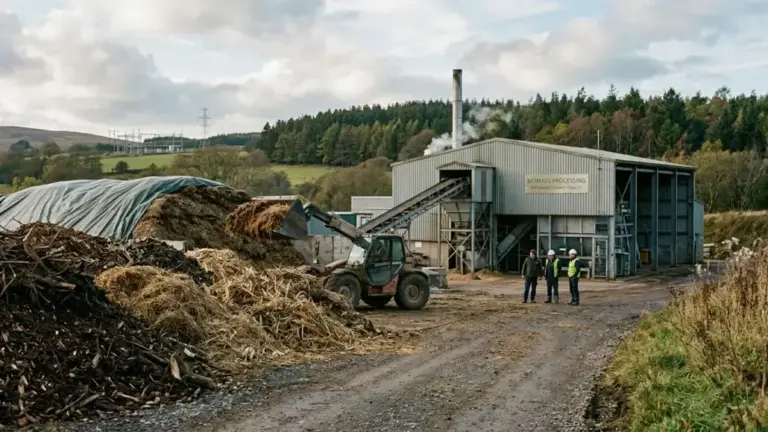
The transition to a renewable energy grid requires more than just solar and wind; it requires reliable, baseload power that can fill the gaps when the sun is not shining and the wind is not blowing. Biomass energy provides this stability, but its success is entirely dependent on the quality and reliability of its fuel source. Unlike fossil fuels, which are relatively uniform, biomass is inherently diverse, ranging from forestry residues and agricultural waste to dedicated energy crops. Consequently, optimizing biomass feedstock for consistent power supply has become one of the most important operational priorities for bioenergy plant managers worldwide. PowerGen Advancement highlights that this optimization involves a complex interplay between procurement, logistics, storage, and processing.
The Impact of Feedstock Quality on Boiler Performance
The physical and chemical properties of biomass directly dictate how it behaves during combustion or gasification. Parameters such as particle size, ash content, and caloric value are critical, but moisture content is perhaps the most significant variable. High moisture levels reduce the net heating value of the fuel, as energy is consumed to evaporate water before combustion can even begin. This leads to temperature fluctuations in the furnace, increased emissions, and potential damage to the boiler walls.
Optimizing biomass feedstock begins with rigorous quality control at the point of origin. By working closely with suppliers to establish clear specifications, plant operators can ensure that the material arriving at the facility meets the necessary standards. This might involve onsite testing of every load for moisture and contaminants. When the feedstock is consistent, the plant’s control systems can be tuned for maximum efficiency, leading to a more stable power output and lower maintenance costs over the long term.
Managing the Supply Chain and Seasonal Variability
Biomass is often a seasonal resource. Agricultural residues are only available after harvest, and forestry activities may be limited by weather conditions or conservation cycles. This seasonality creates significant logistical challenges. To ensure a year-round operation, facilities must develop sophisticated procurement strategies that balance local sourcing with long distance transport when necessary.
Digital supply chain management tools are now being used to track feedstock from the forest or farm to the plant gate. These tools provide real time visibility into inventory levels and transport status, allowing managers to adjust their operations in response to delays or shortages. Furthermore, diversifying the supplier base reduces the risk of disruption. A plant that can handle multiple types of biomass—such as wood chips, pellets, and straw—is much more resilient to market fluctuations and supply chain bottlenecks, which is a core tenet of biomass feedstock optimization.
Storage Solutions and Moisture Control Strategies
Once the biomass arrives at the facility, the way it is stored can have a profound impact on its quality. Organic materials are prone to degradation, mold growth, and even spontaneous combustion if not managed correctly. Proper storage involves controlling ventilation, temperature, and moisture. For many high value feedstocks, such as wood pellets, enclosed silos or warehouses are necessary to protect the material from the elements.
Advanced storage facilities now use sensors to monitor the internal conditions of piles or silos. If temperatures begin to rise, ventilation systems can be activated to dissipate heat. Additionally, some plants are implementing pre-drying systems that use waste heat from the generation process to reduce the moisture content of the incoming fuel. This pre-treatment step is a powerful tool for optimizing biomass feedstock, as it essentially upgrades lower quality material into a high performance fuel before it ever reaches the boiler.
Processing and Size Harmonization for Efficient Feeding
The mechanical handling of biomass is notoriously difficult. Irregular shapes and sizes can lead to bridging in hoppers, clogging of conveyor belts, and uneven distribution on the furnace grate. To prevent these issues, biomass must be processed to achieve a uniform size and density. This often involves chipping, grinding, or pelletizing the raw material.
Harmonizing the physical dimensions of the feedstock allows for the use of automated feeding systems that can precisely control the amount of fuel entering the combustion chamber. This precision is essential for maintaining the oxygen-to-fuel ratio required for clean and efficient combustion. In plants that utilize gasification technology, size uniformity is even more critical, as the chemical reactions depend on a consistent surface-area-to-volume ratio of the fuel particles.
Environmental Sustainability and Certification
As the bioenergy sector grows, the sustainability of its supply chain is under increasing scrutiny. It is not enough for the power to be consistent; it must also be responsibly sourced. Implementing certification schemes, such as the Sustainable Biomass Program (SBP) or the Forest Stewardship Council (FSC), helps ensure that the feedstock does not contribute to deforestation or biodiversity loss.
Sustainable sourcing is actually a component of biomass feedstock optimization. Healthy, well-managed forests and farms provide a more reliable and long term supply of residues than those that are over-harvested. By building partnerships with certified producers, power plants secure their future fuel supply while also meeting the expectations of regulators and the public. This alignment of operational needs with environmental goals is essential for the long term viability of the biomass industry.
Technological Innovations in Feedstock Analysis
The future of biomass management lies in real time analysis. Near-infrared (NIR) spectroscopy and laser-based sensors are being integrated into conveyor systems to provide instantaneous data on the moisture and chemical composition of the fuel as it moves toward the boiler. This allows the plant’s control system to make millisecond-by-millisecond adjustments to the combustion parameters.
Imagine a system where the air flow into the furnace automatically increases the moment a patch of higher-moisture fuel is detected. This level of responsiveness is the ultimate goal of biomass feedstock optimization. It eliminates the lag associated with manual testing and allows the plant to maintain peak efficiency even when the fuel quality is less than perfect. As these technologies become more affordable, they will become standard equipment in facilities of all sizes.
Economic Considerations and Operational Efficiency
Feedstock represents the largest operational expense for a biomass power plant, often accounting for 60 to 70 percent of total costs. Therefore, any improvement in feedstock utilization has a massive impact on profitability. Optimization isn’t just about technical performance; it’s about financial survival in a competitive energy market.
By reducing waste during handling, minimizing degradation in storage, and maximizing the heat yield in the boiler, plant managers can significantly lower their levelized cost of energy (LCOE). This makes biomass a more attractive option for grid operators and investors alike. A well-optimized feedstock strategy transforms a bioenergy plant from a complex logistical challenge into a high-performing financial and environmental asset.
Conclusion
Optimizing biomass feedstock is a multi-layered discipline that requires expertise in forestry, logistics, chemistry, and mechanical engineering. By treating biomass with the same rigor as any other industrial fuel, the power sector can unlock the full potential of this versatile renewable resource. The shift toward digitized supply chains, advanced storage techniques, and real-time fuel analysis is paving the way for a new era of bioenergy—one where consistency and sustainability go hand in hand. PowerGen Advancement believest that as we continue to decarbonize our energy systems, the lessons learned in feedstock optimization will be vital for ensuring a resilient and reliable power grid for the future.