
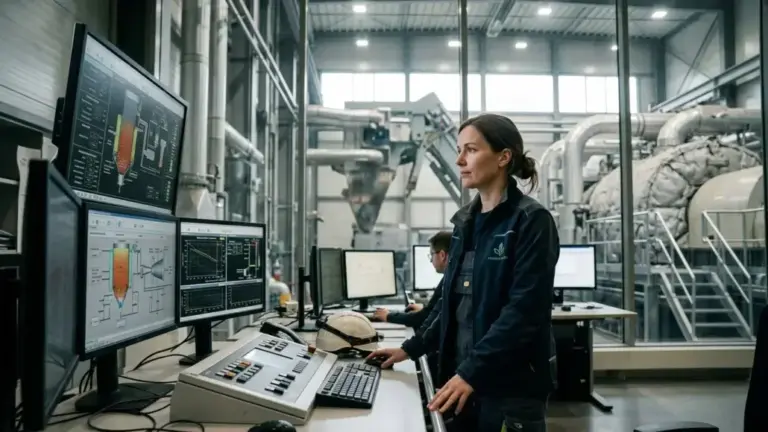
The modern waste management paradigm has shifted dramatically from simple disposal to sophisticated energy recovery. As urban populations grow and landfill space becomes increasingly scarce, the role of Waste to Energy (WtE) facilities has never been more critical. These plants serve a dual purpose: they manage municipal solid waste and generate a reliable source of baseload electricity and heat. However, the heterogeneous nature of waste presents unique challenges that traditional power plants do not face. To maximize the value of this resource, the industry is increasingly turning toward enhancing Waste to Energy efficiency. PowerGen Advancement notes that these systems are designed to handle the variability of feedstock while squeezing every possible joule of energy from the combustion process.
Addressing Feedstock Variability and Combustion Stability
Unlike coal or natural gas, the energy content of municipal waste can fluctuate by the hour. Factors such as moisture content, seasonal changes in consumption, and the effectiveness of local recycling programs all influence the caloric value of the fuel. Enhancing Waste to Energy efficiency begins with sophisticated intake and mixing strategies. Advanced crane operations, often assisted by artificial intelligence, ensure that the fuel fed into the furnace is as homogenized as possible, preventing sudden spikes or drops in temperature that can stress the boiler components.
Once the waste enters the furnace, the challenge is to maintain stable combustion. Modern reciprocating grates and fluidized bed reactors are now equipped with infrared cameras and acoustic sensors that provide a real time view of the fire bed. This data allows for the precise control of primary and secondary air injection. By optimizing the “three Ts”—temperature, time, and turbulence—these systems ensure complete burnout of organic matter, which is essential for both efficiency and the destruction of potentially harmful compounds.
Advanced Boiler Design and Thermal Recovery
The boiler is the heart of the energy recovery process, and its design has seen significant innovation in recent years. In a WtE environment, the flue gas is highly corrosive, containing chlorides and other aggressive chemicals. Traditional designs often ran at lower steam temperatures to protect the boiler tubes, but this limited the electrical efficiency of the plant. Enhancing Waste to Energy efficiency now incorporates advanced materials and protective cladding, such as Inconel alloys, which allow for higher steam parameters.
By increasing the steam temperature and pressure, the thermodynamic efficiency of the Rankine cycle is significantly improved. Furthermore, modern boilers are designed with sophisticated cleaning systems, such as shock pulse generators or acoustic cleaners, which prevent the buildup of fly ash on heat exchange surfaces. Maintaining clean surfaces ensures that the maximum amount of heat is transferred from the flue gas to the water-steam cycle, directly boosting the plant’s net energy output.
Optimization of Flue Gas Treatment and Heat Extraction
The environmental compliance requirements for WtE plants are among the strictest in the industrial sector. Flue gas treatment systems must remove acid gases, heavy metals, and particulate matter before discharge. While these systems consume energy, they also present opportunities for recovery. Enhancing Waste to Energy efficiency often includes flue gas condensation units. These units cool the flue gas below its dew point, recovering the latent heat of vaporization that would otherwise be lost through the stack.
This recovered low-grade heat can be used for district heating networks or for preheating the boiler feedwater. By integrating these recovery stages, the total fuel utilization of a WtE facility can exceed 80 or even 90 percent. This holistic approach to heat management ensures that the facility is not just a power plant, but a vital hub of local thermal energy distribution.
Digitalization and Artificial Intelligence in WtE Operations
The complexity of a WtE plant makes it an ideal candidate for digitalization. Machine learning algorithms can analyze historical operational data to identify the optimal setpoints for various waste compositions. Enhancing Waste to Energy efficiency today utilizes predictive analytics to anticipate maintenance needs and prevent unplanned outages. For instance, if the system detects a trend toward fouling in the superheater, it can adjust the combustion parameters or schedule a cleaning cycle before the efficiency drops.
Digital twins also play a vital role in operational excellence. By simulating different furnace conditions, operators can fine tune the logic of the automatic combustion control (ACC) systems. This reduces the reliance on manual intervention and ensures that the plant operates at its peak efficiency 24 hours a day. The result is a more stable process that produces a consistent power profile, making the WtE plant a more valuable asset for grid operators.
Improving the Energy Self-Consumption Profile
A significant portion of the electricity generated by a WtE plant is used to run its own internal systems, such as pumps, fans, and flue gas treatment units. Reducing this “parasitic load” is a key strategy for enhancing Waste to Energy efficiency. High efficiency motors and variable speed drives (VSDs) are now standard in modern facility upgrades. By matching the speed of a pump or fan to the actual process demand, operators can significantly reduce electricity consumption.
Furthermore, intelligent lighting and HVAC systems within the plant buildings contribute to a better net energy balance. While each individual improvement might seem small, the cumulative effect allows the plant to export more electricity to the grid for every ton of waste processed. This focus on internal efficiency is a hallmark of a well managed, modern energy recovery facility.
Long Term Reliability and Lifecycle Management
Efficiency is closely linked to reliability. A plant that is frequently offline due to equipment failure cannot be considered efficient, regardless of its design parameters. Enhancing Waste to Energy efficiency includes a commitment to reliability centered maintenance (RCM). This approach uses data from condition monitoring sensors to perform maintenance only when necessary, avoiding the costs and risks associated with over-maintenance.
Investing in high quality components and materials at the construction or retrofit stage pays dividends over the facility’s 25 to 30 year lifespan. By reducing the frequency of major overhauls and ensuring that the plant stays within its optimal operating window, owners can maximize both the environmental and financial returns on their investment.
Conclusion
Enhancing Waste to Energy efficiency is a continuous journey of improvement that blends mechanical engineering, material science, and digital innovation. By mastering the challenges of feedstock variability and corrosive environments, modern WtE plants are proving that waste is not a burden, but a valuable resource. As we move toward a circular economy, the efficiency of these facilities will play a central role in how we manage our resources and power our communities. PowerGen Advancement highlights the integration of advanced monitoring, combustion controls, and heat recovery technologies ensures that Waste to Energy remains a cornerstone of sustainable infrastructure for decades to come.