
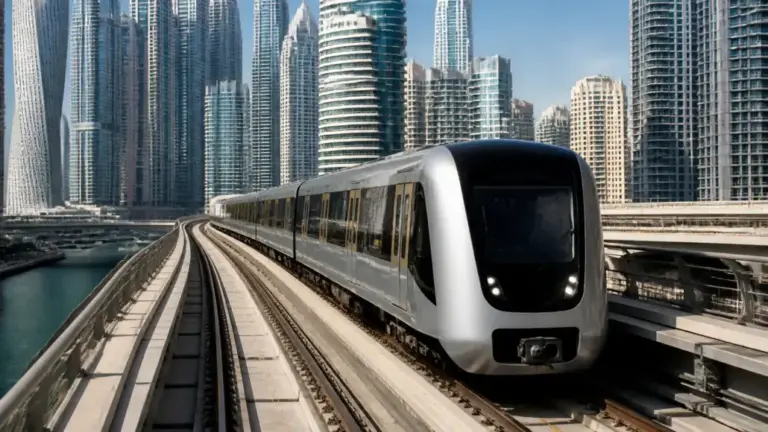
The global urban transit landscape is currently undergoing a silent but profound transformation that is redefining the boundaries of public transportation. In cities from Paris to Singapore, and from Vancouver to Dubai, the traditional image of a train driver peering through the front windshield is being replaced by the seamless, high-frequency operations of GoA4 driverless trains. Grade of Automation 4 (GoA4) represents the pinnacle of railway automation: Unattended Train Operation (UTO). In this environment, the train is completely self-managed, from its initial departure at the depot to its arrival at the platform and its eventual return to service, with no operational staff on board. This push toward fully automated rail is not merely a quest for technological prestige. It is a fundamental requirement for meeting the increasing demand for high-capacity, reliable, and energy-efficient urban mobility in our growing megacities.
The technical core of GoA4 driverless trains is the Communications-Based Train Control (CBTC) system, governed by international standards like IEEE 1474 and IEC 62290. Unlike traditional signaling that relies on fixed track circuits or axle counters, CBTC uses a high-speed, continuous bidirectional data link between the train and the trackside infrastructure to provide high-precision positioning. This enables the use of moving block signaling, where the safety distance between trains—the Limit of Movement Authority (LMA)—is dynamically calculated in real-time based on their actual speed, location, and braking capabilities. Transport Advancment notes that by compressing the headway, the time interval between successive trains, CBTC allows a GoA4 network to move significantly more passengers over the same physical infrastructure, often reducing wait times to as little as 90 seconds during peak hours.
The Integrated Subsystems of GoA4 Automation
To achieve a level of safety that meets the rigorous SIL 4 (Safety Integrity Level 4) standards—requiring a probability of failure per hour as low as one in one billion—GoA4 driverless trains rely on the seamless integration of four primary subsystems. First is the Automatic Train Protection (ATP) layer, the safety-critical core that enforces speed limits, ensures safe train separation, and executes emergency braking if any safety violation occurs. Second is the Automatic Train Operation (ATO) layer, which manages the traction and service braking, optimizing the train’s speed curve for both punctuality and passenger comfort. ATO is also responsible for the precise stopping accuracy—often within a tolerance of ±10 to ±30 centimeters—required to align train doors perfectly with Platform Screen Doors (PSD).
The third subsystem is Automatic Train Supervision (ATS), which provides the centralized brain of the operation at the Operations Control Center (OCC). ATS manages the dispatching, regulates the timetable, and automatically reroutes trains in the event of a disruption. Finally, the Data Communication System (DCS) provides the continuous radio link that ties all these components together. For GoA4 driverless trains, the reliability and security of this communication link are paramount, leading to a transition from legacy Wi-Fi (IEEE 802.11) to advanced 5G/FRMCS (Future Railway Mobile Communication System) networks. These 5G Standalone networks offer the ultra-low latency (URLLC) and high bandwidth needed for concurrent high-definition video streaming from inside the cars and critical CBTC control telemetry.
Enhancing Safety and the Platform-Track Interface
One of the most critical challenges in the deployment of GoA4 driverless trains is the management of the platform-track interface (PTI). Without a driver on board to monitor the platform, the risk of a passenger falling onto the tracks or getting caught in the doors must be mitigated through physical and technical barriers. The most common solution is the installation of Platform Screen Doors (PSD) or Platform Edge Doors (PED), which physically separate the passengers from the moving train and open only when the train is safely stopped and aligned. In environments where PSDs are not feasible, advanced Trackside Intrusion Detection Systems (TIDS) using optical sensors, radar, or LiDAR are deployed to automatically trigger an emergency stop if a person or object enters the track area.
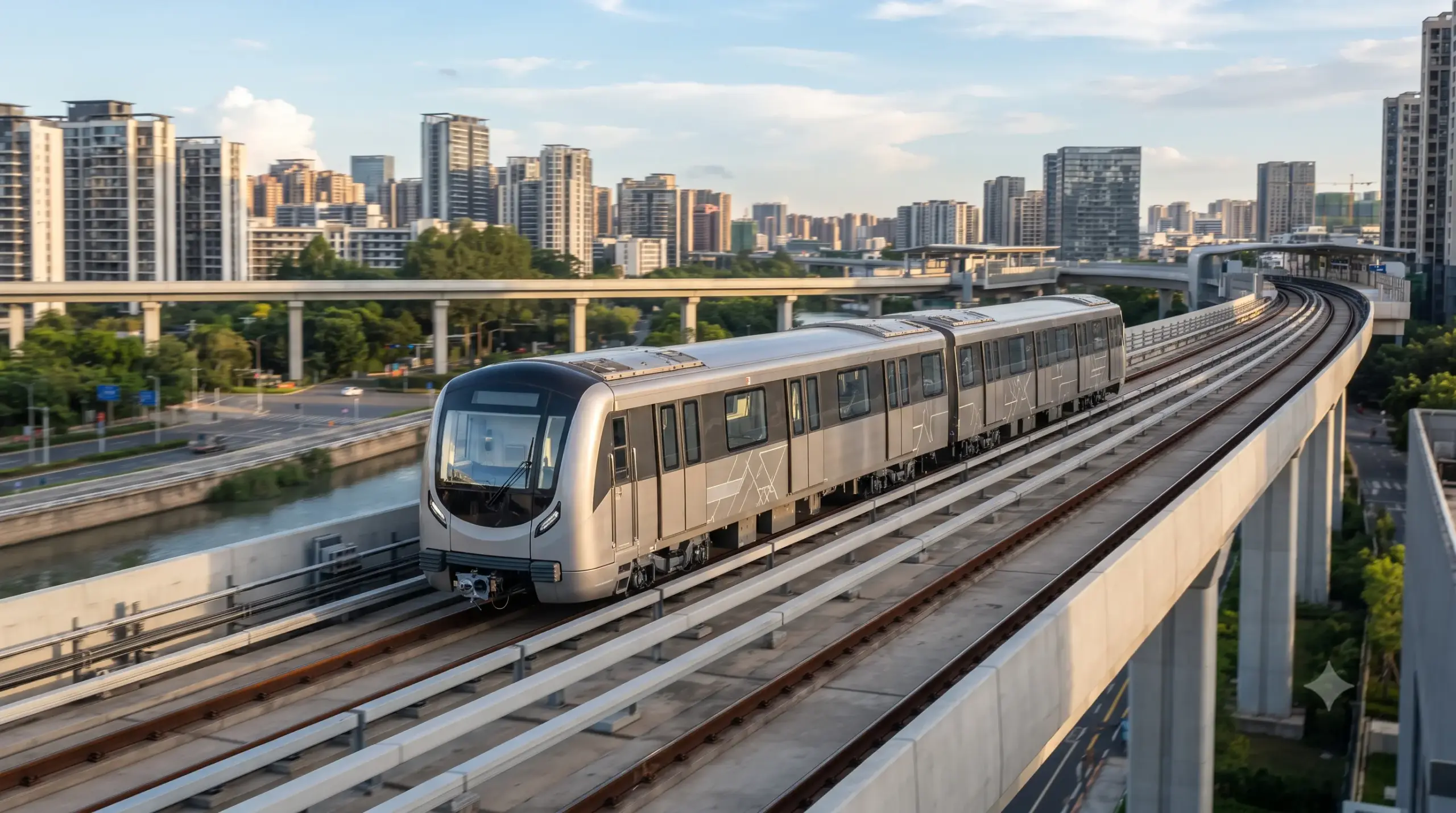
Furthermore, GoA4 driverless trains are becoming increasingly intelligent through the integration of onboard sensor fusion and edge AI. To extend UTO to non-segregated or brownfield mainline environments, trains are being equipped with multi-modal sensor arrays—combining solid-state 3D LiDAR, long-range thermal infrared cameras, and high-definition optical sensors. These systems can detect obstacles, trespassers, or fallen objects hundreds of meters ahead, even in poor visibility or unlit tunnels. By utilizing deep learning architectures processed on carborne edge AI units, the train can semantically understand its environment, distinguishing between harmless trackside debris and a critical safety hazard, exceeding the visual capabilities of a human driver.
Virtual Coupling and Dynamic Network Scaling
The push toward fully automated rail also enables the revolutionary concept of virtual coupling. In a traditional rail environment, trains are physically linked by mechanical couplers, which limits operational flexibility. In a GoA4 environment, virtual coupling replaces physical links with ultra-low latency V2V (Vehicle-to-Vehicle) communications. This allows multiple independent train units to run synchronously at high speed, separated only by a dynamic electronic safety distance. These units can virtually couple to form a long platoon through congested corridors and then split autonomously to serve different branch lines.
This dynamic network scaling allows transit authorities to adjust capacity throughout the day with unprecedented precision. During peak hours, trains can virtually couple to maximize throughput, while during off-peak times, they can split into smaller, high-frequency units to maintain service levels with lower energy consumption. This level of operational agility is the hallmark of the next generation of smart urban transit, allowing for a more responsive and customer-centric railway.
Operational Resilience and Energy Management
GoA4 driverless trains offer significant benefits in terms of operational resilience and energy efficiency. In a manually operated network, recovering from a disruption is a complex task that depends on human coordination. In a GoA4 environment, the ATS system can automatically adjust dwell times and speed curves across the entire fleet to maintain the timetable and minimize knock-on delays. Moreover, by eliminating the variability of human driving styles, GoA4 trains can be programmed for maximum energy efficiency. Advanced ATO algorithms optimize coasting and regenerative braking, returning energy to the third rail or overhead lines and reducing the network’s total traction power consumption by up to 20%.
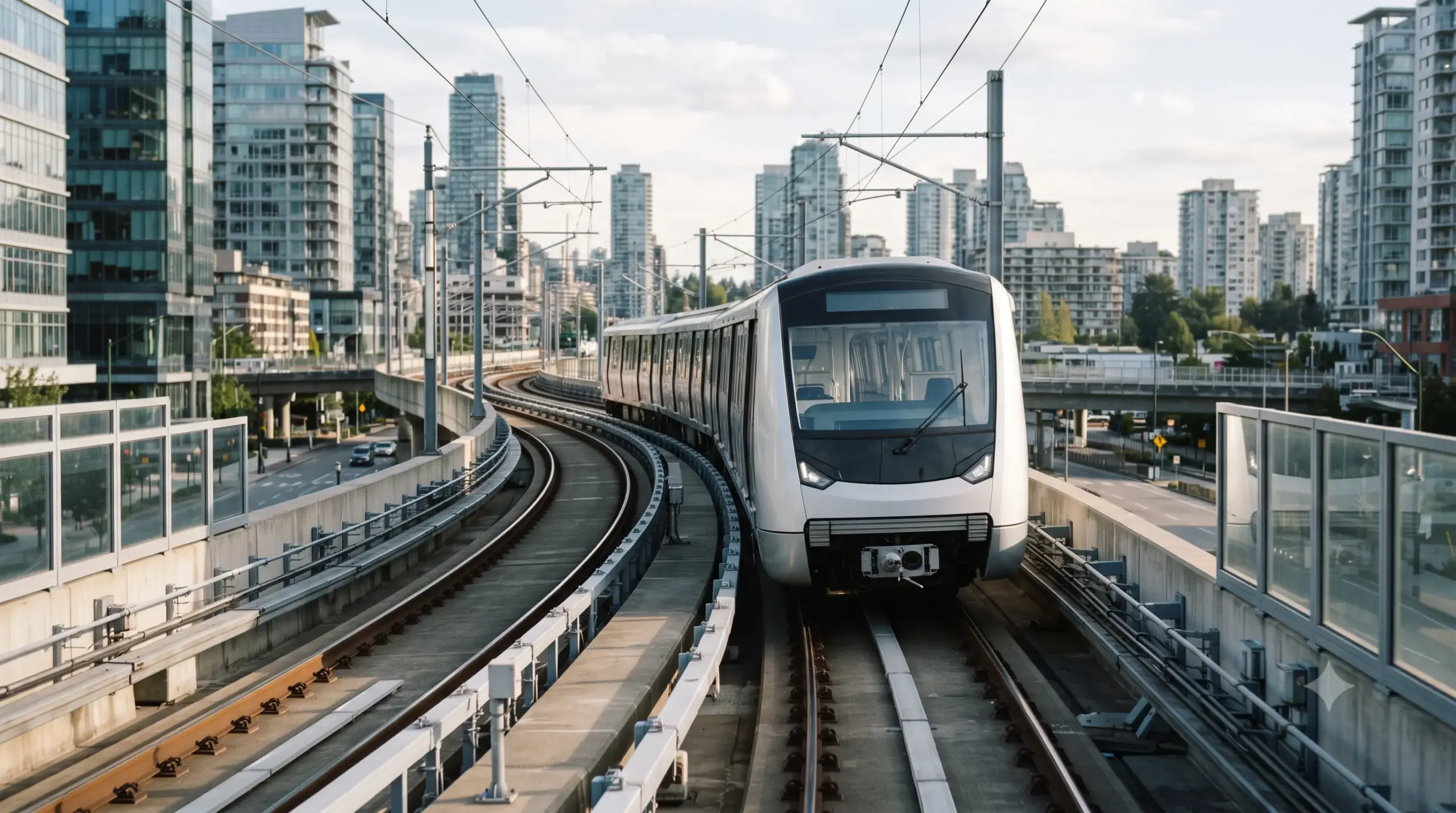
Furthermore, the transition to GoA4 facilitates the automation of depot operations. Autonomous trains can self-route to maintenance bays, automated washing plants, and stabling yards, reducing the need for manual shunting and improving the utilization of depot space. This level of end-to-end automation ensures that the railway operates as a seamless, high-integrity machine, ready to meet the challenges of 24/7 urban mobility.
Strategic Takeaways for Urban Mobility
The deployment of GoA4 driverless trains represents a paradigm shift for the rail industry, moving from a labor-intensive operation to a software-defined, automated service. For transit agencies, the transition requires a holistic approach to technology, safety management, and organizational change.
GoA4 driverless trains are the definitive solution for high-capacity, high-frequency urban transit. By integrating CBTC, moving block signaling, and advanced sensor fusion, cities can maximize the utility of their existing rail infrastructure while significantly enhancing passenger safety and reducing energy consumption. The success of this transition depends on the seamless integration of safety-critical subsystems and the implementation of robust platform protection measures to ensure the safe interaction between passengers and autonomous trains.
To achieve the full potential of fully automated rail, stakeholders must prioritize the modernization of legacy signaling systems and the adoption of secure, high-bandwidth communication networks like FRMCS and 5G. The move to GoA4 requires a new set of operational skills, focusing on remote supervision, cyber-physical security, and complex system integration. By investing in these technologies today, transit authorities can build a resilient, sustainable, and data-driven mobility backbone that is ready to serve the needs of the 21st-century city. The move toward GoA4 is not merely an engineering achievement; it is a social and economic necessity for the world’s growing megacities. Transport Advancement believes that by providing a service that is both higher in capacity and lower in energy consumption, fully automated rail will play a central role in the decarbonization of urban transport. As the global standard for CBTC and UTO continue to harmonize, the dream of a seamless, driverless transit network is fast becoming a reality for millions of commuters worldwide, ensuring that the cities of the future remain vibrant, accessible, and sustainable for all.