
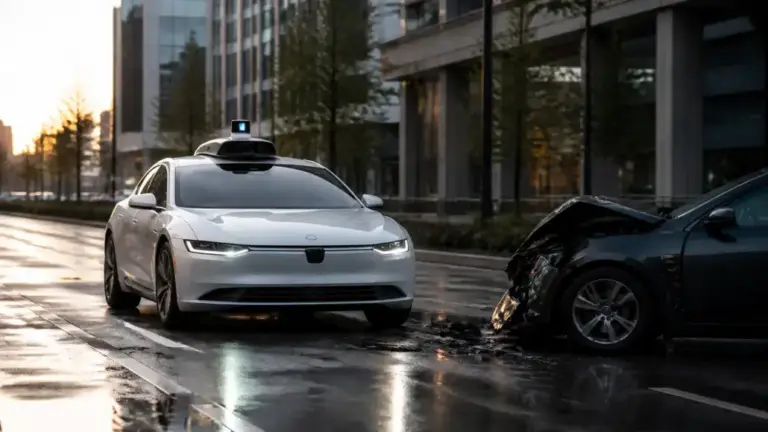
The arrival of autonomous mobility is perhaps the most significant milestone in the history of transportation since the invention of the internal combustion engine. At the heart of this transition is a fundamental promise: the drastic reduction of traffic accidents and fatalities through the elimination of human error, which is responsible for over 90% of all road incidents. However, for self-driving cars to achieve widespread public acceptance and regulatory approval, the industry must demonstrate that driverless vehicle safety is not just an aspiration, but a rigorous, measurable reality. The most critical test for any autonomous system is its ability to handle edge cases—unexpected, high-stakes road events that require split-second decision-making under extreme uncertainty. By leveraging a combination of multi-modal sensor fusion, deep reinforcement learning, and deterministic safety models, modern AI systems are learning to navigate the chaotic complexity of the real world with superhuman precision and reliability.
The foundation of driverless vehicle safety is a sophisticated perception stack that provides the AI with a continuous, 360-degree model of its environment. Unlike a human driver, who is limited by physical gaze, peripheral vision, and cognitive attention span, an autonomous vehicle utilizes a unified matrix of sensors, including 3D LiDAR, millimeter-wave radar, and high-resolution optical cameras. This redundancy is essential for handling unexpected hazards in diverse environmental conditions. For instance, if a camera is blinded by the glare of a setting sun or obscured by dense fog, the LiDAR can still precisely map the geometric structure of the road ahead using near-infrared laser pulses, while the radar provides instantaneous velocity data through heavy rain or blowing snow. Transport Advancement notes that by fusing these data streams into a unified Bird’s-Eye-View (BEV) representation, the AI can detect a pedestrian stepping out from behind a parked car or a vehicle running a red light long before a human driver would even register the threat.
AI Decision-Making and the Prediction of Human Behavior
Detecting a hazard is only the first step; the true challenge of driverless vehicle safety lies in the AI’s ability to predict what will happen next. Modern autonomous systems utilize sophisticated prediction modules that assign probabilistic trajectories to every object in the environment. Using deep neural networks trained on millions of miles of driving data, the vehicle evaluates the likely behavior of a cyclist, a merging truck, or a group of children on a sidewalk. This is not just about tracking movement; it is about understanding intent and context. If the AI detects a car drifting toward the edge of its lane, it doesn’t just wait for a collision. It proactively adjusts its own speed and position to create a safe buffer, anticipating a possible lane departure even before a turn signal is activated.
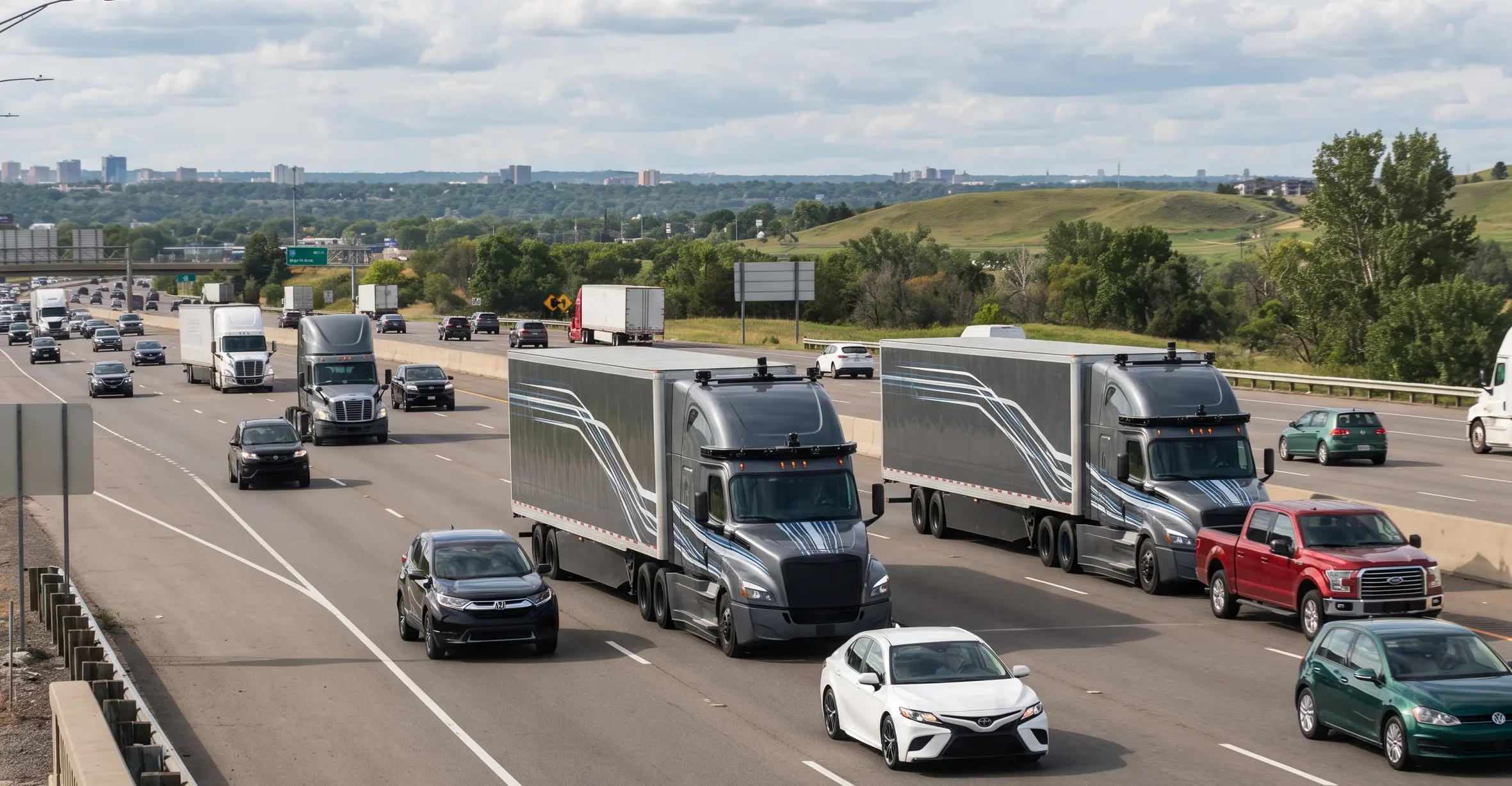
When an unexpected road event occurs—such as a piece of cargo falling off a truck or a sudden emergency braking event by a leading vehicle—the AI must execute a safe and decisive response. This is where End-to-End neural architectures and traditional rule-based safety shields converge. While deep learning provides the flexibility to handle complex, unstructured scenarios, deterministic safety models like Mobileye’s Responsibility-Sensitive Safety (RSS) provide the hard-coded boundaries that the AI must never cross. RSS mathematically defines what constitutes a safe distance and safe maneuvers,ensuring that the vehicle’s response to an unexpected event is always grounded in clear, verifiable safety logic that prevents it from causing a crash, even if it cannot always prevent others from hitting it.
Handling the “Long Tail” of Edge Cases
The greatest hurdle for autonomous mobility is the long tail of edge cases—bizarre and infrequent scenarios that a vehicle may never have encountered during its training phase. This could be anything from a person in a costume crossing the road to an unmapped construction detour marked with hand-drawn signs or a loose animal on a highway. To address these challenges, the industry is increasingly relying on high-fidelity simulation and generative AI world models. By creating digital twins of entire cities and utilizing AI to generate millions of synthetic edge cases, developers can stress-test their systems across scenarios that would be too dangerous or rare to encounter in real-world testing. This virtual training ground allows the AI to learn how to handle a falling tree or a cargo spill thousands of times before it ever sees one on a public road.
Furthermore, the emergence of Vision-Language-Action (VLA) models is bringing a new level of semantic reasoning to driverless vehicle safety. These advanced AI models, often referred to as Embodied AI, can not only see a road sign but can also understand the contextual meaning of a complex, unstructured instruction, such as a traffic officer using hand gestures to redirect vehicles during an emergency or a handwritten sign indicating a temporary road closure. By integrating natural language reasoning with visual perception, autonomous vehicles are becoming better at navigating the social and linguistic aspects of the road, which have historically been the most difficult challenges for machine-driven systems to master.
Sensor Redundancy and Minimal Risk Maneuvers
Driverless vehicle safety also depends on the implementation of robust hardware redundancy and fail-safe protocols. In a high-integrity autonomous system, the steering, braking, and compute units are all duplicated to ensure that a single component failure does not lead to a loss of control. If the primary system detects a severe fault or if the environment exceeds the vehicle’s Operational Design Domain (ODD)—such as a sudden dust storm that saturates the sensors—the AI must be capable of executing a Minimal Risk Maneuver (MRM).
This automated safety protocol is a non-negotiable requirement for passenger safety. Depending on the context, an MRM might involve a controlled lane change to the shoulder of a highway, a slow stop in a safe spot on a city street, or a transition to a safe-passive state where the vehicle maintains its position and activates its hazard lights. Ensuring that the vehicle can always reach a state of minimal risk, even when its primary perception or compute systems are compromised, is the ultimate safety net for autonomous mobility.
Cybersecurity and the Protection of the Driving Stack
As vehicles become more connected and software-defined, the definition of driverless vehicle safety must expand to include cybersecurity. A self-driving car that is susceptible to GPS spoofing, signal jamming, or unauthorized remote control is a catastrophic safety risk. To mitigate this, the industry is adopting rigorous standards such as ISO 21434 and implementing hardware-based security modules with Roots of Trust. Every critical control command must be authenticated, and the vehicle’s internal communication networks must be strictly segmented following the Purdue Model to prevent a breach in the infotainment system from affecting the safety-critical driving stack.
Furthermore, the use of over-the-air (OTA) updates allows manufacturers to continuously patch vulnerabilities and improve safety algorithms in real-time. However, these updates themselves must be secured to prevent the injection of malicious code. By building a secure, end-to-end digital ecosystem, the industry can protect autonomous vehicles from the growing threat of cyber-physical attacks, ensuring that the technology meant to save lives remains under the absolute control of its safety-certified AI.
Strategic Imperatives for Autonomous Safety
The success of the autonomous revolution depends on the industry’s ability to prove that driverless vehicle safety is significantly superior to human driving. This requires a commitment to radical transparency, rigorous testing, and the continuous refinement of AI models through real-world feedback.
Driverless vehicle safety is a multi-dimensional challenge that requires the seamless integration of advanced perception, probabilistic prediction, and deterministic control logic. By leveraging multi-modal sensor fusion, generative simulation, and XAI (Explainable AI), the industry is creating systems that can handle the unexpected with a level of speed and consistency that no human could ever match. The key to public trust lies in the industry’s ability to demonstrate that these systems fail gracefully and always operate within clear, mathematically verifiable safety boundaries.
Transport Advancement believes that as the technology continues to evolve, the move toward cooperative perception and V2X (Vehicle-to-Everything) communication will further enhance safety by allowing vehicles to see through obstacles and share hazard information in real-time. The future of autonomous mobility is not just about individual smart cars, but about an integrated, intelligent transport ecosystem where every element is designed to minimize risk and protect human life. By prioritizing safety at every stage of development—from the silicon level to the software architecture—the industry can fulfill its promise of a world without traffic accidents, providing a safer and more efficient future for all.