
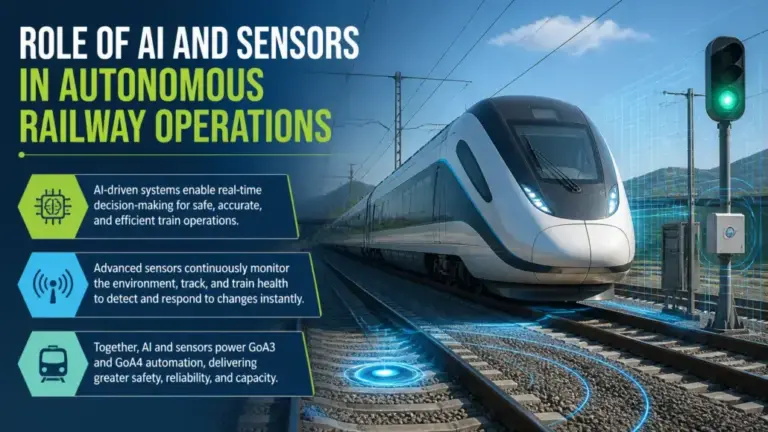
The railway industry is currently undergoing a radical transformation that promises to revolutionize the way people and goods move across continents. At the heart of this evolution is the transition to autonomous railway operations, a shift driven by the convergence of high-performance artificial intelligence, sophisticated sensor suites, and advanced signaling frameworks. By moving beyond traditional manual control and into the realm of Grades of Automation 3 and 4 (GoA3 and GoA4), rail networks can unlock unprecedented levels of safety, capacity, and energy efficiency. For modern transit authorities, the move to autonomous rail is no longer a futuristic concept. It is the essential strategy for building a resilient, sustainable, and high-performance transportation backbone in an increasingly urbanized world.
The technical foundation of autonomous railway operations is anchored by the Grade of Automation (GoA) standards established by the IEC 62290 and IEEE 1474 frameworks. While GoA1 and GoA2 involve various levels of driver assistance and semi-automation, the industry’s focus is now firmly on Unattended Train Operation (UTO), known as GoA4. In a fully autonomous environment, all train movements, station dwellings, door operations, and disruption handling are managed by a centralized control system without any onboard staff. This requires a seamless, SIL 4 (Safety Integrity Level 4) integration between the train’s carborne units and the trackside signaling infrastructure, typically governed by Communications-Based Train Control (CBTC) or the European Train Control System (ETCS) Level 3. These systems enable moving block signaling, allowing trains to run at dynamic safety distances rather than being confined to fixed track segments, thereby dramatically increasing network capacity and reducing headways.
The Role of Multi-Modal Sensor Fusion
To achieve the level of safety required for autonomous railway operations on open or non-segregated tracks, trains must possess a superhuman level of situational awareness. This is achieved through multi-modal sensor fusion, which combines data from FMCW (Frequency Modulated Continuous Wave) 4D LiDAR, millimeter-wave radar, high-resolution RGB optical cameras, and far-infrared (FIR) thermal imaging sensors. By fusing these diverse data streams using advanced deep learning architectures like Vision Transformers and 3D PointPillars, the onboard AI can build a real-time, high-fidelity model of the track ahead, detecting obstacles, track switch misalignments, and potential intrusions with sub-decimeter precision. Unlike a human driver, Transport Advancement highlights that these sensor systems can maintain a constant, 360-degree vigil, operating effectively in total darkness, dense fog, or heavy snowfall.
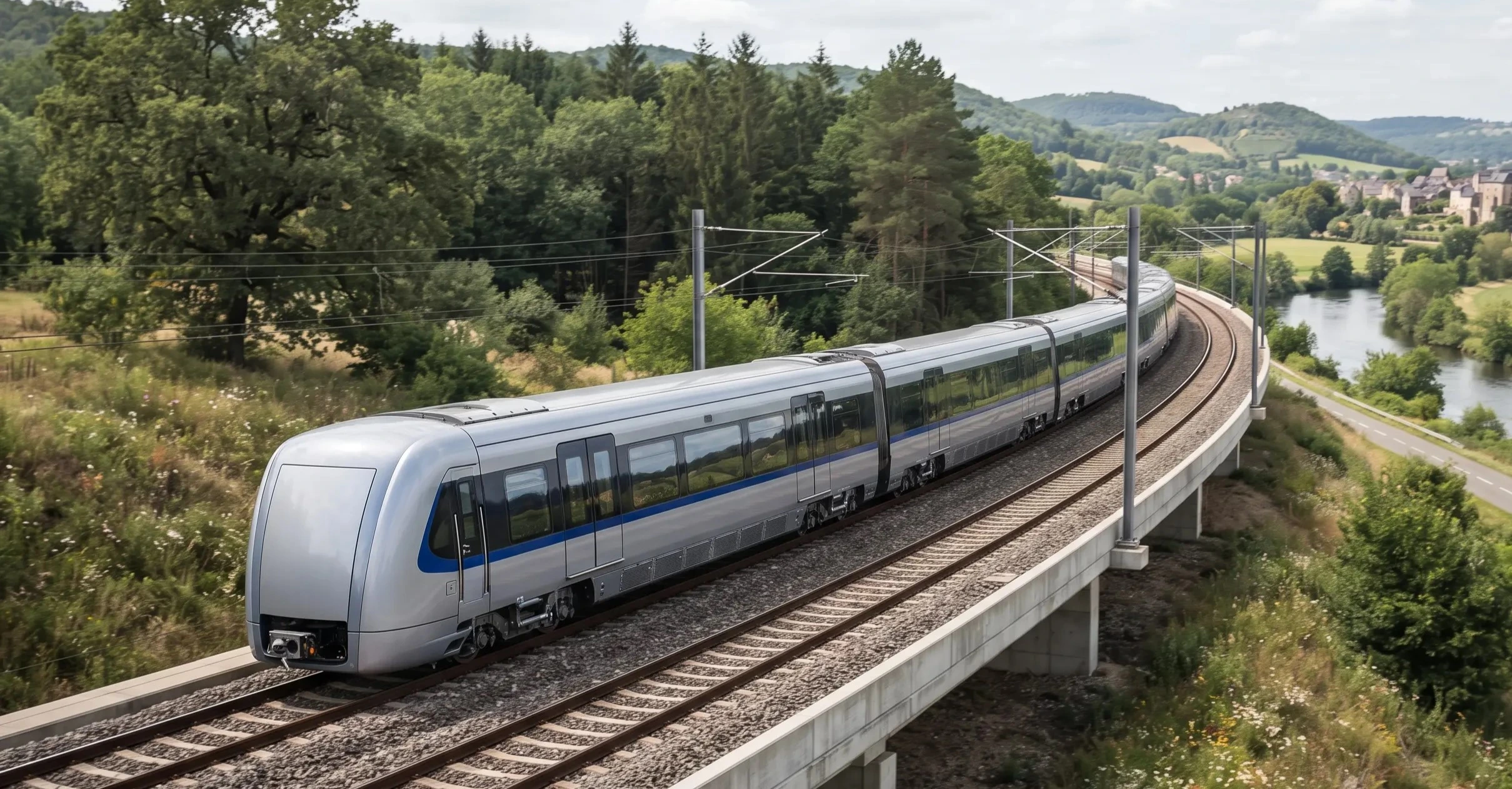
A critical innovation in this area is the use of 4D LiDAR, which provides per-pixel Doppler velocity measurements. This allows the autonomous railway operations system to instantly distinguish between a stationary object and a moving hazard, such as a vehicle crossing the tracks or a pedestrian entering the right-of-way. Furthermore, the integration of GNSS-RTK satellite positioning and inertial measurement units (IMU) allows the train to maintain its precise location on a digital track map, even in tunnels or deep urban canyons. This level of granular environmental understanding is essential for executing the appropriate safety response—whether that be a service brake application, a warning signal, or a full emergency stop—without the risk of false positives that could disrupt the network.
AI-Driven Network Performance and Energy Efficiency
Beyond safety, autonomous railway operations offer significant gains in network performance and energy management. In a manually operated system, energy consumption and passenger comfort vary widely depending on the individual driving style and reaction times of different operators. Automated Train Operation (ATO) eliminates this variability by optimizing speed curves and acceleration profiles in real-time. By utilizing AI algorithms to manage traction and braking, autonomous trains can achieve the perfect balance between punctuality and energy efficiency, often reducing traction power consumption by 15% to 20%. This is particularly critical for high-speed and heavy-haul rail networks, where small improvements in efficiency lead to massive savings in operational costs and carbon emissions.
Furthermore, the integration of AI allows for dynamic headway optimization and virtual coupling. In a GoA4 environment, the central control system can adjust the spacing between trains based on real-time passenger demand and track conditions. Virtual coupling technology allows multiple independent train units to run synchronously at operational speeds, separated only by a dynamic electronic safety distance rather than a physical coupler. These units can virtually couple to form a long platoon through congested network bottlenecks and then split into individual units to serve different destinations. This flexibility is essential for maximizing the utilization of existing rail infrastructure, allowing transit agencies to increase capacity by up to 30% without the need for expensive and disruptive new track construction.
Condition Monitoring and Predictive Rail Maintenance
Autonomous railway operations also extend to the field of asset management through the integration of Industrial IoT (IIoT) sensors across the rolling stock and trackside infrastructure. Bogies, pantographs, and wheelsets are now equipped with vibration and thermal sensors that feed real-time data into AI-driven digital twins. Predictive maintenance algorithms can identify the early signs of component wear—such as bearing degradation or wheel flat spots—long before they lead to an operational failure. This allows for the precise scheduling of maintenance in the depot, ensuring that train sets are only taken out of service when necessary and reducing the risk of unplanned breakdowns that cause systemic delays.
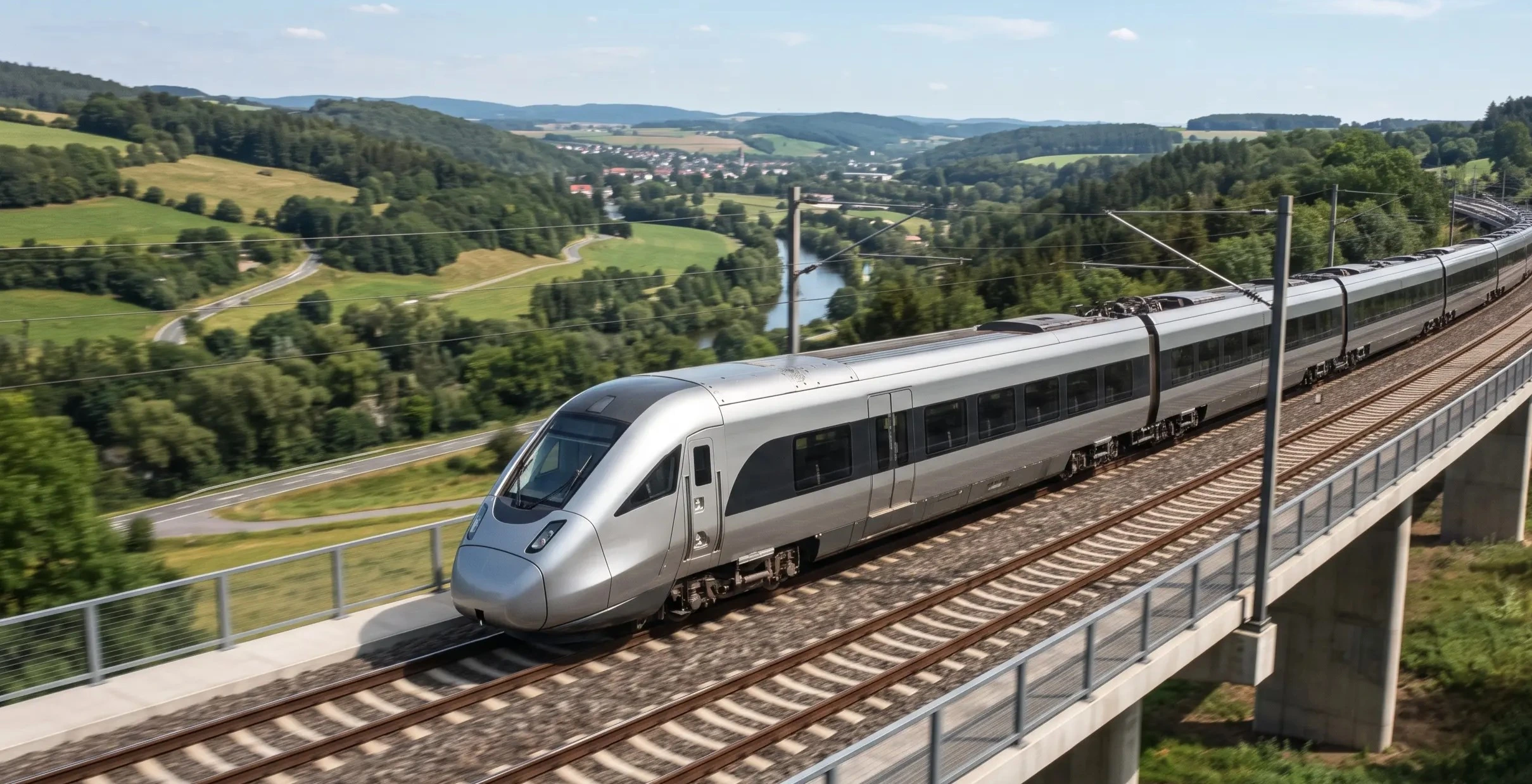
On the trackside, autonomous inspection trains equipped with LiDAR and high-speed cameras can automatically detect rail cracks, ballast issues, or vegetation encroachments. By utilizing computer vision to analyze thousands of miles of track data, rail operators can transition from periodic manual inspections to continuous monitoring. This not only improves safety but also significantly lowers the operational expenditure (OPEX) of maintaining vast rail networks. The resulting data-driven approach to asset integrity ensures that the railway remains a reliable and resilient backbone for national and international logistics. This integration of IIoT with rolling stock maintenance is not just a technological upgrade; it is a fundamental shift in the economics of rail. By maximizing the uptime of every train set and reducing the need for emergency repairs, rail operators can provide a level of service reliability that rivals the most efficient logistics networks in the world. As these digital twin models become more sophisticated, the railway will move closer to a state of zero-unplanned downtime, fulfilling its promise as the most efficient and sustainable mode of long-haul transportation.
Cybersecurity and Safety Certification Challenges
The transition to autonomous railway operations is not without its hurdles, particularly regarding cybersecurity and regulatory certification. As rail networks move toward software-defined architectures and utilize wireless 5G/FRMCS communication links, the attack surface for cyber-intrusions expands. Protecting an autonomous rail network requires a rigorous adherence to cybersecurity standards like CLC/TS 50701 and IEC 62443, incorporating end-to-end encryption, intrusion detection systems (IDS), and hardware-based roots of trust to prevent signal spoofing, GNSS jamming, or unauthorized remote override attempts.
From a regulatory perspective, the greatest challenge lies in the certification of AI/ML algorithms under traditional railway safety standards such as EN 50126, EN 50128, and EN 50129. These standards were developed for deterministic, rule-based software, making the validation of non-deterministic deep learning models a complex task. To overcome this, the industry is pioneering the use of Explainable AI (XAI) and rigorous simulation-based testing, creating digital twins of the rail environment to stress-test autonomous railway operations across millions of virtual miles before they are authorized for commercial service. The EU AI Act further classifies autonomous transport as a high-risk application, adding another layer of compliance oversight for developers.
Strategic Takeaways for Modern Rail Transit
The move to autonomous railway operations represents a fundamental shift in the economics and technology of the rail sector. For operators, policymakers, and technology providers, the path forward requires a long-term commitment to digital infrastructure and safety innovation.
Autonomous railway operations are the definitive key to unlocking the full potential of modern rail networks. By integrating GoA4 automation, multi-modal sensor fusion, and AI-driven control, the industry can achieve levels of safety, capacity, and energy efficiency that were previously impossible. The success of this transition depends on the industry’s ability to modernize legacy signaling systems, adopt secure communication networks like FRMCS, and navigate the complex landscape of digital safety certification.
To lead in the era of autonomous rail, stakeholders must prioritize the development of interoperable standards and the creation of a skilled digital workforce capable of managing complex AI-OT ecosystems. The transition from manual driving to remote supervision requires a transformation of the entire rail ecosystem, from the way trains are designed and maintained to the way they are dispatched and operated. Transport Advancement believes that by embracing these changes, the railway industry can secure its position as the most efficient, safe, and sustainable mode of transportation for the 21st century, providing a resilient foundation for global mobility.