
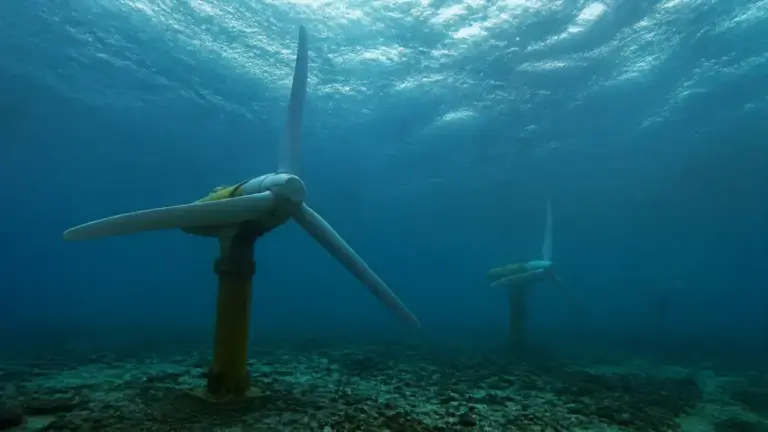
The global quest for carbon neutrality and energy security is driving an engineering renaissance in the world’s most powerful and predictable marine environments. While offshore wind has become a familiar sight on the horizon, a new generation of renewable infrastructure is taking shape beneath the waves. Tidal stream turbines are the cornerstone of this evolution, effectively creating underwater wind farms that harvest the relentless kinetic energy of ocean currents driven by the gravitational pull of the moon and sun. Because seawater is more than 800 times denser than air, these turbines can generate enormous amounts of electricity from relatively small rotor diameters. PowerGen Advancement highlights that for the global energy industry, the predictability and high power density of tidal stream turbines represent a game-changing opportunity to provide reliable, baseload-like renewable power to coastal and national grids.
The evolution of tidal stream turbines is marked by a shift from individual experimental prototypes to large-scale, grid-connected commercial arrays. The technical architecture of these machines has progressed significantly, with designs now optimized for the extreme hydrodynamic loads and corrosive conditions of the deep sea. Horizontal axis tidal turbines (HATT) remain the dominant archetype, featuring two or three high-performance composite blades mounted on a subsea nacelle. These units are typically fixed to the seabed using massive gravity bases, pin piles, or jacket structures. However, as the industry moves into deeper waters and higher-velocity channels where surface currents are strongest, we are seeing the rise of floating tidal platforms, which simplify maintenance and access by keeping the power generation and control equipment near the water’s surface.
The Challenge of Predictability and High Power Density
One of the most profound advantages of tidal stream turbines is their near-100% predictability centuries in advance. Unlike wind and solar, which are subject to the vagaries of the weather and require massive battery backup, tidal flows are governed by celestial mechanics. This allows grid operators to forecast energy production with extreme accuracy, making tidal power an ideal foundation for maintaining grid stability and meeting peak demand. The high power density of the resource also means that tidal stream turbines can achieve high capacity factors, typically ranging from 35% to 50%, which is significantly higher than most terrestrial renewable sources and comparable to some fossil fuel plants.
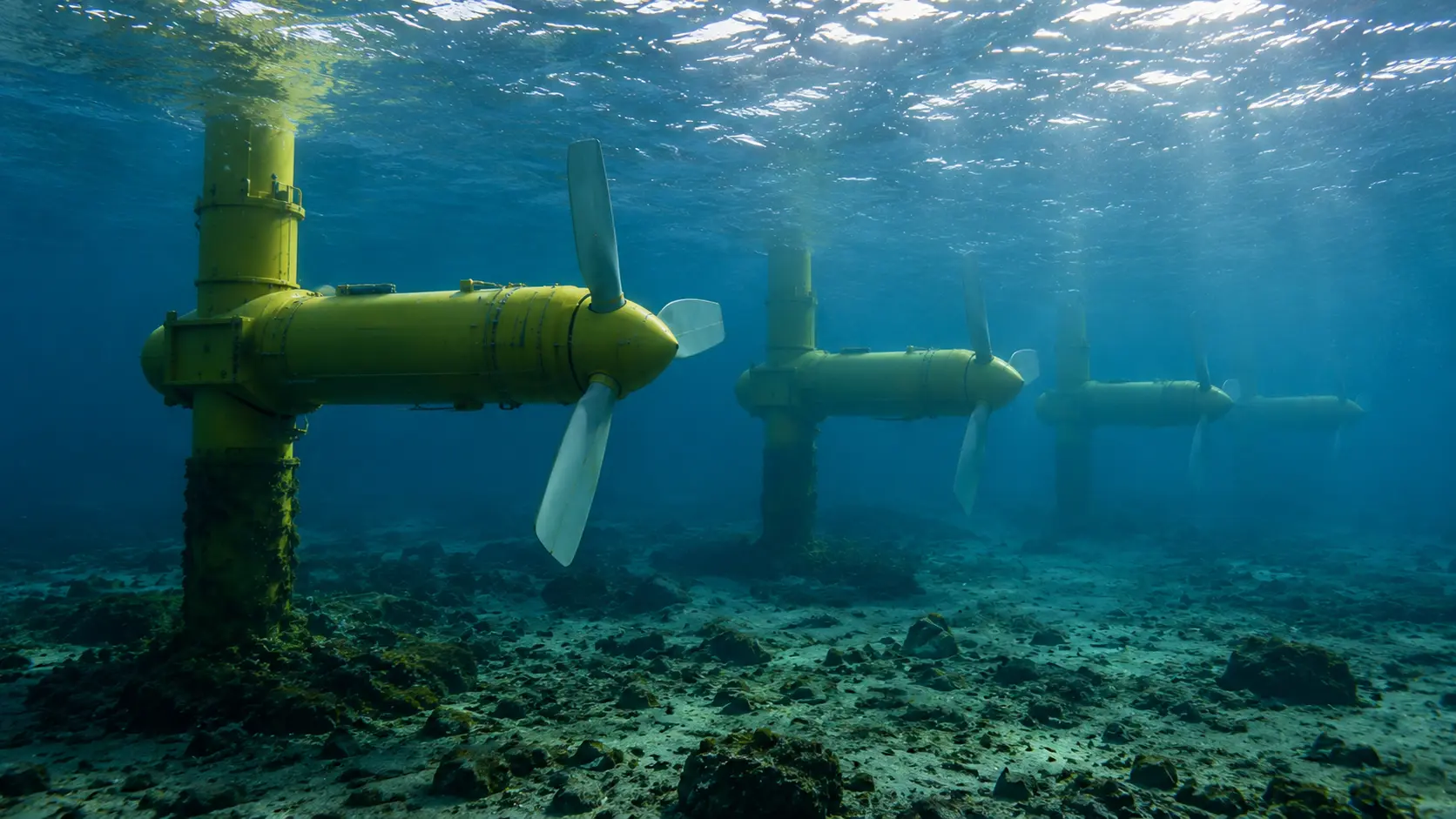
Technically, tidal stream turbines must manage the extreme forces generated by fast-moving water. The power available in a tidal stream is proportional to the cube of the velocity, meaning that a small increase in flow speed leads to a massive increase in power output and structural stress. Modern turbines utilize active variable-pitch blade systems to manage these loads, dynamically adjusting the angle of the blades in real-time to optimize energy capture in low flows and shed excess load during peak spring tides. This active load management is essential for protecting the gearbox, bearings, and generator from torque ripples and sudden load spikes caused by turbulence and wave-current interactions.
Subsea Infrastructure and Power Export Logistics
Building an underwater wind farm requires more than just the turbines; it necessitates a robust and resilient subsea infrastructure that can survive for 20 to 25 years. Tidal stream turbines must be connected to the grid through a complex network of subsea cables, collection hubs, and transformer modules. The logistics of installing and maintaining this equipment are among the most challenging in the entire energy sector. Operations are strictly limited by narrow slack water windows—the brief 20- to 45-minute period between ebb and flood tides when the current is slow enough for safe vessel intervention and ROV operations.
Innovation in subsea cabling and connectors is a critical focus for the industry. Dynamic power cables and wet-mateable subsea connectors are being developed to withstand millions of flex cycles in high-energy marine environments and to allow for the rapid connection and disconnection of turbines without the need for expensive dry-docking. By utilizing subsea power hubs, multiple tidal stream turbines can be linked to a single high-voltage export cable, significantly reducing the cost and complexity of the Balance of Plant (BoP). These technological advancements are essential for bringing the Levelized Cost of Energy (LCOE) of tidal power down to competitive levels, comparable to other offshore renewables.
Environmental Stewardship and Marine Biodiversity
As the industry scales to large underwater farms, the ecological impact of tidal stream turbines is under intense scrutiny. Proving that these machines can coexist safely with marine life is essential for securing long-term social and regulatory licenses. Modern arrays are equipped with a suite of monitoring technologies, including multibeam sonar, passive acoustic monitoring (PAM), and high-definition optical cameras. AI-driven vision systems are used to track the movement of marine mammals and diving birds, providing the data needed to assess collision risks accurately.
Real-world data from pioneer projects like MeyGen in Scotland have shown that marine mammals actively avoid the rotating blades, and no significant negative impacts on local populations have been recorded. Furthermore, tidal stream turbines can serve as artificial reefs, providing new habitats for benthic organisms and stimulating local biodiversity. By integrating these environmental considerations into the design and operation of underwater farms, the tidal sector is demonstrating that it can provide clean, renewable power while protecting the health and diversity of the oceans.
Digitalization, Digital Twins, and AI Integration
The future of tidal stream turbines is being defined by digitalization and the integration of industrial AI. Digital twin technology is now being used to model the performance of entire underwater farms in real-time. By integrating sensor data from the turbines—including blade strain, vibration, thermal profiles, and acoustic emissions—with high-resolution hydrodynamic models, operators can predict component wear and optimize maintenance schedules with extreme precision. AI-driven predictive control can even sense incoming flow fluctuations 100 meters upstream, allowing the turbine to adjust its pitch and torque proactively to maximize yield and minimize structural fatigue.
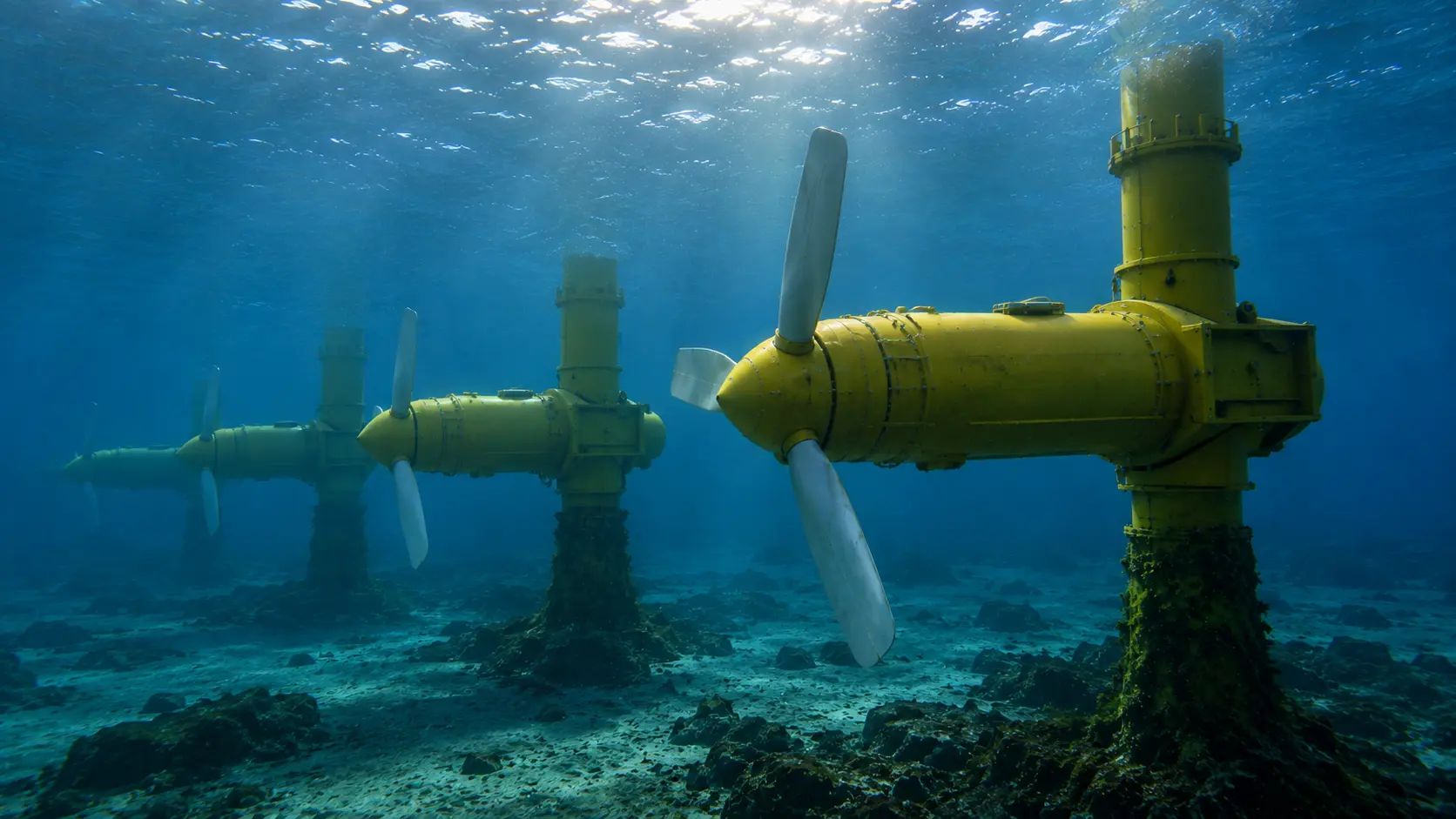
Furthermore, tidal stream turbines are increasingly being explored for dual-use applications and hybrid energy systems. In remote coastal and island regions, they can be integrated with battery energy storage systems (BESS) to create stable, carbon-free microgrids, providing energy security for communities that currently rely on expensive diesel imports. In other cases, tidal power is being used to drive subsea electrolyzers for green hydrogen production, bypassing the bottlenecks of the onshore electrical transmission grid and providing a versatile energy carrier for the transport and industrial sectors. These innovative configurations ensure that tidal stream energy can play a versatile and leading role in the global energy transition.
Strategic Takeaways for Underwater Renewable Farms
The evolution of tidal stream turbines represents a major milestone in the diversification and stabilization of the global renewable energy portfolio. For energy companies and policymakers, the key to success lies in scaling the technology and building a resilient, specialized marine supply chain.
Tidal stream turbines offer a powerful, 100% predictable, and high-density renewable energy resource that is uniquely suited for providing long-term grid stability and reducing carbon emissions. PowerGen Advancement believes that by evolving from individual prototypes to integrated, multi-megawatt underwater wind farms, the industry is demonstrating that the ocean’s kinetic energy can be harvested at scale with high reliability. The success of this transition depends on the continued refinement of active variable-pitch control, the development of robust subsea export infrastructure, and the adoption of AI-driven digital twins for asset management.
To achieve commercial competitiveness and grid parity, stakeholders must prioritize the standardization of turbine designs and the modernization of marine logistics. The move toward floating platforms, modular subsea systems, and hybrid energy islands is a significant step in reducing both OPEX and CAPEX. As the industry matures and the global market for marine renewables expands, those who lead in the deployment of tidal stream turbines will be the ones who define the future of predictable, clean, and reliable power in the 21st century.