Mining operations are becoming increasingly dependent on reliable connectivity as more equipment, sensors and operational systems become digitally connected. Autonomous machines, remote-controlled equipment, industrial cameras and monitoring systems all generate continuous data that needs to move across large and often difficult operating environments.
This is making private 5G mining increasingly relevant as mines look for connectivity infrastructure that can support multiple operational applications at the same time. Unlike conventional wireless systems designed primarily for general connectivity, private cellular networks can be configured around the coverage, performance, security and traffic requirements of a specific mine.
Connectivity is Becoming Critical Infrastructure
The need for stronger connectivity is particularly evident in large and complex mining environments. Open-pit operations can cover extensive areas, while underground mines introduce tunnels, changing layouts and difficult radio conditions. As automation expands, connectivity interruptions can affect not only communications but also remote equipment operation, machine coordination and access to real-time operational information.
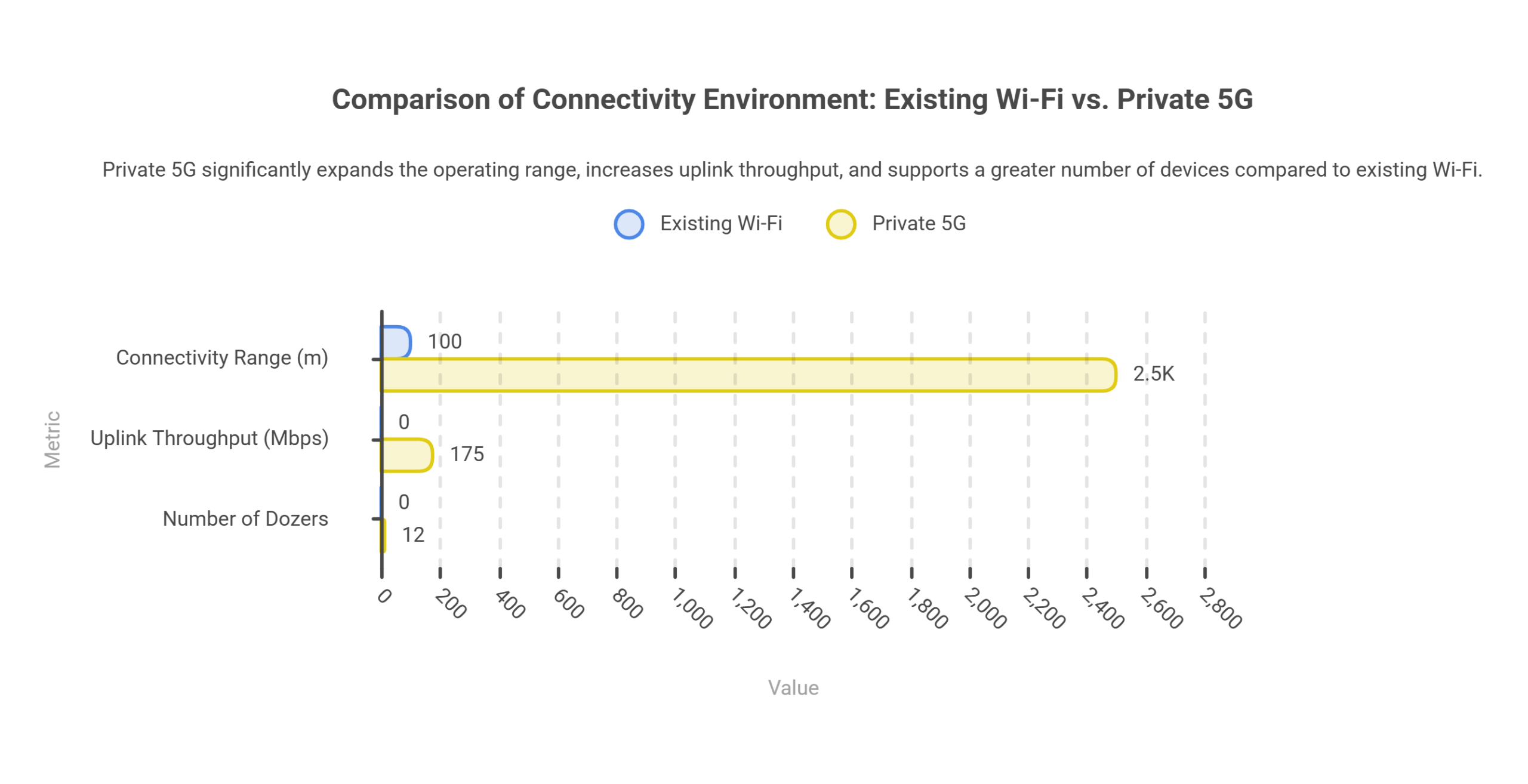
Private 5G provides a dedicated network environment that can combine wide-area coverage with controlled performance. In a documented remote-dozing deployment, an existing Wi-Fi network struggled to reliably connect more than two machines at distances of around 100 metres. A private 5G deployment subsequently provided coverage across up to 2.5 kilometres from a single radio, with uplink throughput of up to 175 Mbps in the reported configuration.
The difference illustrates why private 5G mining is increasingly being considered as operational infrastructure rather than simply another wireless connectivity option. Wider coverage and greater uplink capability can support applications that depend on continuous data exchange, particularly where moving or expanding physical network infrastructure is difficult.
Connected Equipment is Raising Network Requirements
The growth of autonomous and remotely operated equipment is increasing the amount and importance of data moving across mining sites. Machines can require connectivity for control signals, telemetry, video feeds, positioning, fleet coordination and equipment monitoring. Sensors add further streams of environmental and operational information.
A single network may therefore need to support several applications with different performance requirements. Remote operation can depend on predictable latency and stable uplink capacity, while monitoring systems may generate large volumes of sensor and video data.
This broader requirement is helping position private 5G mining within the development of connected mine infrastructure. The network becomes a common layer connecting machines, sensors and computing resources rather than serving one individual application.
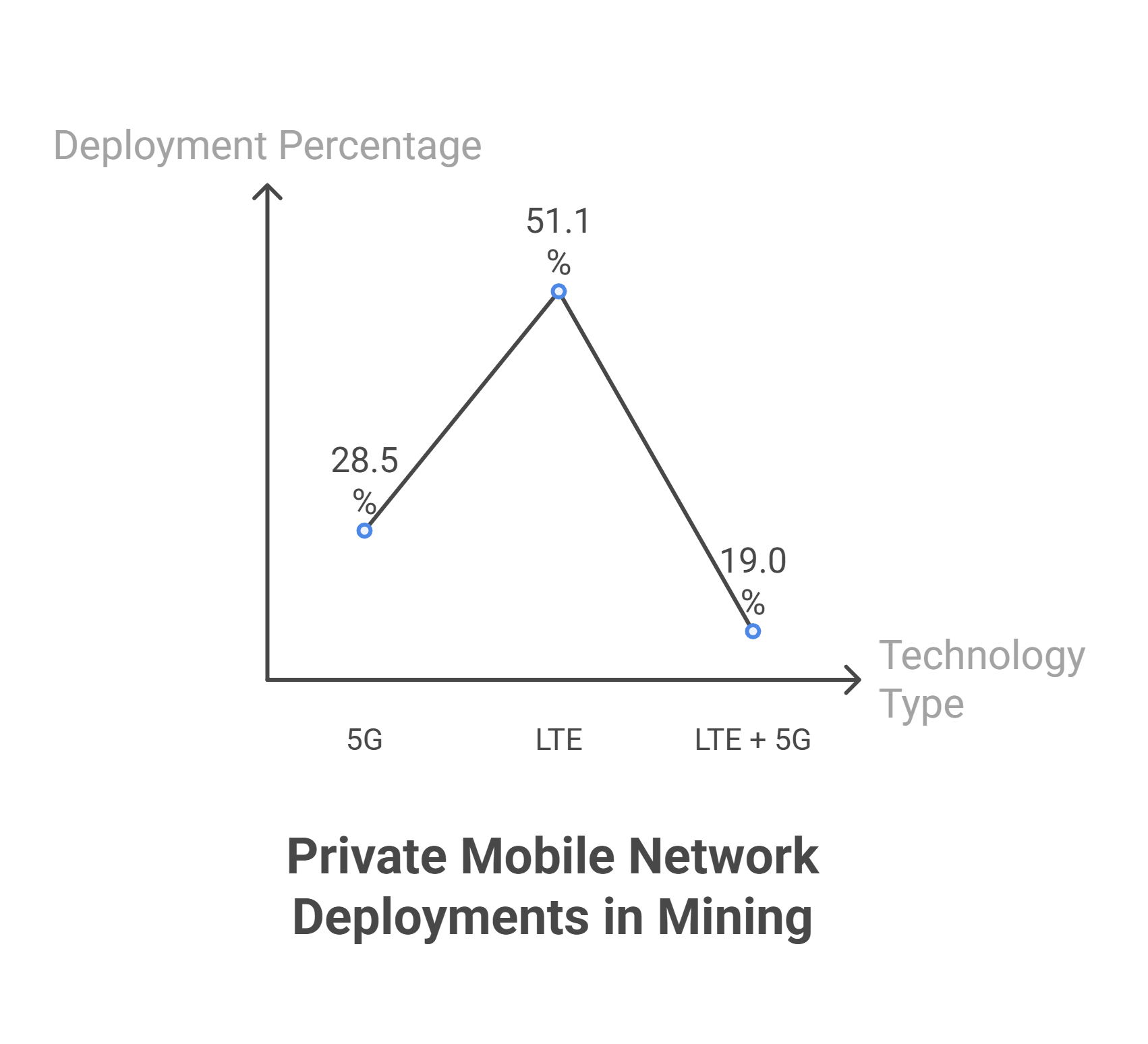
The industry is still transitioning, however. Global private mobile network data recorded 134 mining deployments among 1,846 private network customers across 80 countries in August 2025, showing that adoption is established but still developing. The installed base also included substantial LTE and hybrid deployments, indicating that 5G is evolving alongside existing technologies rather than replacing them immediately.