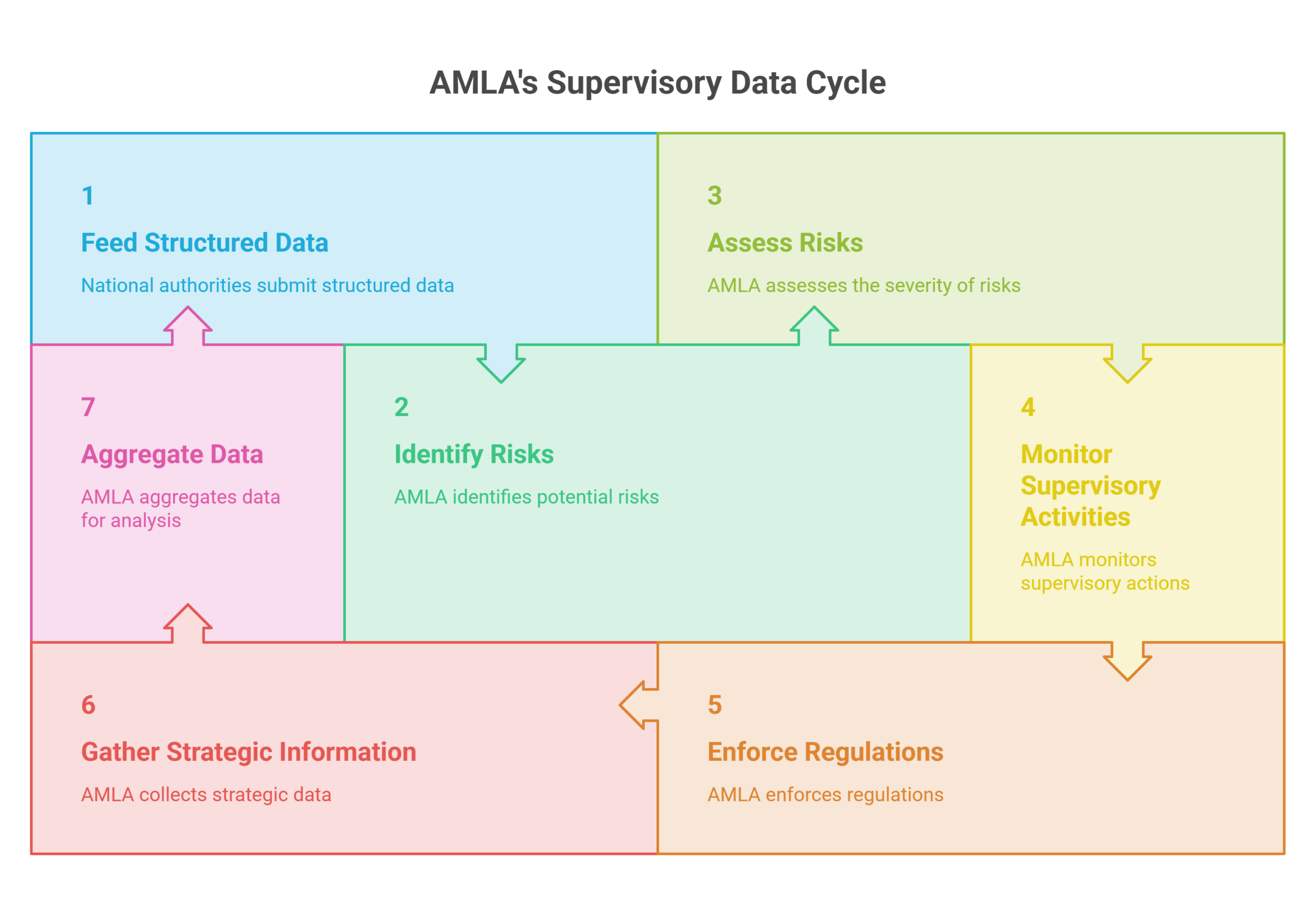
The European Union’s new anti money laundering framework is placing greater emphasis on the quality, consistency and accessibility of data used by supervisors. As the Authority for Anti Money Laundering and Countering the Financing of Terrorism prepares for direct supervision, data is moving beyond a reporting requirement and becoming part of the infrastructure through which risks will be identified, compared and acted upon.
This makes AML data infrastructure increasingly important to the future of European supervision. AMLA’s planned data ecosystem includes structured information from national supervisory authorities, information held in existing systems and additional intelligence that can support a broader understanding of money laundering and terrorist financing risks. Its central AML/CFT database is intended to support risk identification, monitoring, enforcement and cross-border supervisory analysis.
Data is Moving into the Centre of Risk Assessment
The transition is already visible in AMLA’s 2026 data collection exercise. The exercise is designed to test and calibrate risk assessment models that will support consistent supervisory assessments across the EU and help select up to 40 financial institutions or groups for direct supervision beginning in 2028. National supervisors and selected institutions are therefore contributing to a common data framework before the new supervisory model becomes operational.
This creates a direct connection between data and supervisory decisions. AML data infrastructure will help determine how information from different institutions and jurisdictions can be structured into comparable indicators, allowing supervisors to assess risk using a common methodology rather than relying entirely on nationally developed approaches.
Standardisation is becoming particularly important because supervisory data can vary significantly in format, scope and quality. AMLA and European authorities are developing reporting templates, data models, taxonomies and validation rules to create a more consistent reporting environment. The updated 2027 taxonomy is also being refined to distinguish unavailable information from an actual reported zero, illustrating how seemingly small data quality issues can affect the interpretation of supervisory information.