
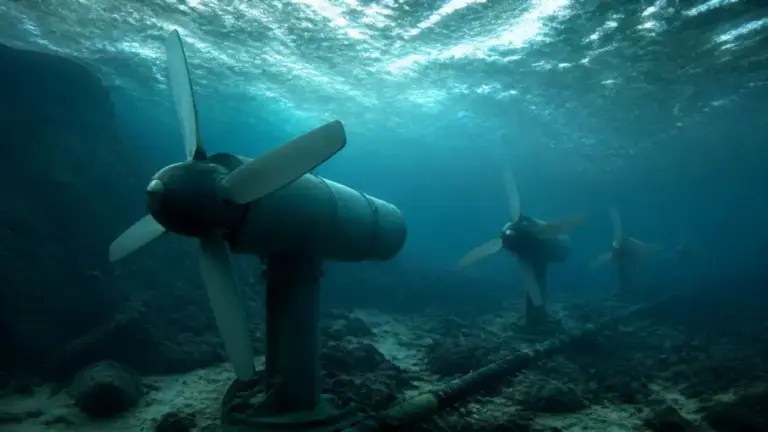
The global transition to renewable energy is increasingly focusing on the predictable and powerful resource of tidal currents. Unlike wind and solar, which are subject to the vagaries of the weather, tidal energy is governed by celestial mechanics, offering a level of reliability and predictability that is unique in the renewable landscape. However, the environments where tidal streams are strongest, such as narrow channels, coastal straits, and deep-water passages, are also characterized by extreme turbulence, high shear flows, and complex wave-current interactions. To maximize energy extraction while ensuring the structural longevity of expensive subsea assets, the industry is turning to AI in tidal energy. PowerGen Advancement notices that by integrating advanced predictive control architectures, tidal turbine operators can optimize performance in real-time, mitigate structural fatigue, and provide the precise forecasting needed for seamless grid integration.
The technical core of AI in tidal energy is the transition from reactive to proactive turbine control. Traditional control systems rely on feedback loops that respond to changes in flow after they have already affected the turbine. In contrast, predictive control systems use AI to see the incoming flow. By leveraging data from Acoustic Doppler Current Profilers (ADCPs) and continuous-wave LiDAR, these systems can sense velocity fluctuations and turbulence intensity 30 to 100 meters upstream. This provides a critical 2- to 10-second preview window, allowing the AI to execute feedforward pitch and torque adjustments that align the turbine’s blades with the incoming flow before the load hits the structure. This not only maximizes the power coefficient (Cp) but also significantly reduces the damaging torque ripples and bending moments that accelerate component fatigue.
Model Predictive Control and Machine Learning Synergy
The implementation of AI in tidal energy often utilizes Non-linear Model Predictive Control (NMPC). This architecture uses a high-fidelity mathematical model of the turbine and its hydrodynamic environment to calculate the optimal control actions over a future time horizon. When combined with machine learning, these models can become self-learning, adapting to the unique and non-stationary flow dynamics of a specific site. For instance, Temporal Convolutional Networks (TCNs) and Long Short-Term Memory (LSTM) networks can be trained on historical flow and performance data to predict short-term tidal velocity with unprecedented accuracy, allowing the NMPC to optimize power output even in the presence of complex, multi-scale turbulence that traditional models struggle to capture.
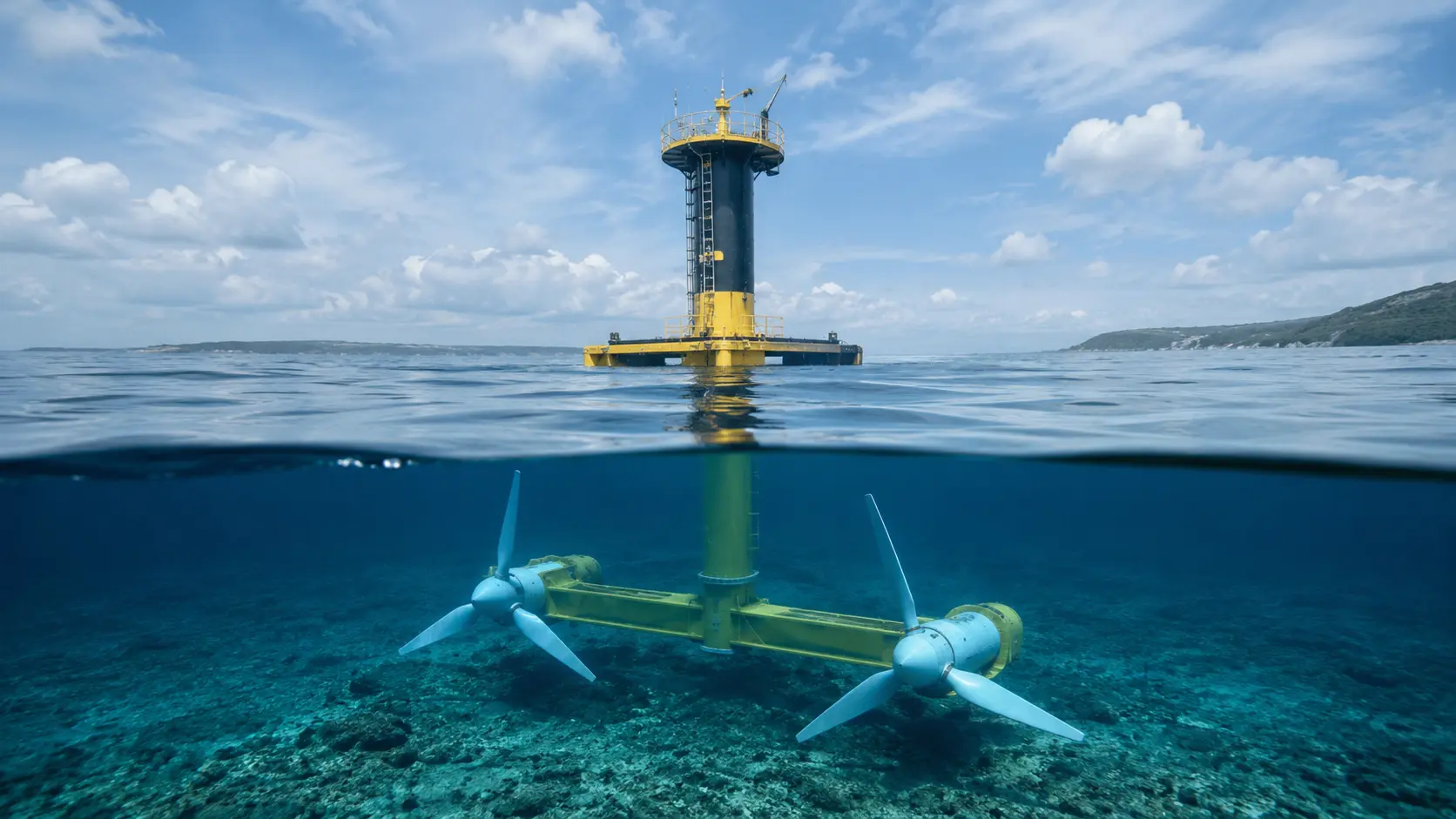
Moreover, the use of Physics-Informed Neural Networks (PINNs) ensures that the AI’s predictions are always grounded in the physical reality of fluid dynamics and structural mechanics. By embedding the Navier-Stokes equations and material fatigue laws into the neural network’s training process, developers can create AI models that are both flexible and robust. In the context of AI in tidal energy, this means the system can accurately predict how a turbine will respond to a rogue wave or a sudden shift in current direction, even if it has never encountered that exact scenario before. This level of physical grounding is essential for maintaining the safety and bankability of subsea infrastructure, where unplanned maintenance costs can be astronomical.
Condition Monitoring and Predictive Rail Maintenance
Beyond operational control, AI in tidal energy is revolutionizing the field of asset integrity management. Maintaining turbines on the seabed or on floating platforms is an expensive and logistically challenging task, often requiring specialized DP vessels and narrow slack water windows. Predictive maintenance (PdM) powered by AI allows operators to detect subtle signs of degradation long before a functional failure occurs. By analyzing high-frequency vibration data, acoustic emissions, and motor current signatures (MCSA), deep learning models can identify the early onset of bearing race spalling, blade leading-edge erosion, or generator winding insulation breakdown.
Furthermore, AI-driven digital twins provide a real-time representation of the turbine’s structural health and hydrodynamic efficiency. By comparing the actual performance of the turbine with the AI’s ideal digital twin, operators can identify biofouling accretion or sensor drift that might be reducing efficiency. This allows for the precise scheduling of maintenance interventions, ensuring that divers and service vessels are only deployed when absolutely necessary. In a sector where operational expenditure (OPEX) is a major component of the Levelized Cost of Energy (LCOE), the ability to reduce unplanned downtime and optimize component life through AI in tidal energy is a critical driver of commercial success.
Multi-Agent Systems and Array-Scale Optimization
As tidal energy moves toward multi-turbine arrays, the complexity of control increases exponentially. Individual turbines in an array can impact each other through wake interactions, where the slowed and turbulent water from an upstream unit reduces the energy available to those downwind. AI in tidal energy addresses this through Multi-Agent Reinforcement Learning (MARL) for dynamic array wake steering. By treating the entire array as a single, intelligent system, MARL can coordinate the pitch and yaw of individual turbines to minimize wake-deficit losses and maximize the total yield of the site.
This farm-scale optimization is essential for reaching grid parity. By using AI to balance the structural loads across the entire fleet, operators can ensure that all turbines reach their design life simultaneously, rather than having a few units fail early due to excessive turbulence exposure. Furthermore, the integration of array-scale AI allows for more efficient grid management, providing a smoothed power output that is easier for utility companies to integrate into the national energy mix. This smart farm approach is the definitive future of the tidal energy sector.
Environmental Monitoring and Wildlife Protection
An often-overlooked but vital application of AI in tidal energy is its role in environmental compliance and ecological stewardship. To obtain the necessary permits for large-scale arrays, developers must prove that their turbines do not pose a significant risk to marine megafauna, such as seals, dolphins, and harbour porpoises. AI-powered multi-sensor fusion systems now combine multibeam sonar, hydrophones, and optical cameras to track marine life in real-time. Computer vision algorithms can classify species and predict their trajectories as they approach the turbine. If a risk of collision is detected, the AI can trigger an adaptive velocity throttling or a temporary shutdown, protecting the local ecosystem without permanently halting power production.
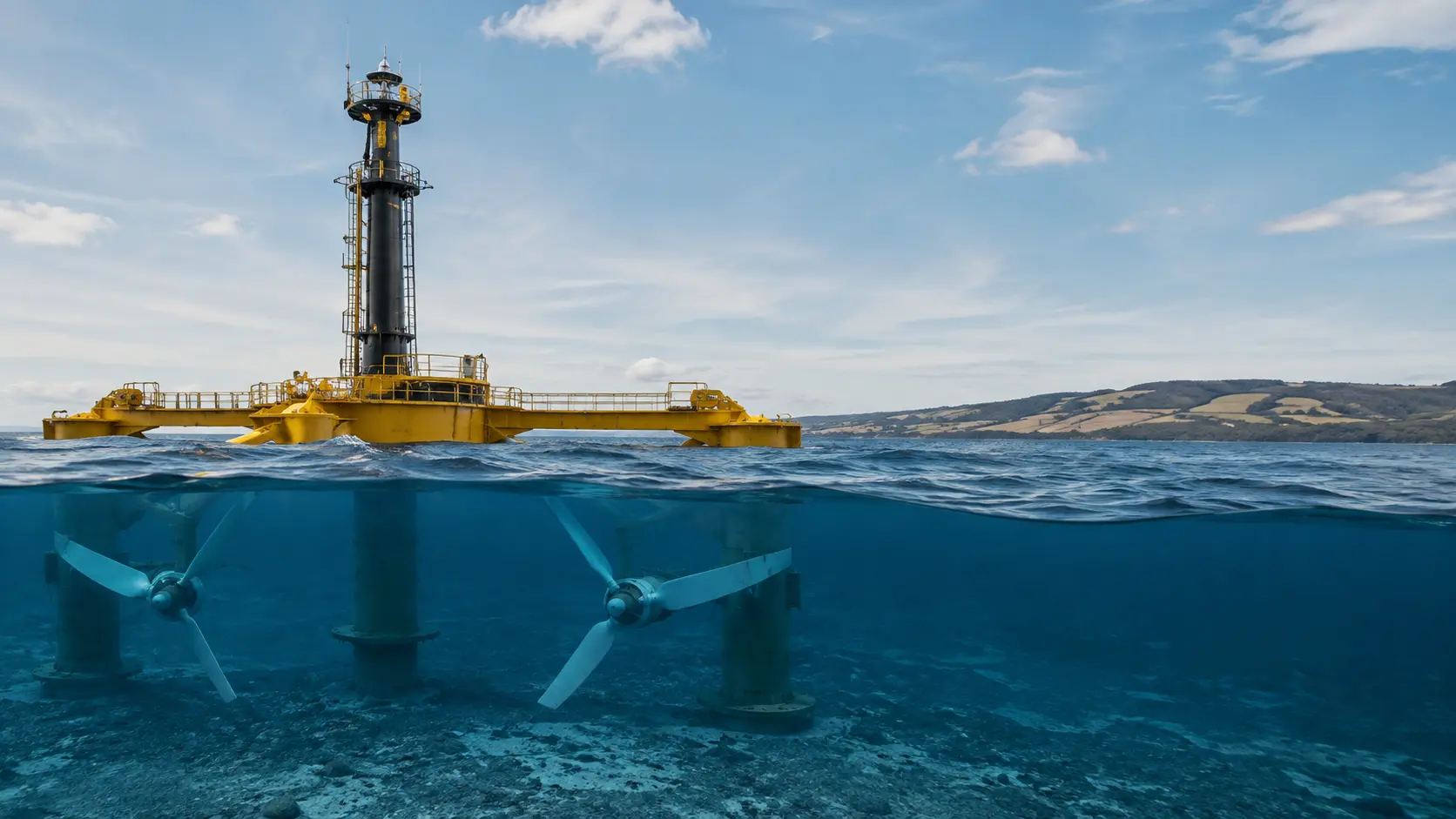
As the industry scales, the ability to automate this environmental monitoring using AI will significantly reduce the cost of compliance and build public trust in marine renewables. By demonstrating that tidal energy can coexist safely with marine life, AI in tidal energy is helping to secure the social license to operate in sensitive coastal environments. The combination of technological efficiency and environmental responsibility is the hallmark of the next generation of marine power systems.
Strategic Takeaways for Smart Marine Power
The integration of AI and predictive control is no longer an optional enhancement for tidal energy; it is a fundamental requirement for the sector’s maturity and economic competitiveness. For the power industry, the goal is to create a marine energy asset that is as reliable, manageable, and safe as a traditional power plant.
AI in tidal energy provides the essential tools needed to navigate the extreme and unpredictable conditions of high-flow marine environments. PowerGen Advancement notes that by integrating NMPC, PINNs, and multi-sensor fusion, the industry can optimize turbine performance, extend asset life, and ensure environmental safety. The success of this transition depends on the development of robust, edge-capable AI hardware that can operate reliably in the harsh subsea environment for decades.
To lead in the next generation of renewable power, stakeholders must prioritize the collection of high-quality operational data and the development of interoperable digital standards for the marine energy sector. The move toward AI-driven tidal arrays requires a new level of collaboration between hydrodynamicists, data scientists, and control engineers. PowerGen Advancement believes that by investing in AI in tidal energy today, the industry can secure a predictable and powerful source of renewable electricity that is ready to play a leading role in the global energy transition, providing a resilient and sustainable power source for the future.