
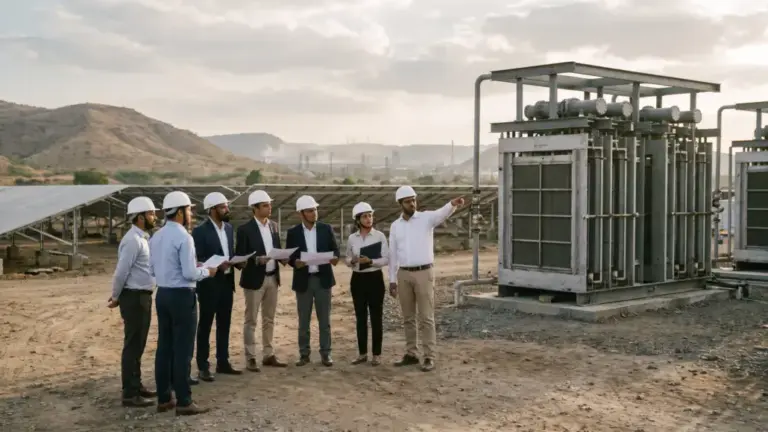
The global energy landscape is witnessing a historic pivot, and green hydrogen investment in India is at the very center of this transition. As investors worldwide look for long-term, sustainable assets, India has emerged as one of the most attractive destinations for clean energy capital. This surge in interest is not merely speculative it is grounded in the country’s low-cost renewable energy potential, a supportive policy framework, and a massive domestic market for industrial decarbonization. The investment trends we are seeing today indicate a shift from cautious exploration to significant, multi-billion-dollar commitments. From large-scale industrial conglomerates to international private equity firms, the diversity of players entering the market is creating a dynamic environment where financial innovation meets technological maturity. These investments are not just funding projects they are reshaping the entire economic structure of India’s energy sector, paving the way for a resilient and carbon-neutral industrial future.
The Influx of Private Equity and Global Sovereign Funds
A defining trend in green hydrogen investment in India is the active participation of global private equity (PE) firms and sovereign wealth funds. These institutional investors, often with long-term horizons, are increasingly viewing green hydrogen as the next frontier after solar and wind power. We are seeing a pattern where these funds partner with established Indian energy developers to de-risk projects and provide the necessary equity for large-scale implementations. This capital is crucial for covering the high initial costs associated with electrolyser plants and specialized infrastructure. The involvement of these sophisticated investors also brings in global best practices in project management, ESG (Environmental, Social, and Governance) reporting, and financial structuring, which further enhances the overall bankability of the Indian market.
The Catalyst Effect of Government Incentives and PLI Schemes
The momentum behind green hydrogen investment in India has been significantly amplified by the government’s strategic interventions. The National Green Hydrogen Mission and the associated Production Linked Incentive (PLI) schemes for electrolyser manufacturing and hydrogen production have created a strong “pull” effect for capital. By providing direct financial support and tax exemptions, the government is effectively lowering the barrier to entry for domestic and international firms. These incentives act as a signal to the market that the state is fully committed to the hydrogen economy, reducing the perceived regulatory risk. For many investors, the availability of these incentives is the deciding factor that tips the scale in favor of committing resources to Indian projects over other competing global markets.
Corporate Sustainability Goals as Investment Drivers
For many large Indian corporations and multinational companies operating in the country, green hydrogen investment in India is a strategic necessity driven by internal sustainability targets. As global supply chains face increasing pressure to report and reduce their Scope 3 emissions, companies in the steel, cement, and chemical sectors are investing in green hydrogen to future-proof their operations. This “captive investment” model, where the consumer is also a part-owner of the production facility, ensures a guaranteed offtake and reduces market price volatility. These corporations are often willing to accept a longer payback period in exchange for the long-term energy security and brand value that comes with being a first-mover in the clean energy space. This trend is creating a decentralized investment landscape where localized production-consumption hubs are thriving.
The Shift from Pilot Projects to Commercial Scale
One of the most promising trends in green hydrogen investment in India is the transition from small-scale feasibility studies to large, commercial-scale ventures. In the early part of the decade, most investments were directed toward research and development or small pilot plants. Today, the scale has changed drastically, with projects now aiming for hundreds of megawatts and eventually gigawatt-scale capacity. This scaling is a clear indication of the growing confidence in the technology’s reliability and the market’s depth. Larger projects allow for better economies of scale, driving down the unit cost of hydrogen and making it more competitive with fossil fuels. For investors, this shift represents a move toward more predictable cash flows and a clearer path to profitability, which in turn attracts even more conservative debt financing.
The Role of Green Bonds and Sustainable Finance Instruments
As the market matures, the financing mechanisms for green hydrogen investment in India are becoming more sophisticated. There is a growing trend toward the use of green bonds and sustainability-linked loans, which offer lower interest rates for projects that meet specific environmental criteria. These instruments allow developers to tap into the global pool of capital dedicated to climate-positive investments. Furthermore, development finance institutions (DFIs) are playing a key role by providing blended finance combining commercial loans with concessional capital to bridge the gap in projects that may still carry significant technical or market risks. This innovative financial layering is essential for making large-scale infrastructure projects viable in an emerging market context, ensuring that the transition is inclusive and financially sustainable.
Strategic M&A and Consolidation in the Hydrogen Sector
A new and significant trend in green hydrogen investment in India is the increase in merger and acquisition (M&A) activity and industry consolidation. As the market becomes more competitive, larger players are acquiring specialized technology startups to gain access to proprietary electrolysis or storage methods. Simultaneously, traditional energy companies are forming strategic alliances with renewable energy developers to create integrated “green energy giants.” This consolidation is a sign of a maturing market where players are looking to build comprehensive, end-to-end capabilities to capture the entire value chain. For investors, this trend offers opportunities for exit strategies through buyouts or initial public offerings (IPOs) as these integrated entities reach commercial scale, further stimulating capital flow into the sector.
The Rise of Dedicated Clean Energy Venture Capital
While large-scale projects attract the bulk of the capital, there is a parallel trend of green hydrogen investment in India flowing through dedicated clean energy venture capital (VC) funds. These funds are focusing on the “early-stage” innovation that will drive the next generation of the hydrogen economy. This includes investments in digital monitoring tools, new catalyst materials, and innovative distribution models. By nurturing a vibrant startup ecosystem, these VC funds are ensuring that India’s hydrogen market remains at the cutting edge of global innovation. For the wider investment community, this provides a pipeline of high-growth opportunities that can eventually be scaled through larger infrastructure funds, creating a healthy and sustainable investment lifecycle.
Managing Geopolitical Risks and Supply Chain Financing
Investment in the hydrogen sector is also being influenced by global geopolitical shifts. Green hydrogen investment in India is often seen as a way for international investors to diversify their clean energy exposure away from other dominant markets. Consequently, we are seeing the emergence of specialized supply chain financing models that help domestic manufacturers scale their operations to meet international demand. These financial tools help manage the risks associated with the long lead times of high-value equipment like electrolysers. By providing working capital and trade finance tailored to the clean energy sector, financial institutions are enabling the domestic manufacturing base to keep pace with the massive capital inflows directed toward production projects.
Future Outlook: Scaling the Investment Frontier
The future of green hydrogen investment in India is bright, with the potential to reach hundreds of billions of dollars over the next two decades. As the technology continues to mature and the global demand for green ammonia and other derivatives grows, India will remain a primary focus for impact investors and institutional capital alike. The ongoing refinement of the regulatory landscape and the development of a domestic carbon market will provide even stronger price signals, further de-risking the environment for long-term commitments. Ultimately, these investment trends are not just about financial returns they are about building a new, sustainable foundation for the Indian economy one that is resilient, prosperous, and leads the world toward a carbon-free future.
The Impact of Global Carbon Taxes on Indian Hydrogen Investment
A significant external factor reshaping green hydrogen investment in India is the introduction of global carbon border adjustment mechanisms (CBAM) and other carbon taxes in key export markets. For Indian industrial players, particularly those in the steel and cement sectors, these taxes act as a powerful incentive to switch to green hydrogen to maintain their export competitiveness. Investors are keenly aware of this shift, as it creates a guaranteed demand for low-carbon products. Consequently, capital is flowing into projects that can demonstrate a clear path to reducing the carbon intensity of industrial outputs. This trend is not just about environmental compliance but about securing market share in a global economy that is increasingly pricing carbon. The convergence of domestic policy and international trade dynamics is creating a robust business case for green hydrogen investment in India, ensuring that the market remains resilient to the changing global regulatory environment.
Conclusion: Transforming Challenges into Capital Opportunities
The landscape of green hydrogen investment in India is a testament to the nation’s ability to transform an environmental challenge into a massive economic opportunity. The synergy between vision, policy, and capital is creating a momentum that is hard to ignore. While challenges remain in terms of cost reduction and infrastructure development, the trend lines are clear: the capital is flowing, the projects are scaling, and the market is maturing. For the savvy investor, India represents a unique combination of scale, speed, and sustainability. As the hydrogen economy continues to reshape the industrial market, it will stand as a model for how emerging economies can lead the global clean energy transition, powered by innovation and a steadfast commitment to a green future, ensuring that the capital invested today generates a legacy of clean energy prosperity.