
Traditional Market Infrastructure Adapting to Digital Assets

0
Traditional Market Infrastructure Adapting to Digital Assets

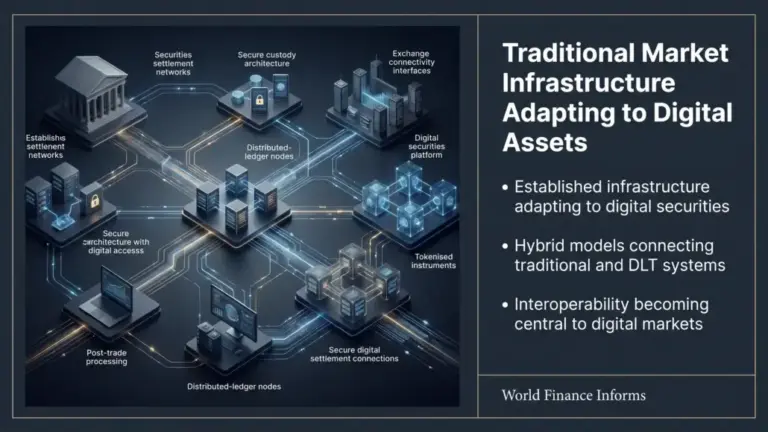
Traditional market infrastructure is increasingly being adapted to accommodate digital securities as financial institutions move DLT-based issuance and settlement beyond isolated experiments. The development is significant because digital assets still depend on established market functions, including issuance, custody, settlement, asset servicing and access to liquidity. The emerging direction is therefore less about replacing conventional infrastructure and more about enabling established operators to support digital securities within regulated financial markets.

Digital Securities Moving into Established Market Structures

The shift is becoming visible across several major markets. AFME recorded €4.8 billion of global DLT-based fixed-income issuance in 2025, up 48% from the previous year, indicating that activity is expanding from a relatively small base. Asia accounted for the largest share, while European and other markets also recorded issuance. At the infrastructure level, firms are responding by developing hybrid models that connect digital securities with established post-trade capabilities, rather than requiring investors to move entirely into separate digital ecosystems.
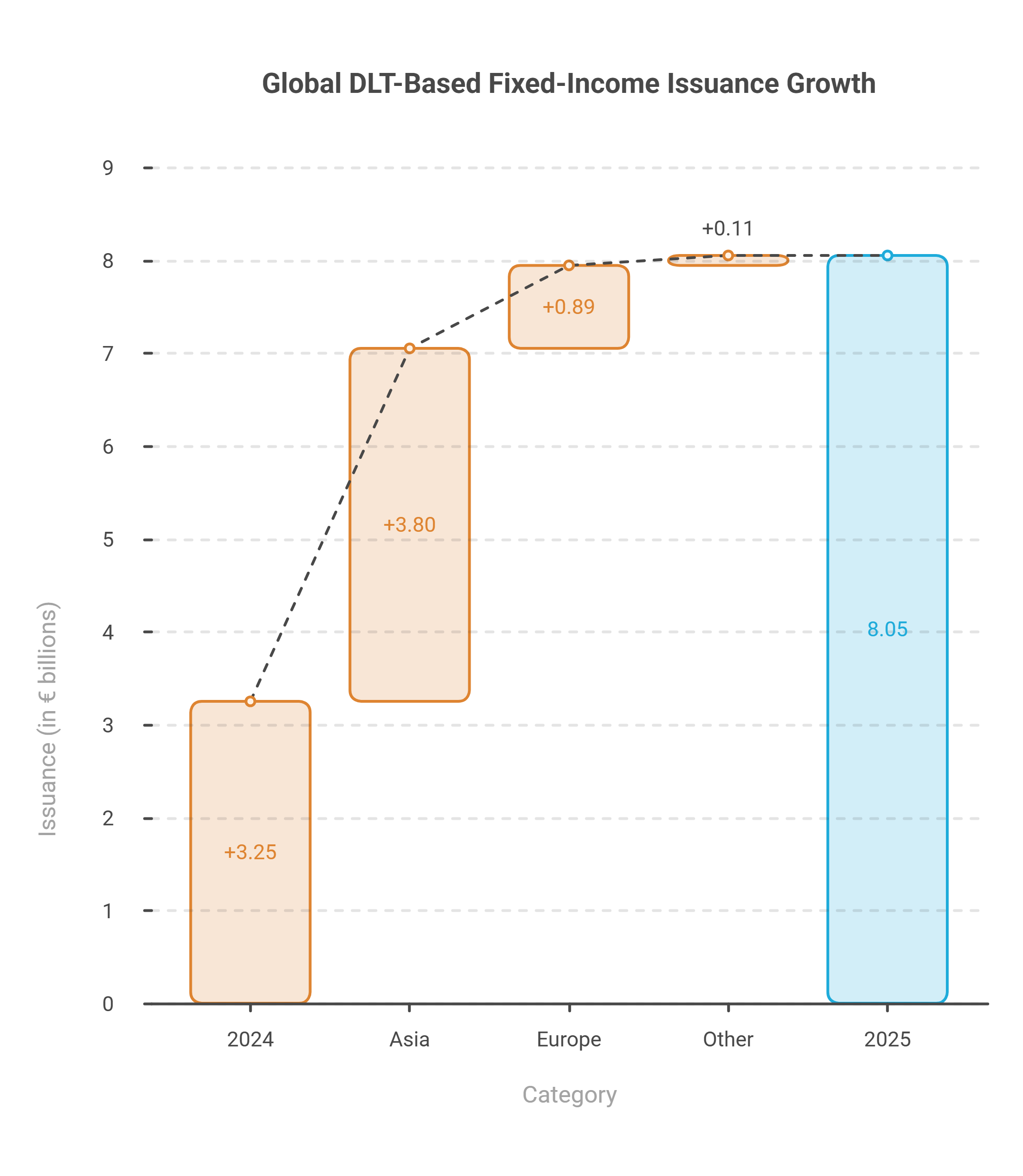
Growing global DLT-based issuance is increasing the need for market infrastructure capable of supporting digital securities alongside established post-trade systems.

The response from market infrastructures is not uniform, but the direction is increasingly consistent. CSDs and other post-trade operators are adding DLT capabilities, connecting digital issuance platforms to conventional settlement environments and examining how custody and asset servicing should work for digital instruments. This makes traditional market infrastructure a critical part of the digital-asset transition, because wider adoption depends on digital securities functioning reliably within the broader financial system.

As traditional market infrastructure adapts to these new instruments, the next question is how those digital securities can be incorporated into collateral and financing markets, creating a natural connection to digital securities entering established post-trade infrastructure.

Traditional and Digital Infrastructure Converging

The development of traditional market infrastructure is increasingly taking the form of hybrid operating models rather than entirely separate digital networks. Market infrastructures are connecting DLT-based issuance and settlement with established custody, account structures and secondary-market processes, allowing participants to access digital securities without rebuilding every post-trade function around new technology. Euroclear’s D-FMI, for example, connects its DLT environment with the traditional Euroclear Bank settlement platform for secondary-market activity, preserving access to existing market infrastructure and liquidity.

This approach is also becoming visible through broader infrastructure programmes. Clearstream’s digital securities initiative is designed to handle traditional and tokenised securities within a single hybrid environment across issuance, distribution, settlement, custody and asset servicing. SIX has similarly integrated its SDX digital infrastructure into its wider securities services business after SDX issued more than CHF 1.5 billion of digital assets.

Regulation Supporting Infrastructure Integration

The regulatory landscape is developing alongside these infrastructure models. ESMA’s January 2026 register listed six authorised DLT market infrastructures operating under the EU DLT Pilot Regime, covering DLT settlement systems, trading venues and combined trading and settlement structures. The permissions and exemptions attached to these infrastructures show how existing requirements around settlement finality, asset segregation, cash settlement and market access are being adapted to different DLT operating models.

For traditional market infrastructure, the challenge therefore extends beyond adopting DLT technology itself. Operators need to establish how digital instruments can move between different platforms, how legal ownership and settlement finality are maintained, and how participants can continue using established custody and settlement relationships. Interoperability becomes particularly important as multiple digital networks emerge, because fragmented systems could create new operational silos rather than removing existing ones. Clearstream has identified interoperability between digital and traditional markets as a central requirement for its hybrid infrastructure model.

The resulting transition is creating a financial market architecture in which traditional market infrastructure remains central, but its technological foundations are becoming more flexible.

Infrastructure Integration Shaping Digital Market Development

The next stage of digital-asset adoption will depend on how effectively new platforms connect with established market processes. Questions around settlement finality, interoperability, custody and regulatory treatment remain important as institutions move from individual pilots toward broader market use. This means traditional market infrastructure is likely to remain part of the transition, while its systems and operating models continue adapting to accommodate digital securities.

The wider development points toward a market structure where digital and conventional infrastructure increasingly operate alongside each other, with greater emphasis on connectivity, operational compatibility and regulatory clarity.