
Bone health has no shortage of effective drugs. Bisphosphonates, denosumab and bone-building agents all have strong trial data behind them. Yet most patients who break a hip never start any of them. For an industry that measures success in patient outcomes, that gap is hard to ignore.
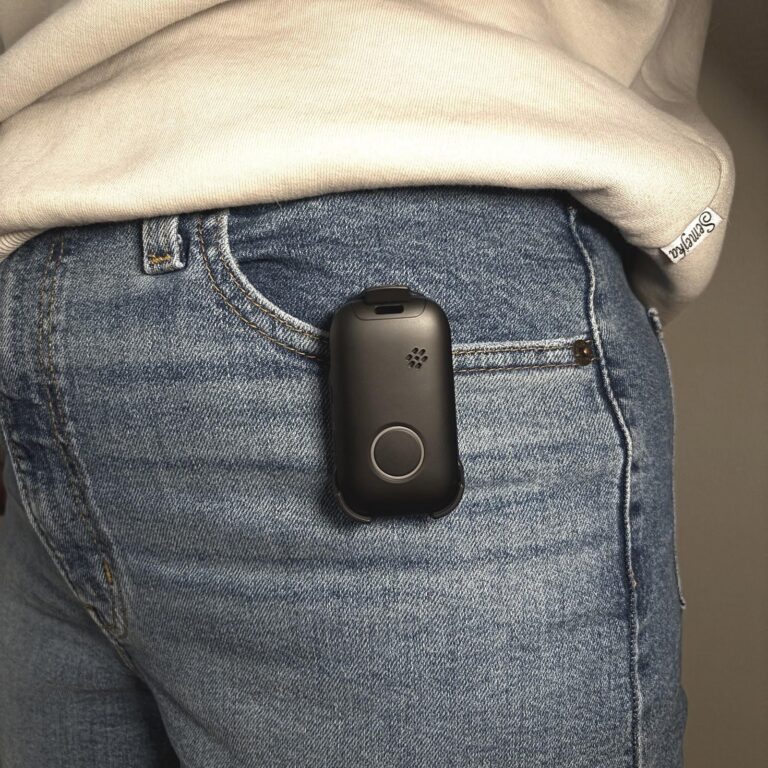
Alt text: A black Premium Mobile Plus alert device with a round help button clipped to the front pocket of blue jeans below a cream sweatshirt
The weeks after discharge are where the gap shows up most clearly. A patient leaves the orthopedic ward with a repaired hip, a walker and often no bone treatment plan. Some go home alone, and families often add portable personal alarm systems to cover the first months of recovery. The bigger question is why the underlying disease so often goes untreated.
A short note on the linked service. Life Assure, the alarm company behind that link, accepts only customers resident in Canada. Readers elsewhere would need written confirmation from the company before relying on it.
What Does the Treatment Gap Look Like In Canada?
The problem is global. The International Osteoporosis Foundation says 1 in 3 women and 1 in 5 men over age 50 will have an osteoporotic fracture. In Europe, the treatment gap averaged 71% in 2019, and 15 million eligible women went untreated.
Canada offers a clear case study. Osteoporosis Canada reports that more than 2.3 million Canadians live with the disease. Osteoporosis causes 70% to 90% of the country’s 30,000 hip fractures each year.
The outcomes after a hip fracture are severe. The same source reports that 22% of women and 33% of men die within one year. One in three hip fracture patients will fracture again within a year.
Treatment rates have not kept pace. Fewer than 20% of fracture patients in Canada are diagnosed or adequately treated for osteoporosis. About 80% of patients with a history of fractures are not given osteoporosis therapies. After a common osteoporotic fracture, less than 10% of Canadians aged 40 and older had a bone density test.
The cost side is just as stark. Osteoporosis Canada puts the average first-year cost to the health system after a hip fracture at CAD 63,649. For patients who cannot return home and need long-term care, that figure rises to CAD 125,085. Osteoporotic hip fractures also use more hospital bed days than stroke, diabetes or heart attack.
Why Do So Few Patients Start Therapy After a Fracture?
The reasons are mostly about handoffs, not science. Several steps have to go right, and each one can slip.
- The fracture is treated as an accident. Surgeons fix the bone, but no one may ask why a fall from standing height broke it.
- Ownership is unclear. The orthopedic team, the family doctor and the specialist may each assume another will start treatment.
- Testing is skipped. Without a bone density scan, the diagnosis may never be recorded.
- Patients juggle other medicines. Older adults often manage several prescriptions at once, and a new one can feel like one too many.
- Recovery comes first. Pain, mobility and getting home take priority in the early weeks.
Real-world data also shows who receives newer agents. A Danish registry study presented at the WCO-IOF-ESCEO 2024 congress included 149,395 women aged 50 and older on osteoporosis medication. Of those, 622 with a fracture in the prior three years were treated with romosozumab in routine clinical practice.
What Do Fracture Liaison Services Change?
A fracture liaison service gives one coordinator the job of finding fracture patients and starting the right care. That person flags the patient, arranges testing and makes sure a treatment decision is made. It turns a gap in ownership into a clear process.
The model is spreading. The foundation now counts 1,389 fracture liaison services in 66 countries on its Capture the Fracture map. Industry has also backed the model, as in the Merck and Premier work on at-risk osteoporosis patients.
For pharma teams, these services matter twice. They raise appropriate treatment starts, and they create a clear partner for patient education and follow-up.
What Happens When a Patient Goes Home?
Not every hip fracture patient returns home. Osteoporosis Canada cites a study of where patients go after discharge.
| Discharge destination | Share of patients |
|---|---|
| Home | 44% |
| Rehabilitation care | 27% |
| Long-term care | 17% |
| Another hospital | 10% |
For the patients who do go home, the risk of a second fall is real. Many families look for a simple way to call for help. Monitored personal alarms are one option, and the details matter.
- The Classic Home model pairs a pendant with an in-home base station, reaching up to 600 feet. During a power outage it keeps running on backup for as long as 80 hours.
- Its Premium Mobile Plus works on the cellular network with GPS location tracking, which helps once a patient walks outdoors again.
- Automatic fall detection is sold as an optional add-on for either model, which matters for a patient who may be unable to press a button.
- The company states that its monitoring staff answer calls around the clock.
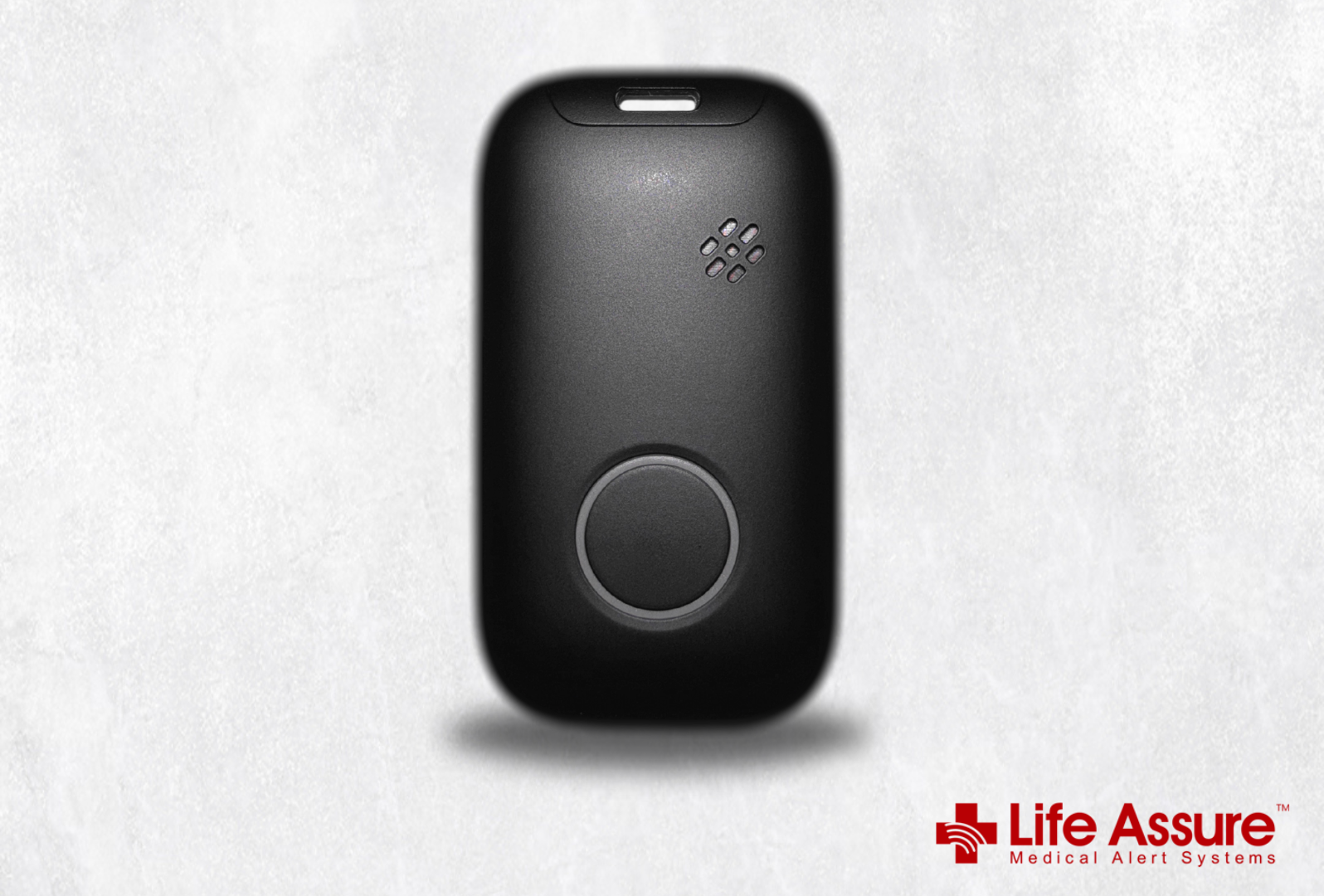
Alt text: A matte black Premium Mobile Plus alert device with one large round button and a speaker grille on a pale gray background beside the Life Assure logo
An alarm does not treat bone loss. It can shorten the time a patient lies on the floor after a fall. Drug therapy, by contrast, works to cut the risk of the fracture itself.
Where Industry Can Help Close the Gap
The data points to practical steps that sit within reach of manufacturers and their partners.
- Support fracture liaison services with education and data sharing.
- Build patient materials around the post-discharge period, not just the clinic visit.
- Track treatment starts after fracture as a core outcome measure.
- Design support programs for older patients who manage several medicines.
- Work with home care and safety partners who see patients between visits.
The drugs already work in trials. The next gains will come from reaching the patients who never start them.
Frequently Asked Questions
What Is the Osteoporosis Treatment Gap?
It is the difference between the number of people who need osteoporosis treatment and the number who receive it. In Canada, fewer than 20% of fracture patients are diagnosed or adequately treated.
How Common Is a Second Fracture After a Hip Fracture?
Osteoporosis Canada reports that one in three hip fracture patients will fracture again within one year. That is why fast follow-up after the first fracture matters so much.
What Does a Fracture Liaison Service Do?
It assigns a coordinator to identify fracture patients and arrange testing and treatment. The goal is to make sure no patient leaves without a bone health plan.
Should Hip Fracture Patients Choose an Alarm With Fall Detection?
It is worth considering, since a patient who falls hard may not be able to press a button. On Life Assure devices the feature is an optional add-on, so it has to be requested.