
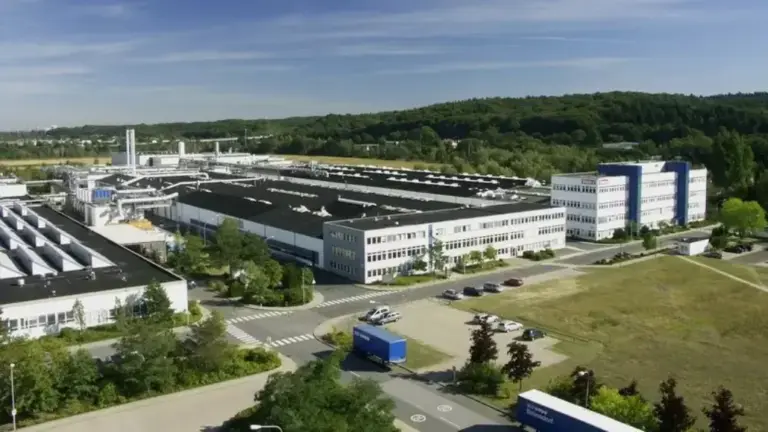
On October 7, 2026, international manufacturers of innovative adhesive tapes and self-adhesive product solutions tesa and EWE, entered into a supply contract for 500 tonnes of green hydrogen per year in Hamburg. The agreement was signed between EWE HYDROGEN GmbH and tesa Werk Hamburg GmbH by EWE CEO Stefan Dohler and tesa CEO Dr Kourosh Bahrami. This will provide EWE with its planned annual hydrogen demand at tesa’s Hamburg plant from 2028 onwards. There they are going to replace fossil fuels with steam generated from the hydrogen.
This is the second industrial supply contract for green hydrogen for EWE after the agreement with Salzgitter AG that took place a few weeks ago. tesa and EWE have already invested in the hydrogen ramp-up – EWE in generation and infrastructure, and tesa in the prerequisites for industrial usage. The supply contract is bringing supply and demand together.
Emden-Hydrogen for Hamburg
The green hydrogen for tesa is to be produced at the hydrogen plant of EWE in Emden with an output of 320 megawatts, which is to be commissioned at the end of 2027. The hydrogen will be produced by electrolysis using electricity from renewable energies and will comply with the European Renewable Hydrogen Requirements – RFNBO. From there the hydrogen would be transported to Hamburg by means of the emerging hydrogen core network.At the same time, tesa is getting ready to link its plant to the Hamburg hydrogen industry network HH-WIN. The link is set to be finished by the end of 2027, with the first hydrogen use for steam generation slated for 2028.
Dr. Kourosh Bahrami, CEO of tesa SE, said, “We want to gradually make our production climate-neutral by 2030 and are creating the technical prerequisites for this at the Hamburg plant. Green hydrogen complements electrification, heat storage and intelligent energy control where process heat cannot be fully electrified. In this way, we combine measurable CO₂ reduction with reliable and sustainable production for our customers. The contract with EWE is therefore not only an important step for our climate targets but also for the long-term competitiveness of the site.”
It is well to be noted that 500 tonnes to cover planned hydrogen demand at tesa’s Hamburg plant is the biggest energy and emissions site in the tesa network. It integrates the transformation concept with the improved efficiency, electrification with heat storage, AI-supported control of energy flows and green hydrogen. From 2028, tesa plans to generate about 500 tonnes of green hydrogen from Emden annually for steam generation. This should reduce the plant’s emissions by about 6,000 tonnes of CO2e a year. The technical basis for this is two dual-fuel steam boilers ready for H₂, the first of which has already been installed and connected.
According to EWE CEO Stefan Dohler, “With tesa, another well-known industrial customer after Salzgitter, has opted for green hydrogen from EWE. This shows that supply and demand can come together, even if the market is still in its infancy. tesa and EWE are making binding decisions today for a more climate-friendly energy supply for tomorrow.”
Infrastructure needed for the hydrogen ramp-up
EWE bundles important elements of the hydrogen value chain from production to transport and storage to delivery to industrial customers. The IPCEI’s large-scale Clean Hydrogen Coastline project is constructing electrolysis and storage as well as pipeline infrastructures in northwest Germany.
The federal government and the state of Lower Saxony are subsidizing the development of this hydrogen infrastructure. This also includes the 320-megawatt generation plant in Emden, from where the hydrogen for tesa will be supplied. The supply contract is a private-sector contract between EWE HYDROGEN GmbH and the tesa works in Hamburg.
The public also supports the conversion of the tesa plant in Hamburg. It is worth noting that tesa receives funding for the project from the German Federal Ministry for Economic Affairs and Energy under a climate protection contract as well as local funding from IFB Hamburg. For EWE, the agreement with tesa is also the first hydrogen supply contract wherein a climate protection contract from the federal government supports the use of green hydrogen on the customer side. The contract therefore provides concrete evidence that government instruments could help to boost industrial demand and to accelerate the development of the hydrogen market.
Partnerships drive the hydrogen market forward
The agreement with tesa shows that green hydrogen is finding real industrial applications. But the market ramp up still depends on funding. For individual projects to develop into a market, further industrial partnerships and dependable framework conditions are required. That is especially competitive electricity prices, realistic production specifications and enough renewable electricity, EWE believes.
Says Dohler, CEO of EWE, early contracts show companies are willing to take the lead. Now it’s time to move from individual projects to scaling. Green hydrogen needs to be produced and used competitively in Germany and Europe. For this, companies must establish long-term security and feasible rules so that hydrogen may improve the durability of the energy supply along with Europe’s energy sovereignty.