
Silica Exposure Standards Bringing Greater Focus to Mine Workplace Controls

0
Silica Exposure Standards Bringing Greater Focus to Mine Workplace Controls

Mining operations are placing greater attention on respirable crystalline silica as exposure standards, monitoring practices and workplace controls become more closely connected. For Mining Frontier, silica exposure provides a useful lens for examining how the global mineral-mining industry is moving from broad dust management toward more specific assessment and control of the respirable fraction that can reach workers’ lungs.

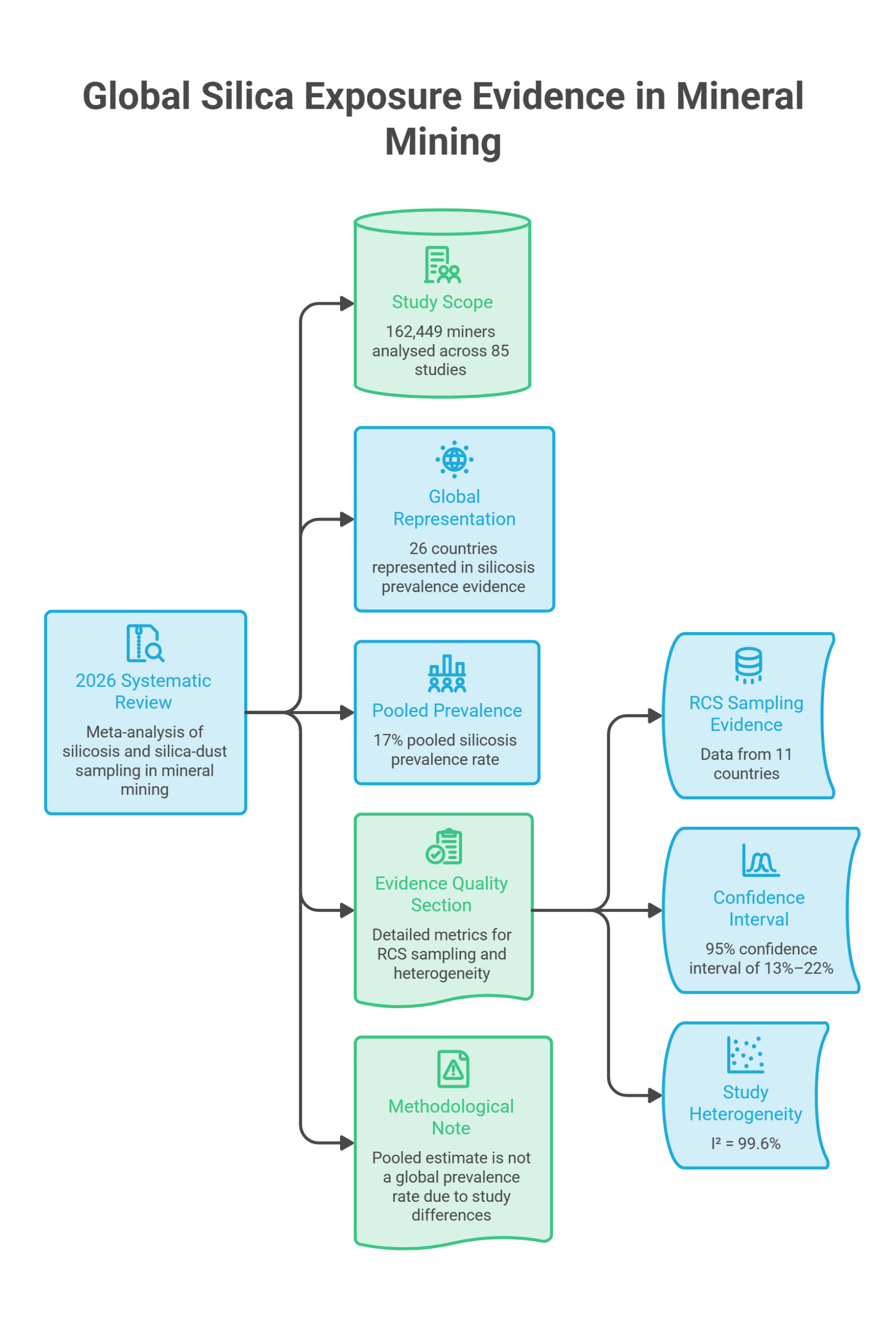
A 2026 systematic review covering mineral-mining research across multiple regions found substantial variation in silicosis prevalence, exposure conditions and sampling practices between mining populations. The review analysed evidence involving more than 162,000 mineral miners across 26 countries and found a pooled silicosis prevalence of 17%, while also reporting very high variation between studies. The findings reinforce that silica exposure cannot be treated as a uniform risk across all mines, commodities or work activities.

Mining Work Activities Creating Different Silica Exposure Profiles

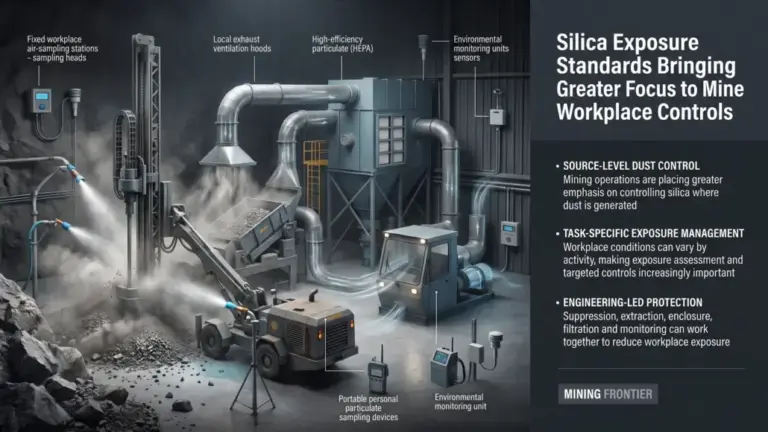
Respirable crystalline silica can be generated during drilling, blasting, crushing, grinding, excavation and mineral processing, meaning exposure can vary considerably between tasks and workplaces. Dust concentrations can also change with material properties, equipment condition, ventilation, production activity and the effectiveness of engineering controls.

This makes silica exposure assessment increasingly important at the workgroup and task level. Rather than relying only on a mine-wide average, operators can use personal sampling and other exposure measurements to identify where higher concentrations occur and which activities require additional controls. The global evidence also highlights differences in sampling methodologies, making consistent measurement and interpretation important as exposure standards become more prominent.

The resulting shift is toward workplace systems that connect exposure assessment with dust suppression, extraction, isolation, maintenance and monitoring. The emphasis is not simply on establishing an exposure limit, but on understanding where exposure occurs and whether the controls used to prevent it remain effective.

Key Takeaway: Global mining evidence shows a substantial and highly variable silicosis burden, reinforcing the importance of workplace-level exposure assessment and targeted dust controls.

As exposure monitoring becomes more detailed, the resulting findings can also influence how mines review broader high-consequence workplace risks and formal control systems. This makes silica exposure management part of a wider shift toward evidence-led workplace risk control, while the next topic moves from occupational exposure toward formal oversight of tailings facilities, high-consequence mine infrastructure.

Workplace Silica Controls Becoming More Continuous and Data-Led

The growing focus on silica exposure standards is linking workplace measurement more closely with the controls used to prevent respirable dust from reaching workers. Monitoring can identify higher-risk tasks and work areas, while engineering measures such as suppression, extraction, enclosure and filtration can be reviewed and maintained against those conditions.

The global evidence also shows why a single control approach cannot be applied uniformly across mining. Exposure varies between commodities, processes, jobs and operating environments, making task-level assessment and control verification important parts of ongoing occupational-risk management.

For Mining Frontier, the broader development is a move toward treating silica management as a continuous workplace-control process rather than a standalone exposure limit. Standards establish measurable requirements, but sustained protection depends on how effectively mines assess exposure, maintain engineering controls and respond when conditions change.