
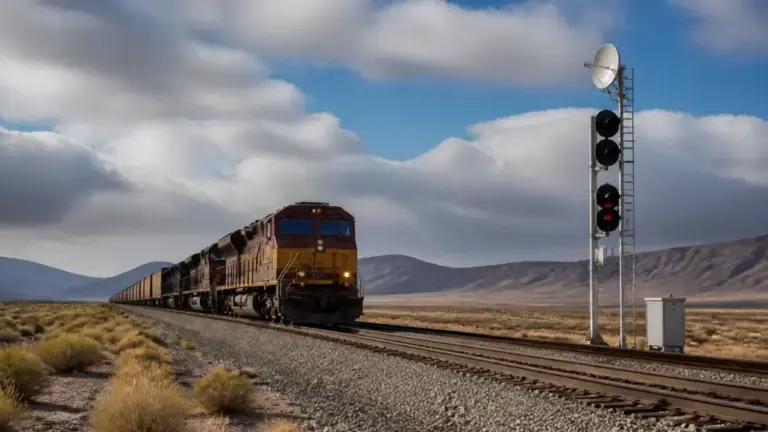
The global railway industry is currently undergoing a quiet but profound technological revolution. For more than a century, rail signaling has relied on expensive, ground-based infrastructure—cables, track circuits, and physical signals—to manage the safe movement of trains. However, as the demand for more efficient and extensive rail networks grows, the limitations of these traditional systems have become apparent, particularly in remote and rural areas. Transport Advancement highlights that the emergence of satellite-based rail signaling offers a transformative solution, providing a high-precision, low-cost alternative for remote track control. By leveraging global positioning links and satellite communication, the industry is breaking free from the constraints of the earth, ensuring consistent railway traffic safety across the most challenging terrains on the planet.
In the vast expanses of the Australian outback, the high-altitude plains of the Andes, or the deep forests of the Canadian North, installing and maintaining thousands of miles of signal cabling is an enormous logistical and financial burden. Satellite-based rail signaling eliminates this requirement by using the eyes in the sky to track and control train movements. This shift toward space-based infrastructure is not just about cost-cutting. It is about the universal expansion of safety and efficiency. It allows for the modernization of regional lines that were previously considered economically unviable, fostering greater connectivity and economic development in underserved areas. This technological evolution is a testament to the power of satellite technology to reshape the fundamental systems of human transport.
The Architecture of Space-Based Rail Management
The core of a satellite-based signaling system is the Global Navigation Satellite System (GNSS). Every train is equipped with a high-precision GNSS receiver that determines its exact location, speed, and direction with sub-meter accuracy. This information is then transmitted via a satellite communication link to a centralized control center. The control center uses this real-time data to create a digital map of the entire rail network, identifying the location of every train and ensuring that safe separation is maintained. This virtual signaling approach replaces the need for physical equipment along the tracks, significantly reducing the initial capital investment and the ongoing maintenance costs for rail operators.
Global Positioning Links and Train Integrity
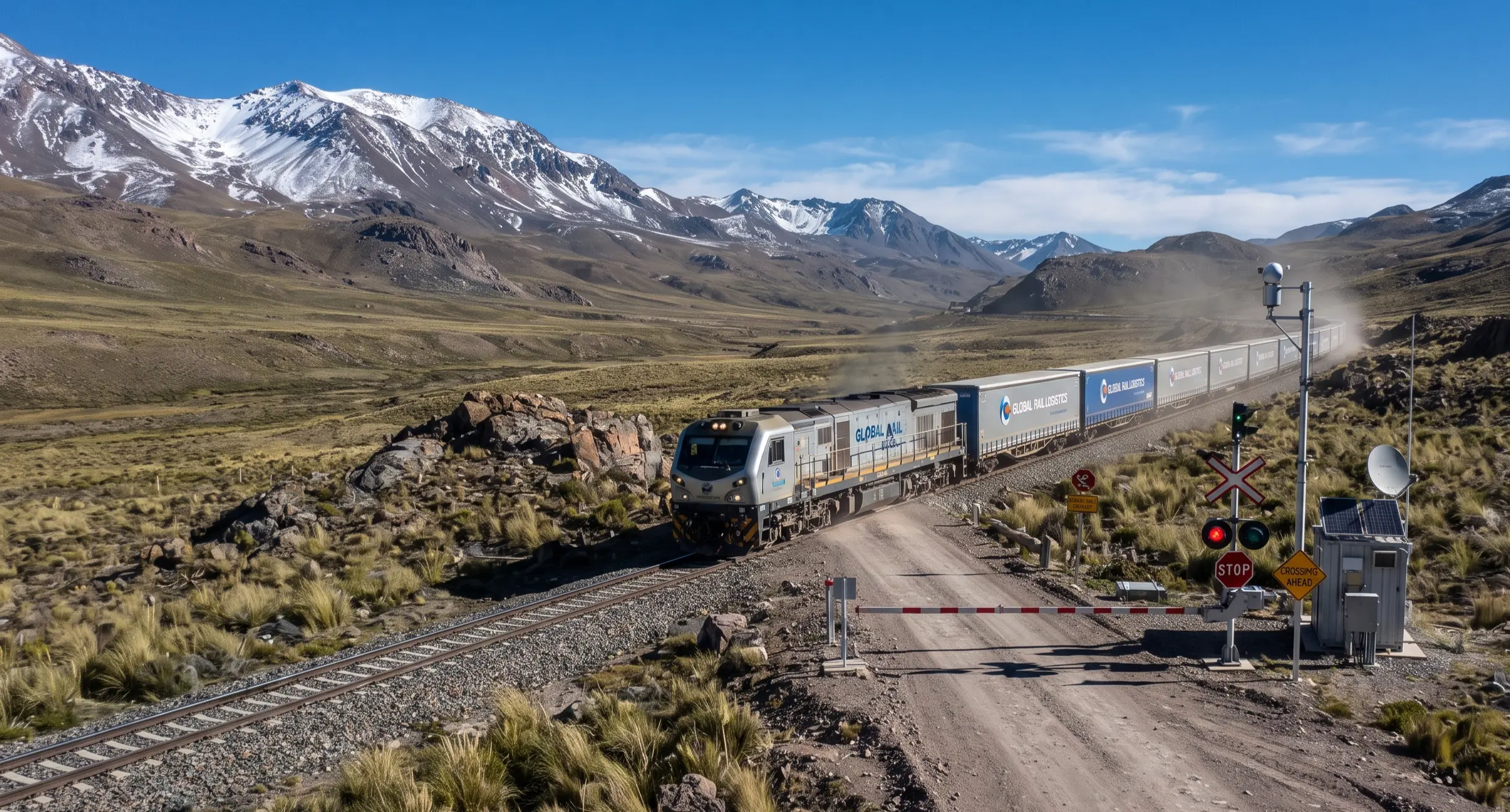 Ensuring the absolute safety of rail operations requires more than just knowing the location of the locomotive; the system must also confirm the integrity of the entire train. Satellite-based rail signaling systems utilize End-of-Train (EOT) devices that communicate with the locomotive via localized links. By comparing the position of the locomotive and the EOT device, the system can verify that the train is whole and that no cars have become detached—a critical requirement for preventing collisions on single-track lines. The integration of these global positioning links with train integrity monitoring provides a robust and fail-safe safety environment that meets the most stringent international standards, such as the European Rail Traffic Management System (ERTMS) Level 3.
Remote Track Control and Dynamic Block Management
Traditional signaling systems use fixed blocks—fixed sections of track where only one train is allowed at a time. This approach is inherently inefficient, as it often leaves large sections of the track empty. Satellite-based systems enable moving blocks or dynamic track control, where the safe distance between trains is adjusted in real-time based on their actual speed and braking capabilities. This allows trains to run closer together, significantly increasing the capacity of the rail line without the need for additional tracks. For remote regional lines, this increase in throughput can be the difference between a struggling service and a thriving transportation corridor.
The Economic and Strategic Impact of Satellite Signaling
The primary economic driver for satellite-based rail signaling is the reduction in infrastructure costs. By eliminating the need for track circuits and expensive lineside cabling, operators can reduce their capital expenditure by up to 50% compared to traditional signaling projects. Furthermore, the absence of physical equipment along the tracks means that maintenance crews no longer need to travel to remote locations for routine repairs, reducing operational costs and improving safety for the workers. This economic efficiency allows for the expansion of rail services into areas where the cost of traditional signaling would be prohibitive, supporting the growth of the regional economy and reducing the reliance on road transport.
Enhancing Safety and Accident Prevention
Safety is the paramount priority for any rail system, and satellite-based signaling provides a new level of protection against human error. The system can act as a virtual supervisor, automatically applying the brakes if a train exceeds the speed limit or approaches a section of track that is occupied by another vehicle. This Automatic Train Protection (ATP) is essential for preventing the high-speed collisions and derailments that can occur on remote lines where human oversight may be limited. Furthermore, the satellite link allows for constant communication between the train crew and the control center, ensuring that emergency information can be transmitted instantly, regardless of the local terrain or weather conditions.
Supporting Global Connectivity and Sustainability
The move toward satellite signaling is part of a broader global effort to build more sustainable and connected transport networks. By improving the efficiency and reach of the railway, we can encourage more freight and passenger traffic to move from the road to the rail, leading to a significant reduction in carbon emissions and fuel consumption. For many developing nations, satellite-based rail signaling provides a leapfrog opportunity, allowing them to build state-of-the-art rail networks without the need to invest in outdated ground-based technology. This fosters greater regional integration and supports the United Nations’ Sustainable Development Goals for resilient infrastructure and sustainable communities.
The Technical Challenges of Satellite-Based Systems
 Despite the many benefits, the implementation of satellite signaling is not without its technical hurdles. One of the primary challenges is ensuring signal availability in deep valleys, tunnels, and urban canyons where the line-of-sight to the satellites may be obstructed. To overcome this, the industry utilizes multi-sensor fusion, combining GNSS data with information from on-board sensors like accelerometers, gyroscopes, and odometers. This inertial navigation allows the train to maintain its position and speed data even when the satellite signal is temporarily lost. Furthermore, ensuring the cybersecurity of the satellite communication link is a top priority, as any interference with the signaling data could have catastrophic consequences.
Spectrum Management and Regulatory Harmony
The effectiveness of satellite signaling depends on the availability of protected radio spectrum for communication. Rail operators must coordinate with global telecommunications bodies to ensure that their signaling data is not disrupted by other satellite services. Furthermore, the industry is working toward global regulatory harmony to ensure that satellite-based systems are interoperable across different countries and regions. This standardization is essential for the growth of international rail corridors, such as the Silk Road rail links connecting Asia and Europe. By establishing clear standards for data accuracy, reliability, and security, the global community can ensure that satellite-based rail signaling becomes a universal standard for the 21st-century railway.
The Role of Low-Earth Orbit (LEO) Satellites
Looking toward the future, the rise of Low-Earth Orbit (LEO) satellite constellations, such as Starlink or OneWeb, is set to further transform the rail industry. LEO satellites provide much higher bandwidth and lower latency than traditional geostationary satellites, allowing for the transmission of high-definition video and massive amounts of diagnostic data from the train to the control center. This will enable even more advanced forms of remote track control, including the remote operation of trains and the use of AI for predictive maintenance. The integration of LEO technology into the rail signaling network represents the next frontier for the industry, creating a truly connected train that is integrated into the global digital ecosystem.
Conclusion: Bridging the Distance with Innovation
In conclusion, the adoption of satellite-based rail signaling is a fundamental milestone in the evolution of the global railway. By leveraging the power of space-based technology, the industry is overcoming the geographic and financial barriers that have long limited the reach of the rail network. This technological leap is not just about moving trains; it is about connecting people, supporting economic growth, and building a more sustainable and resilient transport future for all. As we look toward the 2030s, Transport Advancement believes that the virtual signal will be the defining characteristic of the modern railway, ensuring that the safety and efficiency of the rail network are extended to every corner of the globe. This is the promise of satellite-based mobility: a future where the distance is no longer a barrier, and where the safety of the journey is guaranteed by the silent, watchful eyes in the sky. Through the lens of satellite-based rail signaling, we see a world where the railway remains a pillar of global transport, driven by the transformative power of human innovation and the limitless potential of the stars. The tracks may remain on the ground, but the intelligence that guides them is now truly universal.