
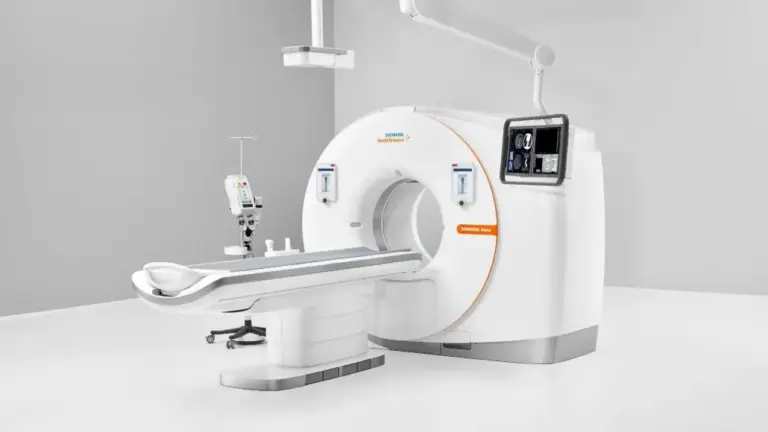
Siemens Healthineers builds CT scanners, oncology systems and angiography equipment at its Kemnath mechatronics factory. These machines depend on linear motion components that must move smoothly and precisely under heavy loads, in sterile environments, with minimal maintenance: downtime can affect a hospital’s imaging capacity and patient throughput.
Safe, effortless access for CT maintenance
Rollon designed a system of telescopic rails for Siemens Healthineer’s CT scanners – where maintenance access must be safe and effortless. The challenge stemmed from the scanner’s X-ray tube, which weighs up to 65kg and must be replaced around five times over the machine’s 15–20 year lifespan, carried out on site, with minimal disruption to scanning schedules.
Stephan Schott, Industry Manager Medical at Rollon: “This was one of the first largescale projects carried out together by Rollon and Siemens Healthineers. These telescopic rails were specially developed to support ease of maintenance while withstanding the high acceleration of the CT scan: it rotates up to four times per second and when you rotate something that heavy that fast, the load on the system is immense.”
Equipment moved at the push of a button
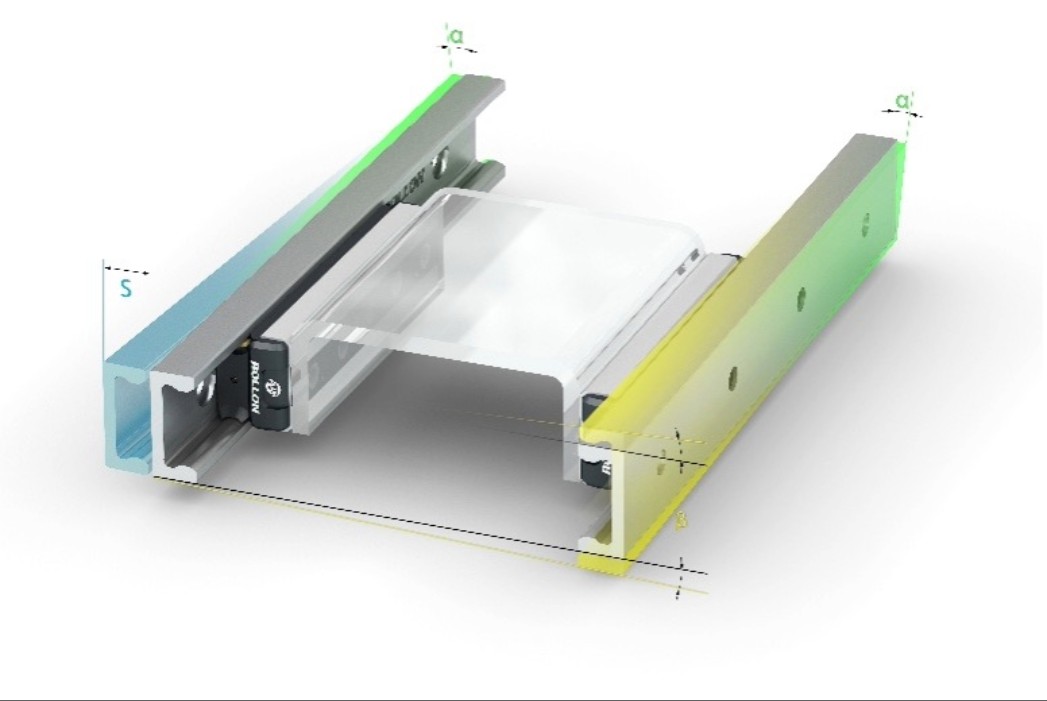
Angiography systems, used in emergency rooms and operating theatres rather than dedicated scanning suites, must be moved quickly when space is needed for other procedures. Rollon’s automated solution, based on its Compact Rail technology, delivers smooth, controlled motion with no grease, no contamination risk and quiet operation, handling loads of up to one tonne along a four-metre rail.
Helping children prepare for imaging exams
Rollon has also contributed to MINITOM Kids, a device developed by apprentices at Siemens Healthineers’ Educational Development Center to familiarise children with MRI and CT scanners. It shows children what happens inside the scanner and lets them crawl into a tunnel to safely experience the sounds and space.
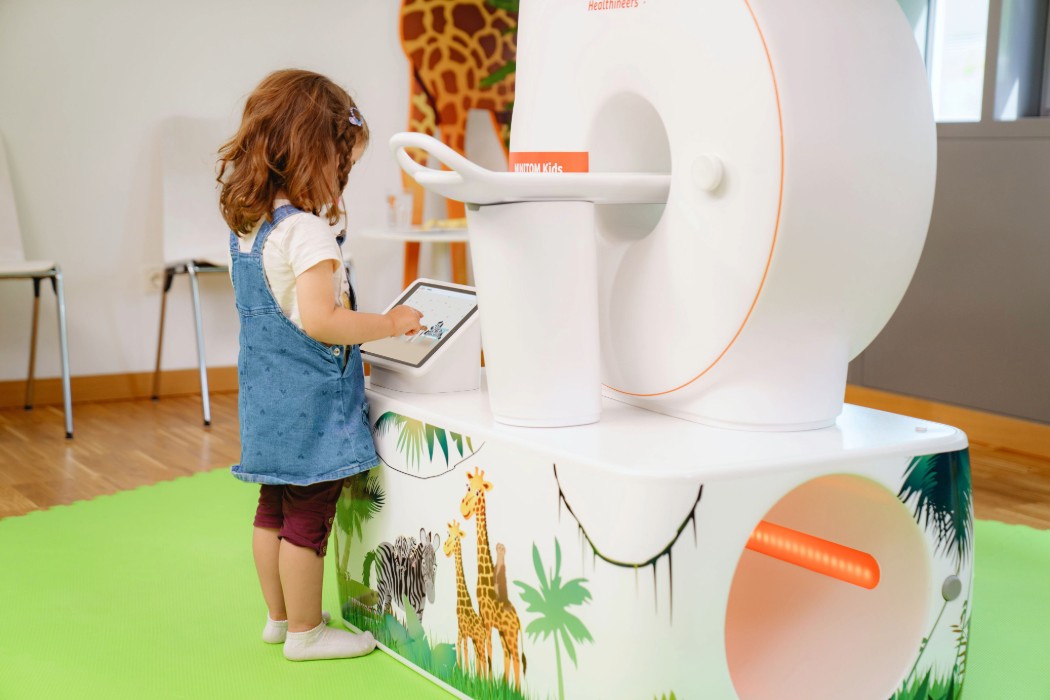
Rollon supplied the X-Rail linear guides that move the small patient bed into the scanner – mechanically simpler than Rollon’s full-scale imaging systems, but still requiring smooth, reliable motion for repeated use by children.
Engineering behind the diagnosis
Together, these three applications show how much modern medical imaging depends on mechanical engineering, not just electronics and software. High-performance motion systems help ensure safety, reliability and precision in critical clinical environments, while initiatives like MINITOM Kids show the same discipline can support patient comfort too.