
Building skills for independence, participation, and wellbeing
Occupational therapy (OT) is about occupation the daily activities and roles that are important to a person. For an infant, the occupation is play and exploration. For a school-age child, it is learning and peer interaction. For an adult, it is work, self-care, leisure, and relationships. Occupational therapy for autistic people addresses whatever activities are most important and challenging for them, with the goal of building the skills and addressing the barriers that prevent full participation and independence.
What Occupational Therapists Address
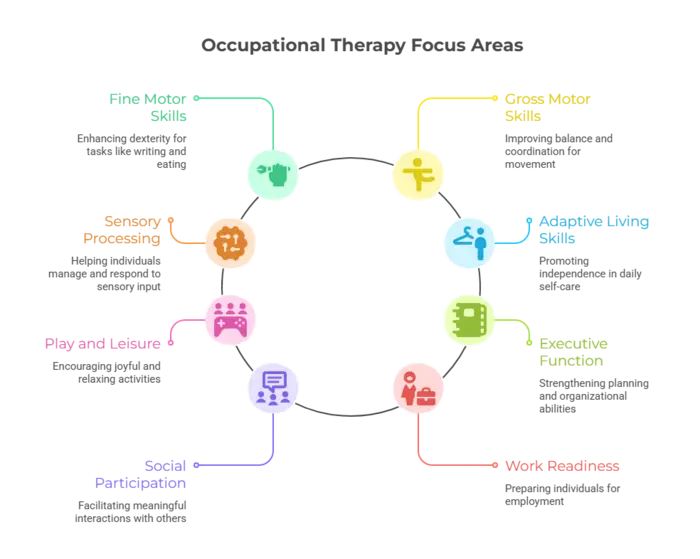 Fine motor skills: holding a pencil, eating with utensils, fastening buttons, writing, manipulating small objects.
Gross motor skills: balance, coordination, posture, movement efficiency.
Sensory processing: how the person experiences and responds to sensory input (touch, sound, sight, movement, taste, smell).
Adaptive living skills: self-care (toileting, dressing, eating), hygiene, meal preparation, home management.
Play and leisure: engagement in activities that bring joy and relaxation. Executive function: organisation, planning, transitioning between activities. Social participation: skills for engaging with others in meaningful activities. Work readiness and job performance: for adolescents and adults.
Sensory Integration: A Core Focus in Autism OT
Sensory integration (SI) therapy is a specific approach used by occupational therapists working with autistic individuals. The basic idea: many autistic people experience sensory input differently. Some are hypersensitive (sounds too loud, lights too bright, touch too intense). Others are hyposensitive (seeking intense sensory input, appearing not to notice pain or temperature). SI therapy provides activities designed to help the person organise and respond to sensory input more effectively.
SI activities might include weighted vests, fidget tools, swinging, jumping, deep pressure, brushing, or other activities that provide proprioceptive or vestibular input. While the evidence base for SI is still developing, many families and therapists report meaningful improvement in focus, regulation, and calmness following SI intervention.
Sensory-Based Environmental Modifications
Beyond direct therapy, occupational therapists help identify sensory modifications that support the autistic person’s functioning:
- Noise-cancelling headphones or earplugs for sound sensitivity
- Dimmer switches or adjusted lighting for visual sensitivity
- Fidget tools, weighted items, or movement breaks for regulation
- Comfortable seating or positioning
- Reduced visual clutter or visual supports
These modifications are not accommodations that avoid challenge; they are supports that make it possible to function well enough to engage in meaningful activities.
Finding an OT Experienced in Autism
Look for OTs who:
- Understand sensory differences in autism and can assess sensory processing
- Focus on meaningful, functional goals (not just worksheets or compliance)
- Work collaboratively with the family and school
- Can explain what they are doing and why
- Respect the autistic person’s preferences and autonomy
Important shift: Modern OT for autism has moved away from ‘normalising’ approaches (trying to make autistic sensory systems work like neurotypical ones) toward supportive approaches (helping autistic people function well given how their sensory systems work). This is a fundamental shift that respects autism as neurological difference, not pathology.
Key Takeaway
Occupational therapy supports autistic people in developing the skills and managing the sensory and environmental factors that affect their ability to engage in meaningful daily activities. From self-care to school participation to work readiness, OT enables greater independence and participation.