
President Kassym-Jomart Tokayev of Kazakhstan has urged to expand cooperation of Kazakhstan and Bavaria in cutting-edge manufacturing, critical materials, microelectronics, and agriculture, as well as logistics, suggesting new joint projects at the Kazakhstan-Bavaria Technology Forum in Munich on Sept. 30.
The forum gathered representatives of business, industry, and technology and was the last event of Tokayev’s official visit to Germany. In his opening remarks, Tokayev praised Bavaria as a unique region, where industrial and technological development goes hand in hand with a strong culture of innovation.
He added that Bavaria is one of the key trade partners of Kazakhstan among the German federal states. Kazakhstan exports oil, ferroalloys, steel, iron, copper, aluminum, inorganic chemicals, oilseeds and grain, and other commodities to the region. President Tokayev said that “Our ambition can be expressed in a simple formula: ‘Made in Kazakhstan using Bavarian technologies and with German quality.”
Cutting-edge manufacturing & automation
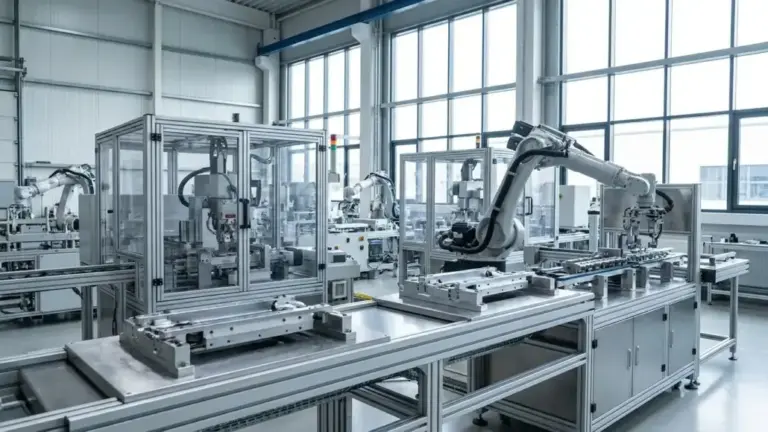
One of the priorities singled out by Tokayev is the development of advanced manufacturing. Kazakhstan is increasing capacities in sectors such as mechanical engineering, metallurgy, electrical engineering, and production of industrial components.
At the same time, further improvements in worker efficiency will become more dependent on automation and robotics as well as digital management of production processes. Tokayev named Siemens and KUKA as world leaders in industrial automation and robotics as well as advanced manufacturing technologies. He also mentioned large Kazakh companies, such as Qarmet, as possible sources of steady demand and long-term collaboration with industry.
Kazakhstan seeks semiconductor partnership
Microelectronics was another area that was highlighted at the forum. Bavaria has developed one of Europe’s leading ecosystems for semiconductors and microelectronics, housing companies such as Infineon Technologies, Siltronic, and Rohde & Schwarz, Tokayev said. Kazakhstan’s immediate opportunity, he said, is not large-scale chip manufacturing but participation in parts of the value chain that can directly support the country’s industrial sectors.
Tokayev added, “In this regard, I propose launching a special partnership program involving the Bavarian Chips Alliance, bringing together relevant Kazakh companies, research organizations and development institutions with Bavaria’s semiconductor industry ecosystem.”
Critical Materials and Emerging Supply Chains
Critical materials were also seen as a potential area for long-term cooperation.
Tokayev remarked, “As German industry seeks to ensure the reliability and diversification of supplies of essential resources, Kazakhstan is ready to become a reliable and long-term supplier of copper, titanium, aluminum, beryllium, tantalum, and niobium.” It is well to note that the proposal comes amid Kazakhstan’s push to expand processing and industrial use of its mineral resources and German companies’ efforts to diversify sources of critical raw materials.
Proposed areas are Agriculture, Alatau City
Another area Tokayev mentioned that he would like to cooperate in is agriculture, citing Bavaria’s experience in agricultural machinery, precision farming, water-saving technologies and food processing. He suggested creating a Kazakhstan-Bavaria model farm project for the production and processing of quality agricultural products in accordance with European standards. Alatau City was also suggested by Tokayev as a potential base for Bavarian companies seeking to grow their business in Kazakhstan and the wider Central Asian market. According to Tokayev, companies will be able to use the city to set up engineering and service units, showcase their technologies, find local partners, and launch investment projects.
Bet on skills and vocational training
Tokayev stressed that the execution of these projects depends on the availability of qualified specialists. He suggested that Kazakhstan could take advantage of the experience of Bavaria in the area of dual vocational education. It could be integrated into the large industrial projects implemented by Bavarian companies in Kazakhstan. Professional training and engineering development could be a part of such projects. As an additional step for the enhancement of business relations, Tokayev proposed to set up a representative office of the Bavarian economy in Almaty. The office would assist German companies doing business in Kazakhstan and throughout Central Asia.