
India is undergoing one of the fastest economic and infrastructure transformations in its history. Urbanization, industrialization, rural electrification, digitalization, electric mobility, data centers, manufacturing and rising household consumption are all increasing the country’s dependence on electricity.
Against this background, India’s power policy deserves a fresh, long-term review – not because renewable energy is undesirable, but because the country must ensure that the transition does not compromise the availability and reliability of electricity. Electricity is no longer a luxury. It is fundamental infrastructure for economic growth and public welfare.
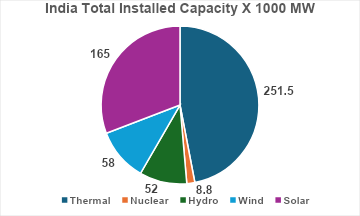
The Central Electricity Authority (CEA) reports that India’s installed generation capacity had reached about 551.99 GW by July 2026, while the peak demand met during July 2026 reached about 270.2 GW. Thermal capacity contributes approx. 46% of India’ installed generation infrastructure. India’s Installed Power Capacity Mix – Refer chart1
Balancing Renewable Energy Ambitions with the Fundamental Need for Reliable Electricity. The question India should now ask is not simply: How much generating capacity can we add? It should be – How much dependable, dispatchable and affordable electricity can we guarantee – 24 hours a day, 365 days a year?
The Changing Indian Power Mix
India’s installed capacity today is dramatically different from the power system inherited at Independence. The country has expanded from a relatively small electricity system in 1947 to one of the world’s largest power systems.
Today, India has a combination of Coal and other thermal generation, Solar power, Wind power, large and small hydro, nuclear power, Biomass and other renewable sources Emerging battery and pumped-storage systems.
The transformation has been impressive. However, installed capacity should not be confused with dependable generation capability.
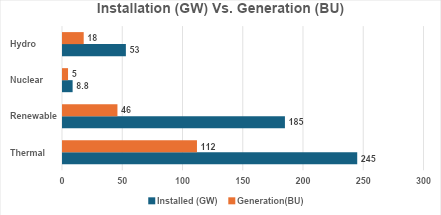
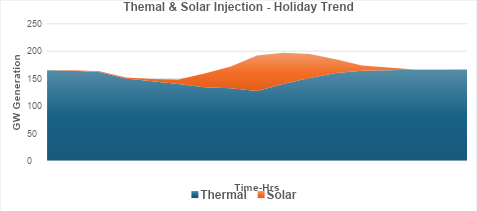
A 1,000 MW solar plant and a 1,000 MW thermal plant may have the same nameplate capacity, but they do not provide the same amount of electricity at every hour of the day – Refer Chart 2.
Solar Power: Excellent Resource, but Not a Complete Power System
India should continue to develop solar energy. Solar power has become an important part of India’s energy transition and can reduce fuel consumption and emissions.
However, solar generation has a fundamental limitation: the sun does not shine 24 hours a day. Solar output varies with Time of day, Season, Cloud cover, Weather Location, Dust and soiling, Panel temperature, etc.
Therefore, solar capacity cannot be treated as equivalent to firm 24 x 7 hour generation. A solar plant may have a capacity factor significantly below its nameplate capacity over the year, depending on location and technology. Consequently, adding large quantities of solar capacity does not eliminate the need for firm generation and storage. The real challenge begins after sunset.
India’s electricity demand does not disappear when solar generation falls. Homes, hospitals, railways, industries, commercial establishments, data centers and essential services continue to require electricity. This creates the need for dispatchable generation, storage and a very strong transmission system.
Battery Storage: Essential, but the Scale Matters
Battery Energy Storage Systems (BESS) will undoubtedly become an important component of India’s future power system. However, India should not assume that batteries can immediately replace conventional generation on the scale required for a national 24×7 electricity system. The challenge is not simply installing batteries. It involves:
- Massive storage capacity
- Long-duration storage
- Replacement and degradation
- Capital cost
- Availability of critical minerals
- Recycling
- Grid integration
- Fire and safety management
- Charging and discharging losses
- Several hours or potentially days of backup during prolonged low renewable generation
India is also pursuing pumped-storage hydro projects, which can provide valuable large-scale storage. The Government has reported substantial pumped-storage capacity under construction and in planning. Therefore, the correct approach should be:
Renewables + Storage + Nuclear + Hydro + Flexible Thermal Generation + Strong Transmission – not renewable energy alone.
Nuclear Power Needs Much Greater Attention
One of the most important issues in India’s long-term power strategy is the relatively small contribution of nuclear power. India does have nuclear generation; it is incorrect to describe nuclear power as absent. However, its contribution remains small compared with India’s overall electricity requirement.
As of December 2025, India’s nuclear installed capacity was only a small fraction compared to USA and China – Refer Table 1 of the national generating fleet, while thermal capacity remained a major component.
Nuclear power has an important characteristic that solar and wind cannot provide on their own: high-capacity-factor, firm generation capable of supplying electricity continuously.
India should therefore consider whether nuclear power deserves a much larger role in its 2040, 2050 and 2070 energy strategy. The Government has already identified additional nuclear capacity under construction and further capacity under planning. The question is whether the pace is sufficient for India’s rapidly growing electricity needs.
| Country | Nuclear Capacity (GW) |
 |
| USA | 98 | |
| China | 62 | |
| India | 8 |
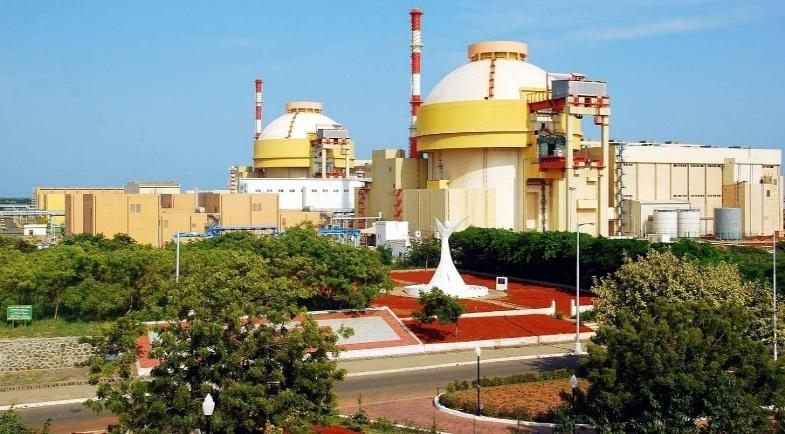
Nuclear Capacity – Table 1 Nuclear Plant – Figure 1
Thermal Power Should Not Be Written Off Prematurely
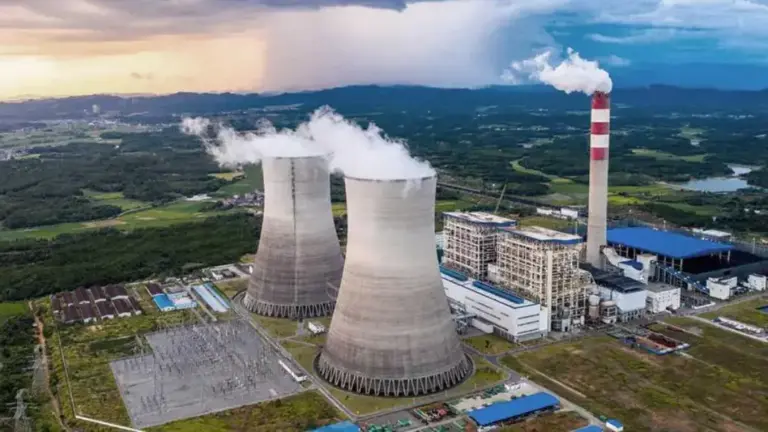
There is an understandable global movement towards reducing carbon emissions. India must participate in that effort. However, coal-based thermal power remains an important source of dependable electricity for India, particularly while storage, nuclear capacity and other firm low-carbon alternatives are being expanded – Refer Figure 2.
Modern thermal power plants can also be improved through:
- Higher efficiency
- Better combustion optimization
- Flexible operation
- Improved heat rate
- Reduced auxiliary power consumption
- Lower emissions
- Better ramping capability
- Improved reliability
- Life-extension programs
- Advanced control systems
The objective should not be to build an electricity system that is either “thermal” or “renewable”. The objective should be to create a balanced and resilient electricity system.
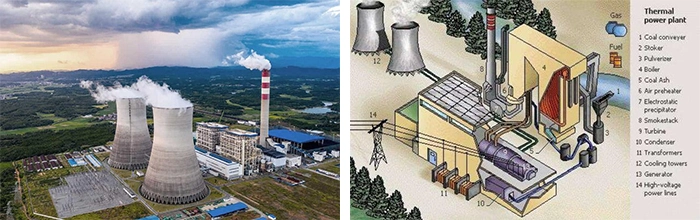
Thermal Power Plant – Figure 2
The United States Offers an Important Lesson
The United States provides an interesting comparison. According to the U.S. Energy Information Administration, in 2025 natural gas accounted for about 41% of U.S. utility-scale electricity generation, nuclear about 18%, coal about 17%, and renewables about 24%. This does not mean India should copy the American model.
In the case of China, the country has built enormous renewable capacity, but thermal power remains the backbone of electricity generation. China has approximately 1,202 GW of solar capacity, but solar generated about 1,173 BU, while its 1,539 GW thermal fleet generated about 6,327 BU – Refer Table 2
| Sources | China Installed GW | China Generation (BU) | India Installed GW | India Generation (BU) |
| Thermal | 1,539 | 6,327 | 247 | 1,364 |
| Solar | 1,202 | 1,173 | 106 | 144 |
| Wind | 640 | 1,128 | 50 | 83 |
| Hydro | 448 | 1,462 | 53 | 160 |
| Nuclear | 62 | 485 | 8 | 57 |
Capacity & Generation between India & China Year 2025 – Table 2
China’s 2025 data show that total electricity generation reached 10,575 TWh, while thermal generation alone was 6,327 TWh.
India has very different resources, population density, economics and environmental priorities. But the American & China experience demonstrates an important principle.
A large electricity system requires substantial quantities of dependable and dispatchable generation alongside renewable energy. Natural-gas generation is particularly valuable because gas-fired plants can respond relatively quickly to changes in electricity demand.
India therefore needs to evaluate its own combination of coal, gas, nuclear, hydro, storage and renewable resources based on system reliability and economics, rather than focusing on capacity additions alone.
Demand Is Rising & Future Demand Could Be Much Higher
India’s electricity requirement will continue to grow. The drivers include:
1. Urbanization
More people are moving into cities, increasing residential and commercial electricity consumption.
2. Industrialization
Steel, cement, chemicals, manufacturing and engineering industries require large quantities of reliable electricity.
3. Rural development
Improved rural living standards mean increasing use of pumps, refrigeration, appliances, education technology and small industries.
4. Digitalization
Data centers, telecommunications and digital infrastructure are becoming increasingly important electricity consumers.
5. Electric mobility
Electric vehicles will progressively add another significant load to the electricity system.
6. Economic growth
A growing economy generally requires more electricity. Recent CEA data illustrate the scale of this change: India’s peak demand met reached about 270 GW in July 2026. Therefore, power planning should look decades ahead rather than focusing only on the next financial year or the next capacity-addition target.
Capacity Is Not the Same as Availability
This distinction is critical. Suppose India has 550 GW of installed capacity. That does not mean 550 GW will be available whenever consumers need it. The generation availability depends on:
- Plant availability
- Fuel availability
- Renewable resource availability
- Transmission constraints
- Grid conditions
- Maintenance
- Weather
- Hydro reservoir levels
- Storage availability
- Forced outages
This is why resource adequacy must become a central principle of India’s energy policy. Interestingly India is undergoing one of the fastest economic and infrastructure transformations in its history. Urbanization, industrialization, rural electrification, digitalization, electric mobility, data centers, manufacturing and rising household consumption are all increasing the country’s dependence on electricity.
Against this background, India’s power policy deserves a fresh, long-term review – not because renewable energy is undesirable, but because the country must ensure that the transition does not compromise the availability and reliability of electricity.
Electricity is no longer a luxury. It is fundamental infrastructure for economic growth and public welfare.
The Central Electricity Authority (CEA) reports that India’s installed generation capacity had reached about 551 GW by July 2026, while the peak demand met during July 2026 reached about 270.2 GW. During holiday, the peak demand was 197 GW. The CEA itself is developing long-term resource adequacy plans extending to 2035-36. The policy discussion should therefore move from:
“How much energy are we adding?” “How much firm capacity do we need during every critical hour of the year?”
The Risk of Overdependence on Intermittent Generation
Solar and wind are valuable resources, but they are variable. Hydro is also influenced by rainfall, reservoir levels and seasonal conditions, although hydro and pumped storage can provide valuable flexibility and balancing capability. A power system that becomes increasingly dependent on variable generation must simultaneously invest in:
Transmission + Storage + Flexible Generation + Grid Stability + Forecasting + Demand Management.
If these supporting systems do not grow at the same pace, the country could face increasing challenges in maintaining reliable supply during periods of low renewable generation and high demand.
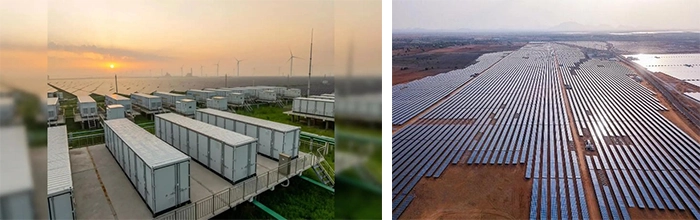
Power Cuts Are More Than an Inconvenience
For an ordinary consumer, a power interruption may be an inconvenience. Some States in India are still facing power cut. For a hospital, it can become a serious operational issue. For a student, it can disrupt education.
For senior citizens, particularly during extreme weather, it can affect basic comfort and safety. For an industry, an interruption can result in:
- Production losses
- Equipment damage
- Restart costs
- Quality problems
- Lost working hours
- Reduced competitiveness
As India aspires to become a major manufacturing and economic power, reliable electricity must be treated as essential national infrastructure fundamental rights.
India Needs a “24×7 Power First” Strategy
India should not abandon renewable energy. Instead, renewable energy should become one component of a broader national electricity strategy. A robust long-term strategy could be based on six pillars:
1. Expand Nuclear Power
Accelerate safe and economically viable nuclear generation to provide firm low-carbon electricity.
2. Modernize Thermal Generation
Improve the efficiency, reliability and flexibility of existing coal plants while deploying cleaner and more efficient technologies where justified.
3. Continue Renewable Development
Solar and wind should continue to grow, but their contribution should be evaluated based on firm power value, not only installed MW.
4. Develop Large-Scale Storage
Accelerate pumped storage and BESS, particularly where they provide measurable grid-balancing value.
5. Strengthen Transmission
Build transmission infrastructure ahead of generation growth so that electricity can move efficiently from resource-rich regions to demand centers.
6. Plan for Resource Adequacy
Every state and the national grid should have sufficient dependable capacity to meet peak demand plus an appropriate reserve margin.
India’s Energy Transition Must Be Balanced, Not Ideological. The debate should not be: Thermal vs. Renewable or Nuclear vs. Solar. The real question is:
What combination of technologies will provide India with affordable, reliable, secure and increasingly low-carbon electricity for the next 30-50 years?
Every generation technology has advantages and limitations
| Source | Major Strength | Major Limitation |
| Coal Thermal | Firm, dispatchable generation | Emissions, fuel and environmental constraints |
| Natural Gas | Flexible and fast response | Fuel price and supply dependence |
| Nuclear | Firm, low-carbon, high availability | High capital cost, long project timelines |
| Solar | Low operating emissions, scalable | Daytime/variable generation |
| Wind | Low operating emissions | Variable and location-dependent |
| Hydro | Flexible, dispatchable, | Seasonal/resource/geographical limitations |
| storage potential | ||
| Battery Storage | Fast response and balancing | Cost, duration, degradation and materials |
| Pumped Storage | Large-scale, long-duration storage | Site and construction requirements |
The answer is, therefore, diversification, not dependence on any single technology.
A Call for a National Power Policy Review
India has made remarkable progress in electricity generation and renewable-energy deployment. The achievement should be recognized. But the next stage is more difficult.
The country must provide electricity for a population of more than a billion people while simultaneously supporting industrialization, urbanization, rural development and a rapidly expanding digital economy.
The Government of India, policymakers, regulators, technocrats, economists and political leadership should therefore undertake a comprehensive review of India’s long-term electricity strategy.
The review should answer five fundamental questions
- How much electricity will India require in 2030, 2040, 2050 and beyond?
- How much of that requirement must be supplied by firm, dispatchable generation?
- What proportion should come from nuclear, thermal, hydro, solar, wind and storage?
- How much storage is required to support the planned renewable capacity?
- How can India guarantee affordable electricity 24×7 without compromising economic growth?
Conclusion
India’s renewable-energy expansion is necessary – but renewable capacity alone cannot be the definition of energy security.
India needs a power system in which solar and wind contribute substantially, hydro provides flexibility, storage manages variability, nuclear provides firm low-carbon generation, and efficient thermal generation continues to provide dependable support during the transition.
The Central Electricity Authority’s recent resource-adequacy work itself reflects the importance of looking beyond installed capacity towards long-term reliability. Power requirement for every citizen is a fundamental right & requirement.
India’s objective should not simply be to become a country with hundreds of gigawatts of installed renewable capacity. It should become a country where:
Every home, hospital, school, farm, railway, industry and business can depend on electricity – 24 hours a day, 365 days a year.
That is the real meaning of energy security. India should plan for the electricity system with minimum transmission loss it will need – not merely celebrate the capacity it has already installed.