
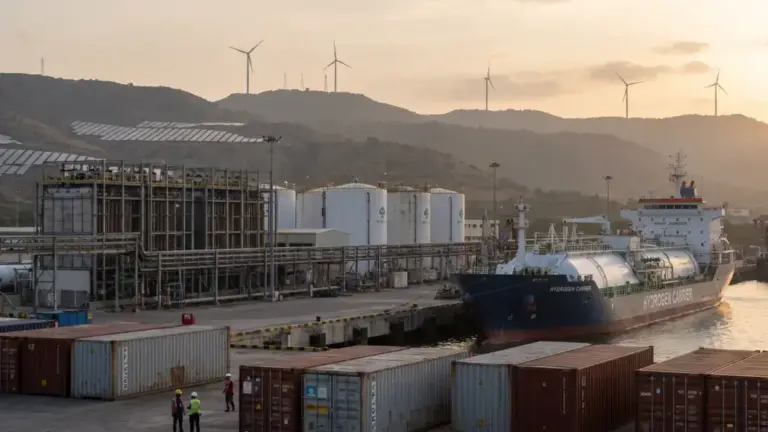
The global transition toward a carbon-neutral economy has opened a new frontier for international commerce, and India is moving decisively to establish its dominance through a comprehensive hydrogen trade India strategy. As nations in Europe and East Asia look to secure reliable sources of clean fuel to meet their net-zero commitments, India’s unique combination of abundant renewable energy, strategic geographic location, and large-scale industrial capability positions it as a premier exporter. The nation’s approach to hydrogen trade is not just about selling a commodity it is about building a new pillar for the national economy that leverages green ammonia and liquid hydrogen to reshape global energy flows. By developing the necessary port infrastructure and aligning with international standards, India is paving the way for a future where clean fuel exports are as significant to the national exchequer as traditional industrial goods, driving prosperity while contributing to a worldwide reduction in emissions.
The Strategic Vision for Global Green Hydrogen Exports
At the heart of the hydrogen trade India strategy is the ambition to become a global hub for green hydrogen and its derivatives. The National Green Hydrogen Mission sets a clear target for India to capture a significant share of the burgeoning global market, which is expected to reach hundreds of billions of dollars over the coming decades. This vision is supported by the country’s ability to produce green hydrogen at some of the world’s lowest costs, thanks to its vast solar and wind resources. By focusing on exporting to energy-deficit nations like Germany, Japan, and South Korea, India can provide a vital solution for countries that lack the domestic renewable capacity to produce their own green fuel. This strategic alignment not only enhances India’s geopolitical standing but also provides a resilient and long-term revenue stream that is decoupled from the volatility of fossil fuel markets.
The Role of Green Ammonia as a Trade Enabler
One of the most practical components of the hydrogen trade India strategy is the focus on green ammonia. While transporting pure hydrogen over long distances remains a logistical challenge, ammonia serves as a highly efficient and stable carrier. It is easier to liquefy and can be transported using existing chemical tankers and infrastructure. India’s established fertilizer industry provides a strong foundation for scaling green ammonia production, allowing for a seamless transition from domestic use to international trade. By positioning itself as a leading supplier of green ammonia, India can cater to both the industrial demand for fertilizers and the emerging market for clean maritime fuels and power generation, significantly diversifying its export portfolio and enhancing the overall bankability of its hydrogen projects.
Developing World-Class Green Port Infrastructure
To facilitate large-scale international trade, the development of specialized port infrastructure is a non-negotiable requirement of the hydrogen trade India strategy. Major Indian ports, such as those in Gujarat, Odisha, and Tamil Nadu, are being upgraded to handle the unique requirements of green hydrogen and ammonia. This involves the construction of dedicated storage terminals, cryogenic loading facilities, and bunkering stations for green ships. These “Hydrogen Ports” will act as the gateway for India’s clean energy to reach global markets. By integrating production hubs directly with port infrastructure, the industry can minimize the cost of internal transport and ensure that the export process is as efficient as possible. These investments are crucial for ensuring that India can compete with other emerging exporters like Chile and Australia on a level playing field.
Aligning with International Standards and Certification
A critical challenge for the hydrogen trade India strategy is the need to align with rapidly evolving international standards for green fuel certification. Global buyers require rigorous proof that the hydrogen they import is truly “green,” with near-zero carbon intensity across its entire lifecycle. India is actively working to harmonize its domestic certification frameworks with international benchmarks such as those being developed in the European Union and under the IPHE (International Partnership for Hydrogen and Fuel Cells in the Economy). By ensuring that every kilogram of hydrogen exported is backed by a credible and transparent guarantee of origin, India can build the necessary trust with international off-takers and secure long-term premium contracts that reflect the environmental value of the fuel.
Strategic Energy Partnerships and Bilateral Agreements
The expansion of the hydrogen trade India strategy is being facilitated through high-level diplomatic efforts and bilateral energy partnerships. India has already signed several Memoranda of Understanding (MoUs) with key consuming nations to collaborate on technology development and supply chain integration. These agreements often involve joint investment in production facilities and a commitment to long-term offtake at competitive prices. Such partnerships provide the financial certainty needed for developers to reach financial close on mega-projects. Furthermore, these diplomatic ties allow India to play a leading role in shaping global hydrogen policy and trade rules, ensuring that the needs of emerging economies are represented in the new international energy order.
The Strategic Role of Hydrogen Valleys in Export Hubs
To maximize the efficiency of the hydrogen trade India strategy, the development of “Hydrogen Valleys” near major export ports is becoming a central theme. these industrial clusters bring together hydrogen production, ammonia synthesis, and port logistics within a single, high-efficiency ecosystem. By minimizing the distance between the point of production and the point of export, these valleys significantly reduce the carbon footprint and cost associated with internal transport. Furthermore, these clusters foster a collaborative environment where shared infrastructure such as high-capacity pipelines and cryogenic storage can be utilized by multiple developers, improving the overall project economics. These valleys are not just logistical nodes they are centers of excellence where the latest technologies in hydrogen storage and handling are deployed, ensuring that India’s exports meet the highest global standards of safety and efficiency.
Navigating Global Trade Regulations and Carbon Border Taxes
A critical aspect of the hydrogen trade India strategy is the proactive navigation of international trade regulations, particularly the emerging carbon border adjustment mechanisms (CBAM) in markets like Europe. These taxes are designed to prevent “carbon leakage” by taxing imports based on their carbon intensity. For India, this represents a unique opportunity to gain a competitive advantage. By exporting certified green hydrogen and ammonia with a verified near-zero carbon footprint, Indian producers can avoid these taxes and command a premium price in the international market. The strategy involves building a transparent and digital tracking system that can provide granular data on the emissions associated with every shipment. This commitment to regulatory compliance and data transparency is what will ultimately distinguish India as a preferred supplier in a global market that is increasingly valuing environmental integrity over low-cost production.
The Economic Multiplier: Beyond Foreign Exchange
While the inflow of foreign exchange is a major benefit, the hydrogen trade India strategy also creates a significant economic multiplier effect within the domestic economy. The construction of massive export-oriented facilities creates thousands of high-skilled jobs in engineering, project management, and specialized construction. Furthermore, the growth of the export sector drives demand for locally manufactured electrolysers and components, supporting the nation’s “Make in India” ambitions. This interconnectedness ensures that the benefits of the global hydrogen trade are felt far beyond the energy sector, stimulating growth in the chemical, maritime, and steel industries as well. By positioning itself as a clean energy exporter, India is effectively exporting its renewable energy potential, turning a natural resource into a driver for a broad-based and sustainable industrial revolution that enhances the livelihoods of its citizens.
Conclusion: Leading the Global Energy Renaissance
The hydrogen trade India strategy represents a bold new chapter in the nation’s history, one where it moves from an energy-dependent importer to a global leader in clean fuel exports. By harmonizing policy, infrastructure, and international diplomacy, India is creating a blueprint for how a developing nation can lead the global energy renaissance. As the first shipments of green ammonia leave Indian shores, they will signal the arrival of a new era one where clean energy flows from the subcontinent to the world, powering a global transition toward sustainability. The legacy of this strategy will be a resilient, prosperous, and carbon-neutral India that stands at the heart of the 21st-century energy landscape, inspiring the world with its vision and industrial strength, and ensuring that the global energy transition is powered by Indian innovation and capability.
The Role of Digital Trade Platforms and Transparency
As the hydrogen trade India strategy matures, the adoption of digital trade platforms will play a crucial role in enhancing transparency and efficiency in global transactions. These platforms allow for real-time tracking of shipments, automated certification of green credentials, and seamless integration with international customs and logistics networks. By reducing the administrative burden and ensuring data integrity, India can facilitate smoother trade flows and build deeper trust with international partners. This digital layer is particularly important for the export of green ammonia and liquid hydrogen, where the verification of “greenness” is a primary value driver. By leading the way in digital energy trade, India can set new standards for transparency and accountability, ensuring that its clean fuel exports are recognized as world-class products that meet the highest environmental and regulatory requirements in the global marketplace.
Strategic Market Diversification and Long-Term Stability
To ensure the long-term success of the hydrogen trade India strategy, the nation must focus on strategic market diversification, reaching beyond traditional partners to emerging clean energy markets in Southeast Asia and Africa. By building a diverse portfolio of export destinations, India can hedge against regional economic fluctuations and changes in policy. This proactive approach to market expansion involves developing specialized trade agreements that address the unique needs of different regions, such as decentralized energy solutions or industrial decarbonization support. By positioning itself as a versatile and reliable energy partner, India can secure its role as a central hub in the evolving global energy order, driving prosperity at home while supporting a sustainable energy transition worldwide through its unmatched capability in clean fuel production and trade.