
Hyundai Engineering has taken an important step toward growing its global critical minerals business by formally entering the $2bn North American critical minerals market via participation in the Rhyolite Ridge lithium-boron project located in the United States’ Nevada.
The company entered into an MOU along with Ioneer, the Australian critical minerals developer, in order to provide purchasing services for the large-scale mining and processing project, thereby emphasizing its pledge of supporting the fast-growing electric vehicle – EV battery as well as clean energy supply chains.
The agreement was signed in Washington, D.C., after a Letter of Intent – LoI was exchanged between both companies in June 2026. The MOU also defines the extent of cooperation and specifies the role of Hyundai Engineering in the procurement and sourcing of important equipment and materials necessary for the progress of the project. Senior government and industry representatives from both South Korea and the United States were present at the signing ceremony, pointing out the strategic significance of the project in enhancing critical mineral supply chains.
Attendees included officials from the Ministry of Land, Infrastructure and Transport of South Korea, the Korea Overseas Infrastructure and Urban Development Corporation – KIND, the U.S. Department of Energy – DoE, Hyundai Engineering and Ioneer.
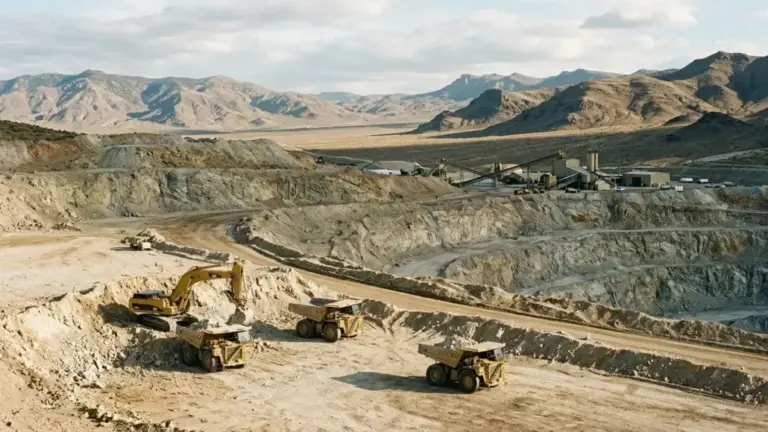
Valued at about $2 billion, the Rhyolite Ridge project is located in Nevada and is acknowledged as the largest known lithium-boron deposit in North America. Apparently, it is one of the few deposits in the world that is able to commercially produce lithium and boron from a single ore body, which is indeed a strategic asset for the transition to energy. Owned by Ioneer, which is Sydney, Australia-based, the project will employ advanced process optimization technologies in order to produce battery-grade lithium carbonate as well as boric acid right at the mine site.
It is well to be noted that this integrated production approach will boost operational efficiency while supporting the increasing demand for critical minerals essential for electric vehicle batteries, electronics, and industrial applications as well as renewable energy storage systems.
Interestingly, the project has already reached a range of important goals. It secured its last federal permit from the U.S. Bureau of Land Management in October 2024, completing the main regulatory authorization process after almost 10 years of environmental evaluations and project planning.
In addition, the U.S. Department of Energy has committed roughly $1 billion in funding, pointing out the crucial role of the project when it comes to reducing the reliance on imported critical minerals and also boosting domestic supply chains. Regulatory approvals have been obtained, financial support is on track, and the project is progressing into its construction along with operating development phase.
Under the partnership, Hyundai Engineering will take charge of purchasing activities for key equipment and industrial systems as well as construction materials. The company sees the project as an important starting point to further develop its engineering and procurement expertise in the $2bn North American critical minerals market. Hyundai Engineering intends to use its experience, in addition to supporting the Nevada development, to win further global contracts for processing lithium, rare earths, and other strategic minerals.
The partnership could also get a lift from KIND, which is looking into a possible equity investment in the effort. This involvement would strengthen collaborative efforts between the South Korean government, policy finance organizations, and private companies and improve long-term accessibility to important raw materials when it comes to Korean industries.
As per Hyundai Engineering, its involvement in Rhyolite Ridge development constitutes a major achievement as it coincides with the efforts made by the U.S. government to create resilient and varied critical mineral supply chains.
The company reiterated its dedication to the successful delivery of the project and to broadening its position in the global critical minerals infrastructure segment.
Hyundai Engineering continues to bolster its expanded engineering portfolio in other domains. Just recently, the company finished the Rene Square project located in the Euljiro 3-ga District 6 redevelopment zone in Seoul, demonstrating its knowhow when it comes to large-scale urban construction as well as its growing presence throughout industrial and energy infrastructure projects.
The lithium-boron project from Rhyolite Ridge has the potential to strengthen the long-term supply outlook when it comes to lithium carbonate as well as boric acid in North America, contributing to the growing electric vehicle market in the region, in addition to energy storage, glass, ceramics, fertilizer, as well as specialty chemical industries.
The project will have little immediate effect in its construction stage, but when completed, it will lower dependence on imported lithium products and enhance regional supply safety. More domestic production may improve supply chain resilience and mitigate future supply limitations. As new production capability comes on stream, supply risks might drop, contributing to lower price volatility along with procurement uncertainty. Overall, the project should encourage relatively stable to moderately downward pricing patterns for lithium-related chemicals and a more robust supply chain for critical minerals within North America.