
The Green Hydrogen for Decentralised Energy Systems in Sub-Saharan Africa – GH2GH project ended on 30 September 2026. Since January 2023, an international consortium has been developing, building and testing a novel hydrogen microgrid as part of the project.
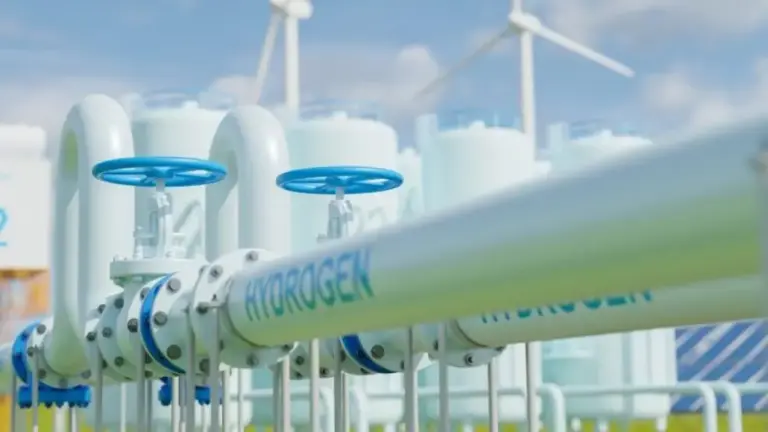
The system consists of an electrolyzer, hydrogen storage and a fuel cell and allows solar power to be utilised to produce hydrogen. The hydrogen can then be stored without losses and reconverted to electricity by the fuel cell, for example, during power grid outages. The system assessed in the project has an electrolysis capacity of 20 kW and a fuel cell capacity of 10 kW and is able to store about 1.2 MWh of chemical power and 670 kWh of electrical energy in the form of hydrogen.
The consortium of the Sustainable Technologies Laboratory at the Bochum University of Applied Sciences, Green Power Brains GmbH as well as SFC Energy AG has realized a pilot project with GH2GH which offers valuable insights into the feasibility and dependability of green hydrogen and fuel cell technologies for a decentralized energy supply in Ghana and sub-Saharan Africa. Results of the project show that such systems are an effective and sustainable alternative to diesel generators commonly employed to fill longer gaps when it comes to power generation and supply. Of special value are understandings that can only be obtained from demonstration projects under real-world scenarios. Further development of system design, water treatment, cooling and operating strategies allowed the system to run reliably in tropical conditions.
At the same time, the project especially contributed to building local expertise by means of its cooperation with local partner Don Bosco Solar as well as the Renewable Energy Center in Tema, Ghana. Engaging local stakeholders in the installation, operation and maintenance of the hydrogen microgrid, as well as training skilled personnel, contributes to developing the expertise needed for long-term deployment of the technology in the region.
Demonstration projects like GH2GH are important for visibility and acceptance of hydrogen technologies: They allow people to experience hands-on with the technology, to build confidence in the capabilities of the technology and to encourage exchange between potential users, research institutions and companies. It is well to be noted that the hydrogen microgrid in Tema will remain in operation beyond the project and will be available as a demonstration, training and pilot initiative for interested stakeholders from Ghana and West Africa. This implies that the expertise gained can continue to underpin shared knowledge, capacity building and the development of further projects across the region and simultaneously lay important foundations for the broader use of hydrogen technologies “Made in Germany”.
In addition, research by Bochum University of Applied Sciences and other partners yields significant scientific results on environmental effects, social acceptance, market potential and business models as well as degradation mechanisms in electrolyzers. GH2GH not only offers technical insights but also key answers to the query of how CleanTech “Made in Germany” is capable of successfully entering global markets.
The GH2GH project was co-financed by the Export Initiative for Environmental Protection – EXI program of the Federal Ministry for the Environment, Climate Action, Nature Conservation and Nuclear Safety – BMUKN. NOW GmbH, as the program management organization has worked in close cooperation with the project management organization ZUG gGmbH in support of the GH2GH project.