
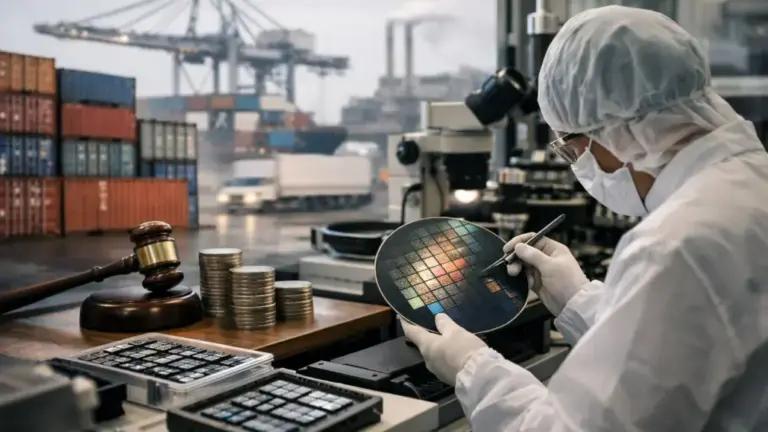
The Trump administration is considering a new round of tariffs when it comes to imported semiconductors that could result in higher taxes on overseas chips in an effort to bring a greater amount of manufacturing to the U.S., Howard Lutnick, the Commerce Secretary, said on September 2, 2026.
But those tariffs will likely be accompanied by tariff exemptions for companies that invest in domestic manufacturing, Lutnick told CNBC, taking a page from the Trump administration’s playbook that has been implemented in the pharmaceutical industry.
According to Lutnick, “That’s what you should look for in semiconductors: if you build in America, we will give you tariff relief, and if you don’t build in America, you will pay tariffs. That’s pretty much a very sensible way of doing things, and it’s working.”
It is well to be noted that President Donald Trump already hit some advanced semiconductors with 25% tariffs, imposing those import fees in January 2026 after a Commerce Department investigation into the trade. But a fresh wave of tariffs could spread far beyond semiconductors to products with chips, therefore impacting imports of data center servers as well as consumer electronics.
As per critics, higher taxes on overseas chips could make it pricier to set up data centers in the US. But Lutnick offered one possible solution, and that’s tariff relief for domestic fabrication.
Lutnick added, “I think what you’re going to see is targeted, thoughtful tariff policy that basically says, ‘If you build here, you don’t pay, but if you don’t build here, expect to pay to enter the greatest market in the world. All of the companies know they’re coming. They’ve all gone through it.”
To date, according to him, there have been commitments made so as to build semiconductors in the US worth $1.2 trillion, with companies like Taiwan Semiconductor Manufacturing Co. Ltd. as well as Micron Technology Inc. making investments in domestic facilities.
Notably, a part of that has been driven by the US-Taiwan trade pact finalized earlier in 2026. Under the deal, Taiwan promised around $500 billion in investments and credit guarantees in order to promote high-tech manufacturing in the US.
Lutnick said the island would disclose an additional $20 billion or $30 billion in terms of commitments. In the forthcoming week, they are going to be announcing another batch of investment commitments from Taiwan.