
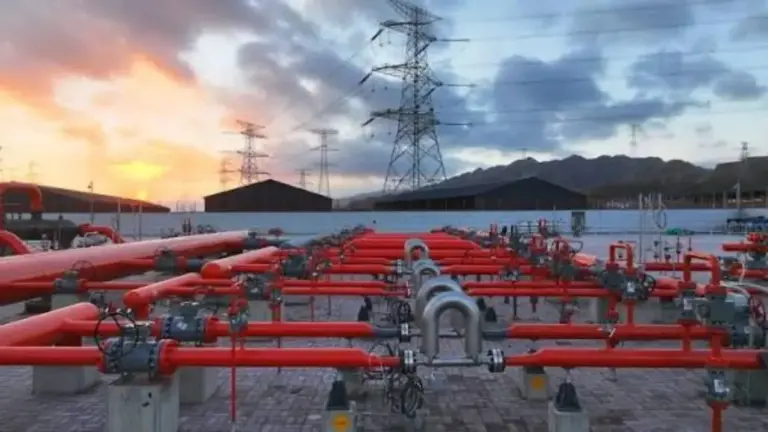
The first 100 kms plus hydrogen pipeline of China began operation on November 19, 2026, in Baotou in the northern Inner Mongolia Autonomous Region, reducing transportation costs by almost 77%.
It is worth noting that a 195-kilometre pipeline connecting green hydrogen manufacturing in Darhan Muminggan, United Banner, to industrial users was revealed to be in regular service at the 2026 hydrogen energy industry development conference, which was held in Baotou. This is an important milestone in the endeavours of China to create massive, long-distance hydrogen transportation.
The fact is that Baotou has plentiful wind and solar assets, offering abundant renewable power for the generation of green hydrogen. It has a yearly capacity to produce 7,800 tonnes of green hydrogen at comparatively low production costs. At the same time, its firmly established industrial base produces a high demand for hydrogen in industries such as chemicals, metallurgy, gas, and transportation, said Mayor Meng Qingwei.
Apparently, hydrogen has become a key strategic option since major economies are looking to speed up their energy change and upgrade their standards. Transport, however, is still a key obstacle for the establishment of the hydrogen sector. Road transport by trailers is constrained in capacity and expensive, and pipeline transport demands high standards of safety.
Hydrogen atoms are tiny and can also permeate steel, which can reduce the toughness and ductility of the pipeline in high-pressure operating conditions. To solve this problem, Baotou Iron and Steel Group created an anti-hydrogen-embrittlement steel for the pipeline. Engineers have also resolved technical problems in challenging geological environments, building on steep mountainous areas, with welding and defence of high-pressure pure hydrogen pipelines.
This first 100 kms plus hydrogen pipeline of China is intended to carry 100,000 tonnes annually. When operating at full capacity, it is projected to reduce the cost of transporting green hydrogen from approximately 13 yuan, which is around 1.94 U.S. dollars, to roughly 3 yuan per kg, a reduction of around 77%.
The director of the project developer, Inner Mongolia Huadian Hydrogen Energy Industry Technology Development Co., Ltd., Wang Xinyu, said that “This will help expand the use of green hydrogen in chemicals, metallurgy and transportation, while providing valuable experience for the construction and operation of large-scale pure hydrogen pipelines.”
Notably, China is the largest producer and consumer of hydrogen in the world, with production in excess of 39 million tonnes in 2025, official data showed.
In 2022, China published a national hydrogen energy development strategy for the 2021–2035 time frame. It aims to create rational and organised hydrogen industrial layout by the end of the decade and encourage the widespread utilisation of hydrogen generated from renewable energy to promote the nation’s peaking of carbon and carbon neutrality objectives.