
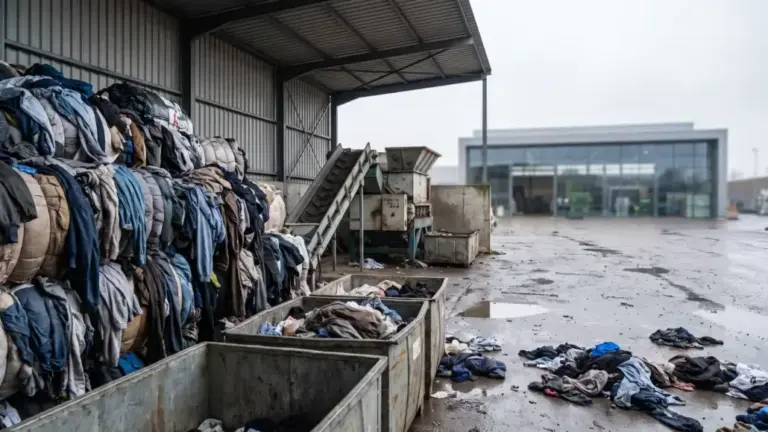
Europe is now less than a year away from a bloc-wide textile Extended Producer Responsibility (EPR) deadline, yet the very recycling infrastructure this policy is designed to fund remains far from achieving economic scale. The gap between policy ambition and ground-level reality is stark — and the numbers tell a compelling story.
According to an analysis by BCG and ReHubs, reaching a meaningful level of textile-to-textile recycling across Europe would require somewhere between €4 billion and €6 billion (approximately $4.4 billion to $6.6 billion) in new capital investment, alongside €3 billion to €3.5 billion (approximately $3.3 billion to $3.9 billion) in annual operating expenditure. These figures underline just how capital-intensive the transition toward circular fashion truly is.
Europe’s Textile Waste Reality
The same BCG/ReHubs research reveals that Europe generated approximately 12.6 million tonnes of textile waste in 2020, of which 5.5 million tonnes came from post-consumer use. Despite the scale of this waste stream, less than 1 per cent of post-consumer textiles are currently being recycled back into new textile fibres. The EPR deadline is intended to accelerate change, but the recycling ecosystem it is meant to finance is still nowhere near the capacity required to meet projected demand.
This is a critical bottleneck. The EPR framework essentially places financial responsibility for end-of-life textile management on producers, compelling brands and manufacturers to fund collection, sorting, and recycling systems. However, without the industrial infrastructure already in place, there is a fundamental mismatch between regulatory timelines and operational readiness.
Global Sourcing Exposure Adds Further Complexity
The challenge is not just domestic. Data from TexPro highlights the significant global dimension of Europe’s textile supply chain. Nearly $26.5 billion worth of apparel and home textiles entered the EU27 from non-EU suppliers during January to May 2024 alone. This level of import exposure means that any credible textile recycling and circular fashion strategy must account for the sheer volume of externally sourced material flowing into European markets every year.
The scale of this EU sourcing footprint makes textile waste management even more complex, as products designed and manufactured outside the bloc may not align with the recyclability or labelling standards that circular fashion infrastructure depends on.
The Investment Gap at the Heart of Circular Fashion
What this analysis brings sharply into focus is the investment gap standing between Europe’s circular fashion goals and their realisation. The textile EPR regulation was conceived as a funding mechanism — a way to channel producer money into the systems that would make textile recycling viable at scale. Yet with the deadline approaching rapidly and the required capital still far from committed, questions remain about whether the industry and policy ecosystem can move fast enough.
BCG and ReHubs have been consistent in flagging that textile-to-textile recycling, which would see post-consumer textile waste transformed back into usable fibre, remains a nascent capability in Europe. Closing that gap will require not only investment in recycling technology and sorting facilities but also coordinated action across brands, governments, and infrastructure providers.
The textile recycling conversation in Europe is no longer theoretical. With billions of dollars on the line and an EPR deadline drawing closer by the month, the pressure on both policymakers and the private sector to deliver on circular fashion commitments is very real — and very immediate.