Europe’s capital markets have become more integrated in some areas, but important differences remain in the infrastructure connecting investors, issuers and financial intermediaries across national borders. The European Central Bank says financial integration in the euro area has strengthened since late 2022, while fragmentation remains particularly visible in securities settlement and asset servicing. National legal frameworks, tax arrangements and market practices continue to influence how cross-border transactions are processed.
That makes European Capital Markets a question of infrastructure as much as financial depth. Investors may operate within a common European market, but the systems supporting trading, clearing, settlement and asset servicing do not always function as one integrated structure. Differences between national frameworks can add complexity to transactions that cross borders and make it harder to achieve the scale and efficiency associated with a more unified market.
The issue has gained greater policy attention as Europe looks to mobilise more private capital for investment. The European Commission’s Savings and Investments Union is intended to improve the flow of savings into productive investment and reduce barriers between national financial markets. Its market-integration measures include efforts to improve cross-border access and strengthen links between financial-market infrastructures.
Infrastructure is Becoming a Competitiveness Issue
The infrastructure challenge is most visible in post-trade activity. Securities settlement and asset servicing remain substantially organised around national structures, even after the development of shared European settlement infrastructure. The ECB has identified differences in national legal and tax systems, as well as variations in market practices, as continuing obstacles to deeper integration.
This matters because cross-border investment depends on more than the ability to execute a trade. Once a transaction has taken place, it has to be cleared, settled, recorded and serviced. When those processes require different procedures across jurisdictions, transactions can become more complex and potentially more costly than comparable domestic activity.
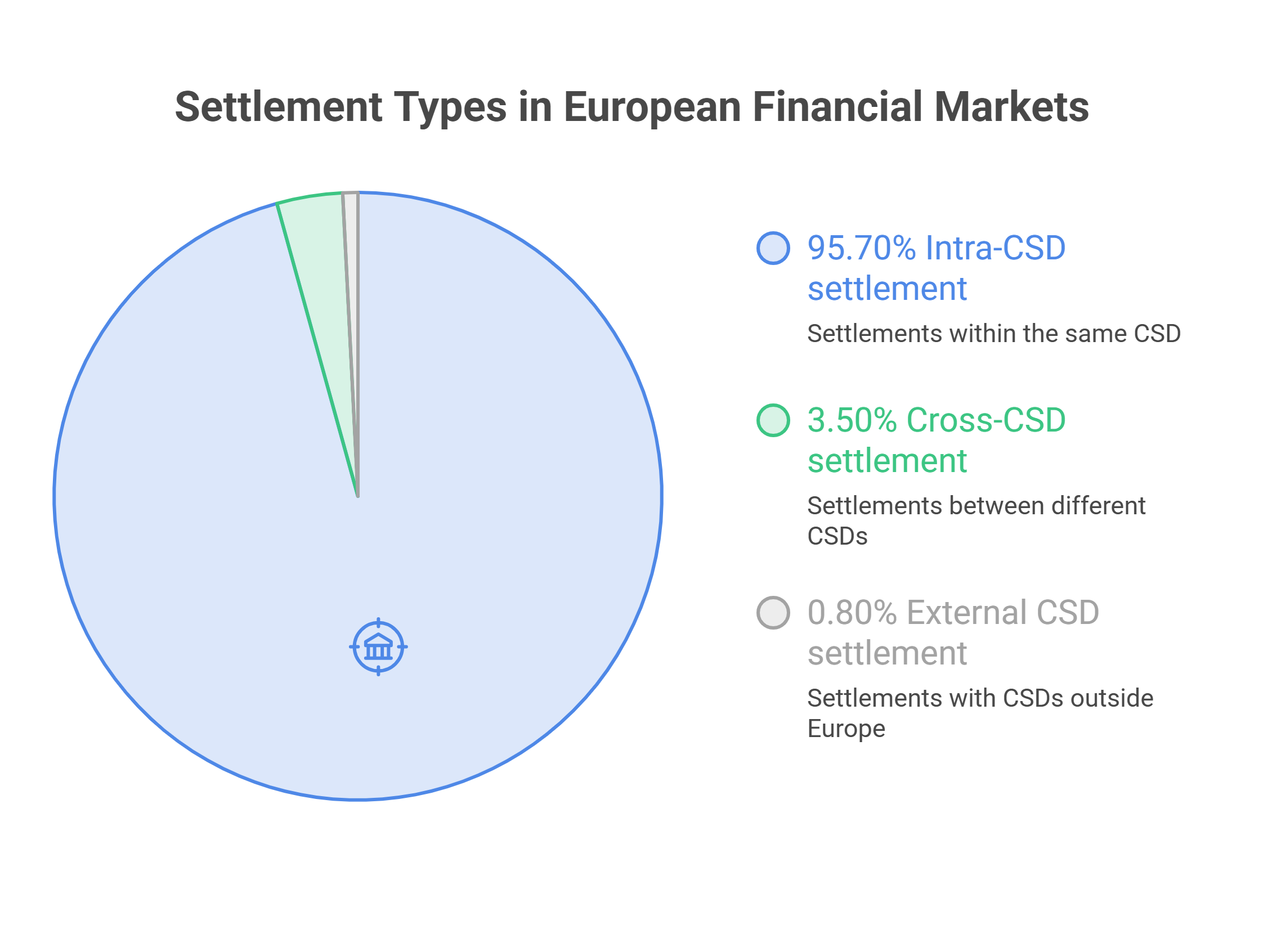
The ECB has also pointed to limited cross-CSD activity as evidence that European settlement infrastructure, while substantially more integrated than in the past, has not eliminated all barriers affecting cross-border activity. Shared systems can provide common infrastructure, but they do not automatically remove differences in legal requirements, tax processes or operational practices.
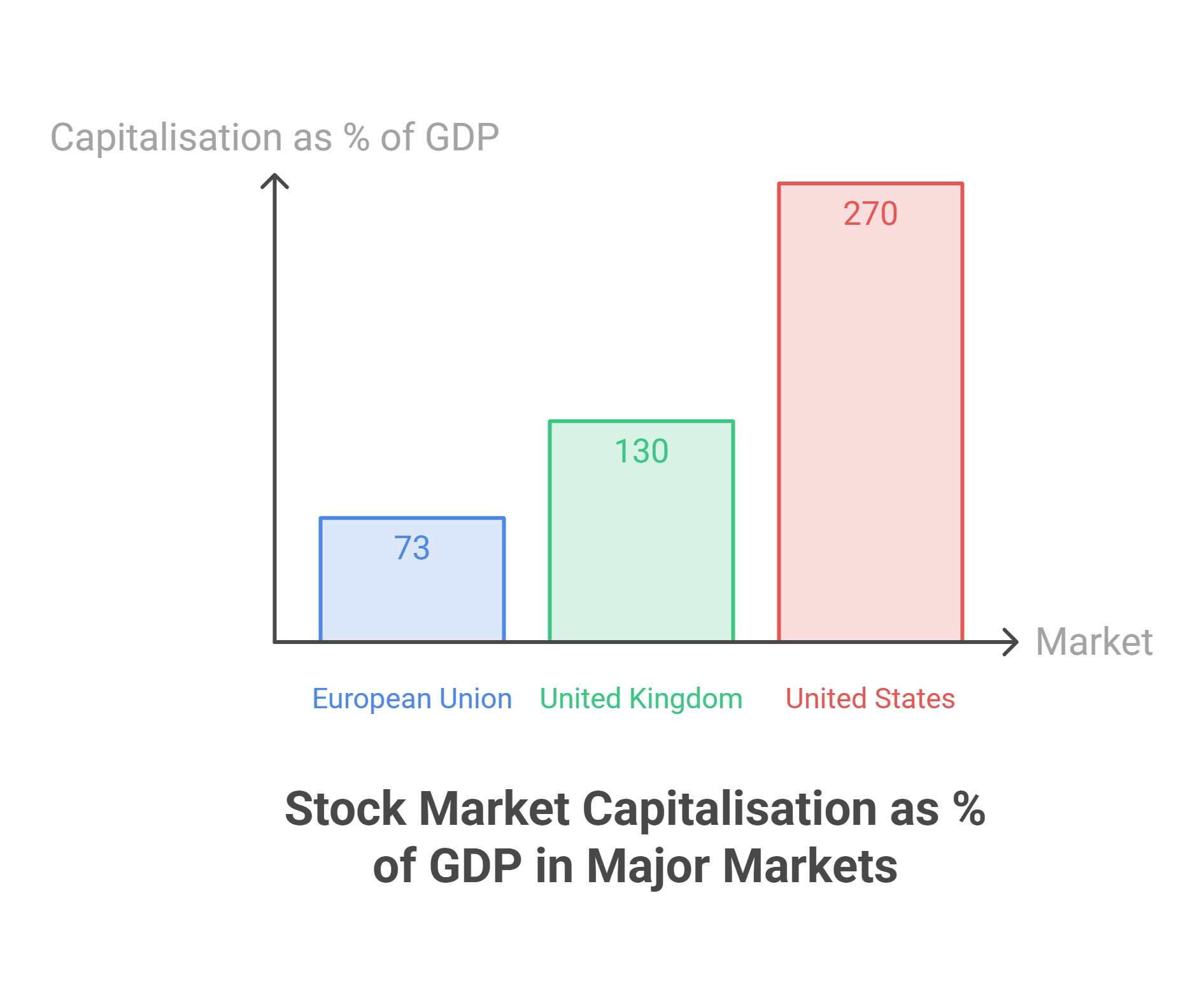
The scale of Europe’s capital markets provides another part of the context. European Commission data shows stock-market capitalisation at around 73% of EU GDP, compared with roughly 270% in the United States and 130% in the United Kingdom. The same comparison shows that European investment funds are, on average, around five times smaller than those in the United States. These figures do not establish that infrastructure fragmentation causes the difference, but they illustrate the broader scale challenge facing European capital markets.