

Maximising development during the most critical period of growth
Early intervention (EI) programmes serve infants and young children (typically birth to age three) who have been diagnosed with autism or who are showing developmental delays. Early intervention is unique among autism therapies: it is mandated by federal law in the United States (Part C of the Individuals with Disabilities Education Act, or IDEA) and is typically coordinated through a child’s state. For families of young children, early intervention is often the first formal support they receive and it is among the most important.
Why Early Matters: The Critical Window
The brain develops most rapidly in the first three years of life. By age three, the brain has formed approximately 1,000 trillion synaptic connections more than at any other point in life. During this period, the brain is exquisitely responsive to experience. Intervention during these years literally shapes the architecture of the developing brain.
Research consistently shows that children who receive early intervention services have better long-term outcomes than those whose intervention begins later even if the amount of total
intervention is the same. A year of intensive intervention at age one is more powerful than a year of intervention at age five. This is not because infants are more ‘fixable’ but because intervention during rapid development has cascading effects across all developmental domains.
What Early Intervention Includes
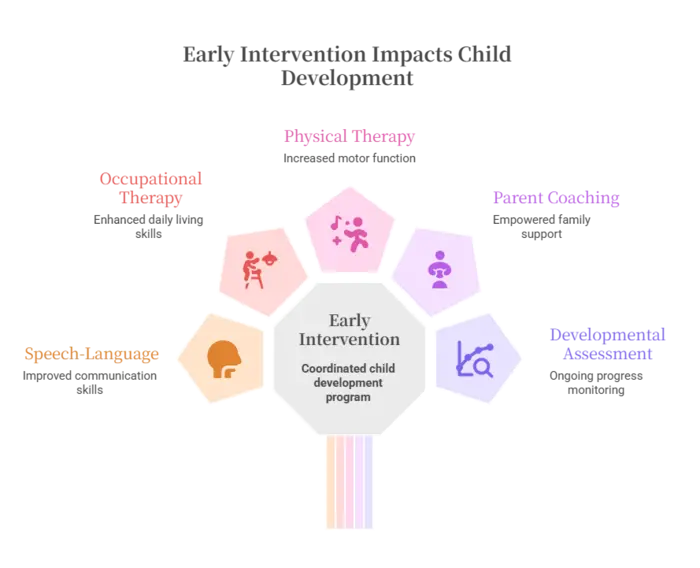 Early intervention programmes are comprehensive and coordinated. They typically include:
- Speech-language pathology
- Occupational therapy
- Physical therapy
- Parent coaching and support
- Developmental assessment and monitoring
All services are delivered in the child’s natural environment home, childcare settings, community locations rather than in an office or clinic. This is crucial. Skills learned in natural settings with natural materials and people are more likely to generalise and become truly integrated into the child’s daily life.
Services are coordinated through an Individualized Family Service Plan (IFSP), which involves the family, evaluators, and service coordinators working together to identify the family’s priorities and goals, and to plan services around those goals.
The Role of Parents in Early Intervention
Early intervention differs from later school-based services in one crucial way: parents are not supplementary. They are central. Early intervention providers coach and support parents, teaching them strategies to use during everyday routines changing nappies, meals, play, bedtime. These everyday interactions become the intervention itself.
This parent-coaching model is powerful. Parents interact with their children far more than any therapist ever will. When parents have coaching and support, they become skilled interventionists in their own child’s development. This approach respects parents as experts on their child and partners in intervention, not as supplementary helpers.
Accessing Early Intervention
Early intervention is a federally mandated service, meaning all states are required to provide it. Services are typically free or low-cost, based on a sliding fee scale. If you suspect your child has developmental delays or has received an autism diagnosis, you can request an evaluation through your state’s early intervention programme (sometimes called ‘Birth to Three’ or similar).
A developmental evaluation will assess your child across all developmental domains. If delays are found, your family works with the early intervention team to develop an IFSP and receive services during the critical early years.