
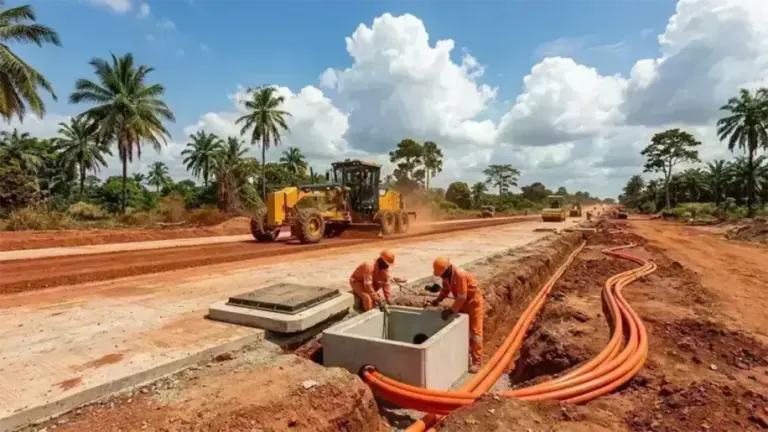
In an endeavour to accelerate broadband deployment and enhance access to reasonably priced data services, the Government says that the proposed Dig Once policy in Ghana could lower the cost of the fibre infrastructure rollout in the country by as much as 60%.
Samuel Nartey George, the minister for communication, digital technology and innovations, said that the policy is anticipated to substantially lower implementation costs for telecom operators and bolster the digital infrastructure drive in Ghana. Mr George said this at the 15th anniversary soft launch of the Ghana Chamber of Telecommunications.
According to the minister, the policy is to embed fibre infrastructure into existing government road construction projects as part of the Big Push programme.
Under the proposed arrangement, road contractors who are building new roads will need to include fibre chambers within the road designs so that telecom companies can go ahead and lay fibre cables and avoid separate digging works.
George went on to explain that there will not be any duplication of civil works and capital expenditure associated with expanding the network, as the telecom providers will just need to get right-of-way access and lay fibre by means of the already constructed chambers.
Some estimates happen to suggest that the Dig Once policy in Ghana might reduce the cost of rolling out fibre in Ghana by almost 60%.
Mr George said at present road contractors and telecom operators conduct separate excavation work, which is adding to the cost of infrastructure unnecessarily. He said that the use of fibre chambers in road building would be a more cost-efficient and effective method of creating infrastructure.
The draft policy framework has been finalised by the ministry after including the suggestions from the Ministry of Roads and Highways, as the initiative has a cross-sector impact, says the minister.
The final draft was received recently and is scheduled to be presented to the Cabinet for approval, with the government aiming for approval for implementation by the third quarter of 2026, he said.
Mr George said the initiative promises hope for a digital economy that could very well be transformative for Ghana. He said lower fibre costs for deployment should be the foundation for more network expansion, improved internet access and decreased data costs for consumers.
He said the policy is projected to bring in long-term efficiency gains within the telecommunications industry while at the same time promoting a wider digitalisation plan along with economic competitiveness in Ghana.