
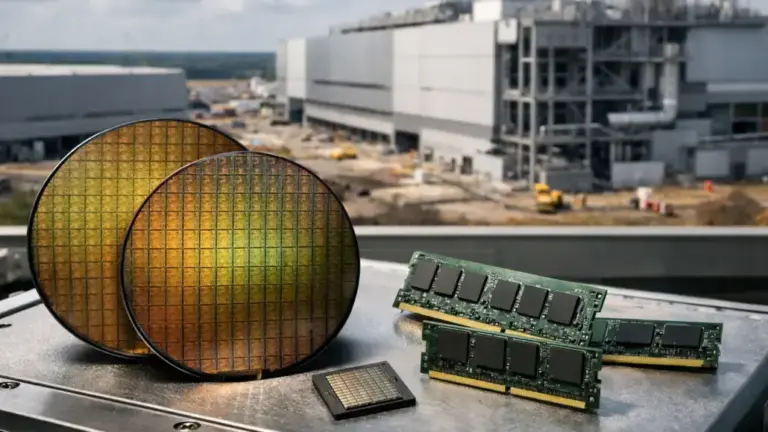
SK Hynix is negotiating with Intel on a deal that would see the South Korean company make memory chips on U.S. soil for the first time, three people familiar with the talks said.
One option would be for SK Hynix to lease part of Intel’s long-planned chipmaking facility in Ohio, they said. Another scenario has it creating a venture with Intel and key cloud companies eager to secure memory chip supplies, two of the people said.
The deal to make memory chips on U.S. soil for the first time would provide relief to a struggling Intel and be a major win for the Trump administration, which has been ramping up pressure on chipmakers to make in the United States, as constant investment in AI and data centers creates a dire shortage of memory chips.
However, the potential opposition from Seoul could be a major hurdle, the sources said.
One of the sources said the talks were exploratory, adding that no decisions have been made and SK Hynix may also consider other ways to structure the deal.
Intel stock jumped 5.5% at the opening bell on September 16 while SK Hynix shares ended up 4.1% in Seoul.
Details are emerging for the first time on how an SK Hynix-Intel deal might be structured. Reuters, however, could not determine what type of chips SK Hynix might produce in Ohio if a deal is reached.
Its products include DRAM – dynamic random-access memory chips used in servers, PCs, and smartphones and NAND flash memory chips that provide long-term storage memory. It also is the leading supplier of high bandwidth memory – HBM used in AI processing units.
Seoul’s Possible Resistance
Any deal to develop advanced memory, such as HBM or even DRAM, could face resistance from the South Korean government, as such technologies are considered sensitive, said the three sources, who declined to be identified because the information is not public.
SK Hynix, in a statement to Reuters, said it is “considering various measures, including establishing additional production bases, to strengthen the competitiveness of its memory business,” but “no matters have been determined at this stage.”
SK Hynix later said in a statement on its website on September 16, 2026 that nothing had been finalized on cooperation with any specific companies mentioned in the Reuters report or memory chip production in the United States.
Intel declined to comment on what it called speculation but said it was pressing ahead with investments in Ohio to prepare the site.
South Korea’s trade ministry said any decision about a possible SK Hynix plan to make chips in the U.S. would be up to the company, but if it involved a “national core technology,” it would be subject to a review under the Industrial Technology Protection Act.
The U.S. Commerce Department did not reply to a request for comment.
Why You Should Produce in America
Two of the sources said it is far more expensive to make semiconductors in the U.S. than in South Korea. Building in the United States has significantly higher labour and construction costs, and much of the semiconductor industry’s supply chain is in Asia, which also raises U.S. costs’, one of them said.
And SK Hynix, which just finalized a secondary listing on the Nasdaq in July and only has a chip packaging facility under construction in Indiana, has good reasons to want to make chips in the United States.
Chey Tae-won, chairman of the SK Group conglomerate that SK Hynix is part of, had said in July 2026 that the company was under tremendous pressure and lobbying from customers and countries to provide more chips. I believe we should establish a factory in the US. “If we can, I think we should build it,” he told reporters.
A deal with SK Hynix would also ease some of the financial pain Intel has been feeling, as the U.S. government owns a stake in the company.
Intel said in 2022 it would spend up to $100 billion to build what could be the world’s largest chipmaking plant in Ohio, with production beginning in 2025. But the two plants at the site are now slated for completion in 2030 and 2031.
But pleasing both Washington and Seoul may be tricky, particularly as SK Hynix and rival Samsung Electronics have been told by Seoul to accelerate plans to build a new cluster of chipmaking plants in South Korea’s southwest.
U.S. Commerce Secretary Howard Lutnick has threatened to slap tariffs as high as 100 percent on companies from South Korea and Taiwan unless they agree to boost production on American soil.
Both countries have also been squabbling over the implementation of a massive investment promise South Korea made to the U.S. last year in return for lower U.S. tariffs. Of the $350 billion proposed, $150 billion has been earmarked for shipbuilding, but the rest of the money is undecided.
That has left SK Hynix in a tight spot, with the South Korean government looking to use any U.S. investment by SK Hynix as a bargaining chip in the talks, and Washington piling on pressure for the company to quickly commit to a U.S. expansion, two sources said.