
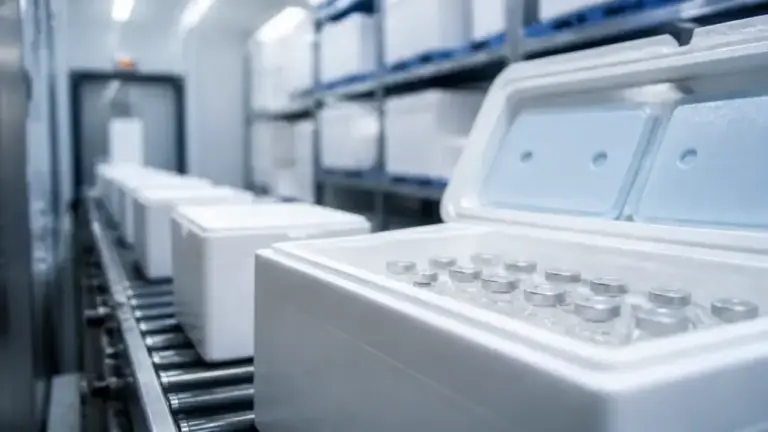
The global pharmaceutical industry is currently facing one of its most rigorous and high-stakes logistical tests: the safe, reliable, and cost-effective distribution of biosimilars. Unlike traditional small-molecule drugs, which are chemically stable and often resistant to environmental changes, biosimilars are large, structurally complex recombinant proteins expressed in living biological systems. They are acutely sensitive to environmental dynamics, particularly temperature. Maintaining a perfect and continuous +2°C to +8°C refrigerated window—or deeper frozen states for bulk drug substances—from the manufacturing floor to the patient’s clinic is a non-negotiable requirement for therapeutic efficacy and patient safety. Any breakdown in the cold chain logistics for biosimilars can lead to irreversible protein denaturation, unfolding, and the formation of dangerous aggregates. For the global industry, Pharma Advancement notes that the challenge is to build a distribution network that is as robust as it is efficient, ensuring that these life-saving therapies remain stable across every climate, border, and logistical hurdle.
The technical core of the challenge lies in the inherent biophysical fragility of the macromolecular structures themselves. Biosimilars, such as monoclonal antibodies (mAbs) and fusion proteins, possess complex tertiary and quaternary conformations that are held together by delicate non-covalent bonds. If the product is exposed to temperatures outside the validated range—a phenomenon known as a thermal excursion—even for a short period, it can undergo irreversible degradation. Freezing excursions are particularly catastrophic. The formation of ice crystals can cause mechanical shearing of the protein and cryo-concentration, leading to the formation of sub-visible particles (SVPs). These aggregates are not only therapeutically ineffective but can also act as potent immunogens, breaching immune tolerance and inducing the production of anti-drug antibodies (ADAs). These ADAs can neutralize the drug’s efficacy or cause severe, potentially life-threatening immunological reactions in patients.
Temperature-Controlled Storage and Advanced Thermal Packaging
To mitigate these risks, cold chain logistics for biosimilars relies on a sophisticated, multi-layered approach to thermal protection. At the central storage and hub level, Automated Storage and Retrieval Systems (ASRS) operating within climate-controlled warehouses are being deployed to minimize the time that products are exposed to ambient temperatures during the pick-and-pack and sorting process. This automation reduces human error and ensures that the cold chain is maintained even in high-volume distribution centers. When it comes to long-haul transportation, the industry is rapidly moving away from traditional expanded polystyrene (EPS) boxes and toward advanced Vacuum Insulation Panels (VIPs). These panels, when integrated with high-performance Phase Change Materials (PCMs) engineered for specific phase-transition points near +4°C, can provide over 120 to 144 hours of autonomous thermal stability without the need for external power, protecting the product during transoceanic flights or significant transit delays at customs.
However, the efficacy of these advanced passive systems depends on precise conditioning and handling by logistics personnel. If a PCM pack is not properly pre-conditioned or if it is placed in direct contact with the primary packaging of the biosimilar, it can cause the very freezing excursion it was designed to prevent. This has led to the adoption of rigorous Good Distribution Practice (GDP) standards, such as EU GDP 2013/C 343/01 and USP <1079>. These mandates require the use of fully validated shippers and the continuous training and certification of all personnel in the logistics chain. For cold chain logistics for biosimilars, every node in the network—from the airline ground crew to the last-mile delivery driver—must understand the high-stakes, temperature-sensitive nature of the cargo they are handling to prevent costly batch losses and patient safety risks.
Real-Time IoT Monitoring and Digital Transparency
The most significant and transformative advancement in cold chain logistics for biosimilars is the integration of real-time IoT (Internet of Things) monitoring. Modern data loggers, equipped with 5G, NB-IoT, and satellite communication capabilities, now provide a continuous and high-fidelity stream of data on temperature, relative humidity, light exposure, physical shock, and GPS location. This data is fed into cloud-based dashboards, providing logistics managers with absolute visibility of their global inventory. If a temperature drift is detected, the system can instantly alert the provider, allowing for immediate intervention—such as moving the shipment to a nearby refrigerated facility or re-icing the container—before the product’s quality is compromised. This proactive risk management is the new standard for the industry.
Furthermore, this real-time data is becoming the bedrock of regulatory compliance and commercial insurance validation. Under frameworks like the US Drug Supply Chain Security Act (DSCSA) and the EU Falsified Medicines Directive (FMD), the ability to prove a continuous and un-interrupted Chain of Custody (CoC) is a legal requirement. By utilizing immutable blockchain ledgers to store temperature records, manufacturers can provide absolute transparency to regulators, payers, and healthcare providers. If a thermal excursion does occur, AI-driven stability analysis can calculate the Mean Kinetic Temperature (MKT) and compare it against drug-specific stability data (ICH Q5C) to determine if the batch is still safe for use. This reduces unnecessary pharmaceutical waste while ensuring that no compromised medication ever reaches a patient.
Last-Mile Distribution and the Rise of Direct-to-Patient (DTP)
The final stage of the journey—the last mile—remains the most vulnerable and technically difficult link in the cold chain logistics for biosimilars. This is especially true for self-administered biologics used in the treatment of chronic conditions like rheumatoid arthritis or multiple sclerosis. The move toward Direct-to-Patient (DTP) and home-care models, while highly convenient for patients, introduces the risk of unconditioned doorstep environments, variable transit times, and the inherent instability of domestic refrigerators. To address this, specialized logistics providers are developing smart home delivery containers that maintain the cold chain until the patient is ready to administer the dose. These units often feature integrated Bluetooth sensors that notify the patient’s mobile app or their healthcare provider when the medication has been successfully delivered and safely stored.
Moreover, the expansion of biosimilars into emerging markets introduces severe and systemic infrastructure challenges. In regions with unreliable power grids and a lack of modern refrigerated transport fleets, the cold chain logistics for biosimilars requires innovative, off-grid solutions. This includes the deployment of solar-powered refrigerators and active refrigeration containers equipped with long-life, high-capacity batteries. Building a truly global and equitable distribution network requires not only technological innovation but also a significant and sustained investment in the physical and digital infrastructure of these developing regions, ensuring that all patients, regardless of their geographic location, have access to high-quality, stable biotherapeutics.
Strategic Takeaways for Global Cold Chain Integrity
The integrity of the cold chain is the fundamental and non-negotiable foundation upon which the global biosimilar market is built. For the pharmaceutical, biotech, and logistics sectors, the goal is to create a seamless, fail-safe, and transparent distribution network that protects every dose.
Cold chain logistics for biosimilars is a complex, data-driven, and highly regulated discipline that is essential for maintaining the safety, structural integrity, and therapeutic efficacy of complex biologics. By integrating advanced VIP and PCM packaging, real-time IoT monitoring, and GDP-compliant processes, the industry is overcoming the physical and logistical hurdles of global distribution. The success of this transition depends on the adoption of digital transparency, the use of blockchain for chain of custody, and the expansion of specialized cold-chain infrastructure into all emerging and remote markets.
To lead in this high-stakes sector, stakeholders must prioritize the modernization of the last-mile delivery network and the implementation of robust cybersecurity measures to protect the integrity of the digital tracking and monitoring systems. The move toward DTP models and global market expansion requires a holistic strategy that includes not only the physical technology but also the continuous training and international regulatory alignment needed to operate safely and efficiently at scale. By investing in these advanced cold chain capabilities today, the pharmaceutical industry can ensure that the promise of affordable, life-saving biosimilars is fulfilled for every patient, no matter where they live or how complex the logistical path may be. The integrity of the cold chain is the ultimate assurance of drug quality. Pharma Advancement believes that by mastering the science of temperature-controlled distribution, the logistics sector is playing a vital role in the global health ecosystem, protecting the potency of every dose and ensuring that medical innovation is delivered safely to the point of care. This commitment to distribution excellence is the hallmark of a healthcare system that values patient safety above all else, ensuring that the benefits of biotherapeutics are never lost in transit but reach every patient in their intended, life-saving form.