
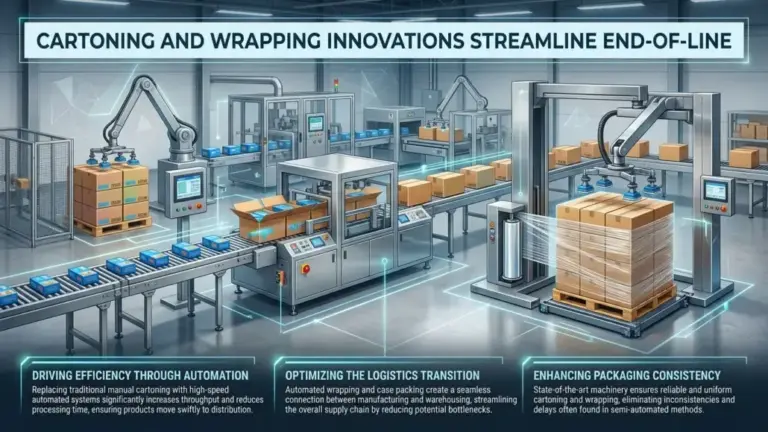
The final stages of the production process, where individual units are grouped and prepared for the broader distribution network, represent a critical transition from manufacturing to logistics. For many years, the tasks of cartoning, wrapping, and case packing were seen as secondary to the primary packaging process, often relying on semi-automated methods that were prone to delays and inconsistencies. However, as global supply chains become more complex and the demands for higher throughput increase, the focus on the final stages of the line has intensified. It is now widely recognized that cartoning and wrapping innovations are essential for creating a seamless and efficient manufacturing workflow that can support the needs of a modern economy.
Cartoning machinery has evolved from simple mechanical folders to sophisticated systems that can handle a wide variety of box styles and product configurations. Modern systems utilize servo-driven motion control and robotic assistance to load products into cartons with high precision and speed. This automation ensures that the final unit is structurally sound and visually appealing, which is vital for maintaining brand integrity on the retail shelf. By eliminating the manual labor and the high rate of errors associated with older technology, these innovations provide a significant boost to the overall packaging efficiency of the facility.
Advancements in Secondary Packaging and Case Packing
The role of secondary packaging is to protect the primary units during transit and to facilitate efficient handling throughout the supply chain. Cartoning and wrapping innovations are driving a shift toward more integrated and flexible secondary packaging solutions. Modern case packers can be programmed to handle multiple product formats and case sizes, allowing for a rapid switch between different orders with minimal downtime. This flexibility is particularly important in a market where retailers are increasingly demanding smaller and more frequent shipments, requiring a high degree of responsiveness from the manufacturer.
The integration of robotic pick-and-place systems within the cartoning and case packing process has also improved the precision and speed of these operations. These robots can orient and stack products in complex patterns that would be difficult to achieve with traditional mechanical systems. Furthermore, the use of advanced sensors ensures that every case is complete and that the product is placed correctly before the carton is sealed. This level of oversight is essential for maintaining the high standards of a modern manufacturing workflow and for reducing the costs associated with product damage and returns during transit.
Wrapping Systems and Shrink Wrapping Innovation
Wrapping systems provide a vital final layer of protection for many products, particularly in the beverage, personal care, and pharmaceutical sectors. Cartoning and wrapping innovations in the field of shrink wrapping and stretch wrapping have led to the development of systems that provide a tighter and more consistent seal while using less material. Modern shrink tunnels utilize precise temperature control and airflow to ensure that the film conforms perfectly to the product, providing a professional appearance and a robust barrier against dust and moisture. This efficiency not only improves the safety of the product but also reduces the environmental impact of the packaging process.
The move toward sustainable packaging materials is also being supported by innovations in wrapping technology. Manufacturers are developing systems that can handle thinner and more environmentally friendly films, such as those made from recycled or bio-based polymers. The ability to maintain high speeds and consistent quality while using these specialized materials is a significant technical achievement. By utilising cartoning and wrapping innovations that are compatible with sustainable materials, firms can demonstrate their commitment to environmental responsibility while maintaining the functional excellence that their customers expect.
Enhancing Manufacturing Workflow and Efficiency
The successful integration of these advanced systems into the end of line process requires a comprehensive approach to manufacturing workflow design. It is no longer sufficient to view cartoning and wrapping as isolated tasks; they must be synchronized with the upstream filling and downstream palletizing processes to achieve the full benefits of automation. Modern packaging lines utilize a central control system that provides real-time visibility into the performance of every machine, allowing for the rapid identification and resolution of any bottlenecks. This level of coordination is a hallmark of a high-performance facility and is essential for maintaining a competitive edge in a global market.
The data generated by modern cartoning and wrapping machinery also provide a wealth of information for process optimization. By analyzing the speed, downtime, and material usage of each machine, production managers can identify trends and anomalies that may indicate a need for maintenance or adjustment. This proactive approach to management ensures that the line continues to operate at peak efficiency and that any potential issues are addressed before they lead to a significant production stoppage. The ability to leverage this data is a key characteristic of the modern, data-driven approach to packaging efficiency.
Strategic Value and Market Resilience
For firms looking to thrive in an increasingly uncertain economic environment, the investment in cartoning and wrapping innovations is a strategic priority. The benefits of these systems extend across the entire organization, from improved productivity and lower labor costs to enhanced product safety and quality. By creating a more efficient and reliable end of line process, firms can improve their overall market resilience and ensure that they can meet the changing demands of their customers with ease. The final stages of the production line are where the value created during manufacturing is secured for distribution, making them a vital part of the overall business strategy.
Conclusion
The move toward a more automated and integrated end of line process is a fundamental shift in the packaging industry. By replacing older mechanical and manual methods with flexible, intelligent systems, firms can achieve a level of operational precision that was previously impossible. The benefits of cartoning and wrapping innovations are visible in every aspect of the facility, from the physical flow of materials to the financial performance of the organization. As the technology continues to mature, it will remain a critical factor in the success of the global manufacturing sector for decades to come.
In the coming years, the focus will likely remain on the development of even more flexible and modular systems that can adapt to the diverse needs of the global supply chain. The ability to manage a wide variety of products and packaging formats with minimal downtime will remain a key characteristic of successful firms. The ongoing commitment to cartoning and wrapping technology will continue to provide the foundation for a more efficient, responsive, and high-quality packaging sector.