
1. How is Xylem helping life sciences organizations maintain sterility, reliability, and compliance in critical fluid transfer processes?
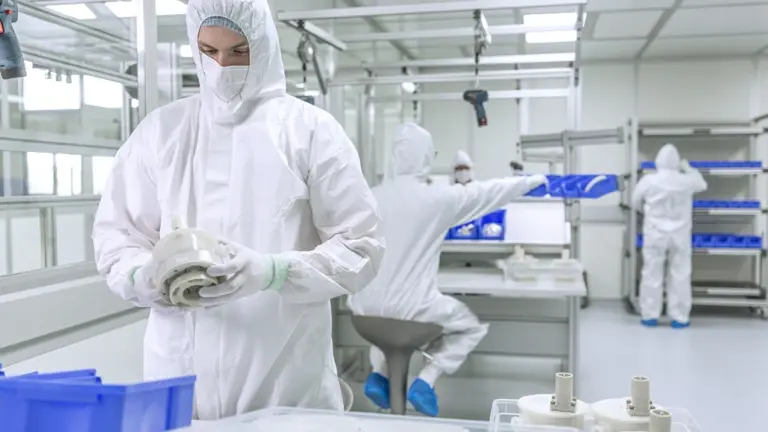
Fluid handling sits at the heart of biopharmaceutical manufacturing and getting it right isn’t just a technical requirement, it’s a business imperative. Through our Jabsco brand, we work alongside manufacturers to deliver reliable, compliant fluid transfer solutions for the applications that matter most: media and buffer preparation, intermediate processing, and final drug product handling.
What we’ve learned working alongside our customers is that there’s no single right approach to sterility and compliance. Different processes, facility configurations, and production strategies call for different tools and manufacturers deserve options that genuinely fit how they operate, not solutions that ask them to redesign their process around the equipment.
That’s why we’ve built a complete portfolio spanning both single-use and reusable diaphragm pump technologies, each grounded in the same fundamental commitment: gentle, low-shear fluid handling that protects sensitive biologics, including vaccines and cell therapies, throughout transfer, while supporting the regulatory documentation and process validation that our customers rely on. Giving manufacturers the flexibility to choose the approach that best fits their compliance strategy, without compromising on performance, is central to how we think about our role in this industry.
2. What challenges do manufacturers face around contamination, validation, and system reliability, and how can advanced pump technologies help?
The pressure to reduce contamination risk while maintaining process consistency is one of the most persistent challenges our customers navigate. Traditional clean-in-place and steam-in-place processes demand significant time, resources, and validation effort, and introduce variability that’s difficult to control at scale. But different manufacturers approach this challenge differently, and the right solution depends heavily on their process design philosophy, product mix, and facility strategy.
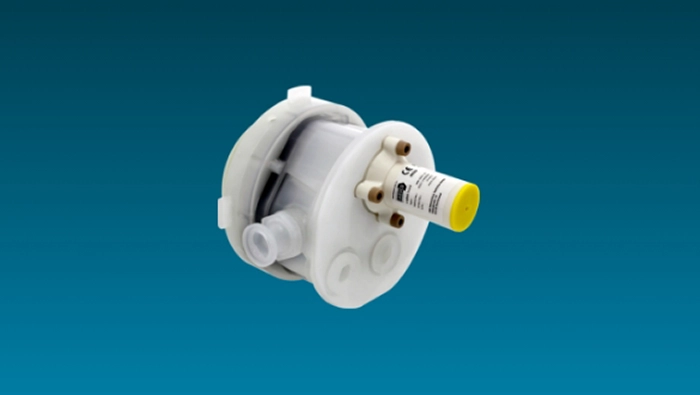
For teams working to eliminate cleaning validation altogether, single-use technologies offer a direct answer. Pre-assembled, gamma-irradiated, disposable flow paths establish a sterile barrier before a pump ever connects to a process line. That means no cleaning cycle to validate, no residue testing, and no risk of cleaning agent carryover. In high-value biologics manufacturing, where a single batch failure can represent millions in lost product, that level of assurance matters enormously.
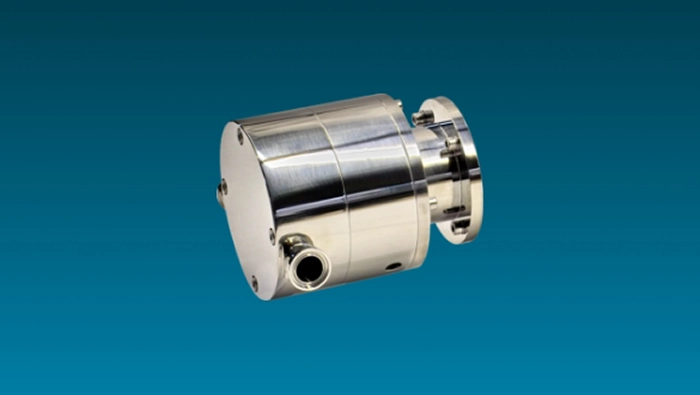
For operations that prefer or require reusable systems, the challenge is ensuring that cleaning is thorough, verifiable, and consistent. Well-designed reusable diaphragm pumps eliminate shaft seals, a common contamination and maintenance challenge, and are engineered for CIP compatibility, with liquid contact parts that conform to FDA and USP Class VI standards. This supports validation and regulatory documentation without requiring a fundamental change to how a facility operates. Having both approaches available within our portfolio means we can help our customers solve for the specific contamination and reliability challenges they actually face.
3. Sustainability has become a major priority across the pharmaceutical industry. How is Xylem supporting organizations in improving resource efficiency, reducing operational waste, and minimizing energy use in critical fluid handling processes while maintaining product quality and performance?
Sustainability is a commitment we take seriously, and fluid handling is one of the areas where we can help our customers make genuine, measurable progress against their ESG goals – not just incremental gains.
The most resource-intensive activities in many pharmaceutical manufacturing environments are cleaning and sterilization processes. CIP and SIP cycles consume significant volumes of water, chemical reagents, and thermal energy with every run and in high-throughput operations, that overhead compounds quickly. One of the most direct ways we support our customers’ resource efficiency goals is by offering single-use technologies that eliminate these cycles entirely. Removing CIP and SIP from the process doesn’t just reduce water and energy consumption, it also shortens turnaround times, reduces chemical waste streams, and lowers the operational complexity that drives energy use across the facility. Product quality and sterility are maintained through pre-validated, gamma-irradiated flow paths rather than through resource-intensive cleaning protocols.
For operations where reusable systems are the right fit, we support sustainability through pump designs engineered to minimize maintenance burden, run efficiently across a wide operating range, and eliminate shaft seals that can contribute to both contamination risk and premature equipment wear. Longer equipment life and lower maintenance frequency directly reduce the material and energy footprint of fluid handling operations over time.
We work alongside our customers to understand where their most significant environmental impacts lie because the right answer isn’t the same for every facility or every process. Together, we can identify fluid handling approaches that move the needle on resource efficiency, waste, and energy use without asking them to trade away the product quality and process reliability their operations depend on.
4. Biopharmaceutical manufacturing relies on highly controlled and contamination-free processes. What are the most significant challenges facing the sector today, and what strategies are proving most effective in overcoming them?
When we look across the manufacturers we work with, maintaining sterility and product integrity throughout the production process consistently rises to the top of the list. As biologics, cell therapies, and advanced medicines become more complex and sensitive, the consequences of contamination – a compromised culture, a failed batch, a regulatory finding – grow more severe. In high-value, low-volume production environments, there is simply no margin for error, and the financial and operational impact of a single contamination event can be significant.
The strategies proving most effective share a few common principles. First, closed or closable processing that minimizes human touchpoints because every manual intervention is a potential contamination vector. Second, fluid path designs that are either fully disposable or demonstrably and reliably clean, eliminating the risk of carryover between batches or campaigns. Third, pump technologies designed for low-shear handling of sensitive molecules where physical stress during transfer can directly compromise yield and efficacy.
Beyond contamination, manufacturers increasingly identify process consistency and validation burden as compounding challenges. Variability introduced by cleaning cycles, operator handling, or equipment performance over time creates downstream quality risk and regulatory complexity. The most resilient operations we see are those that address these challenges through design, selecting technologies that reduce variability at the source rather than trying to detect and manage it after the fact.
5. Digital transformation is reshaping operations across the life sciences industry. How are smart technologies improving reliability and risk management in fluid transfer?
Digital transformation is reshaping biopharma manufacturing and much of the conversation rightly centers on data, connectivity, and automation. But some of the most meaningful advances in process reliability don’t come from layering more monitoring hardware onto existing systems. Sometimes they come from building intelligence directly into the equipment itself and that’s an area where we’ve invested considerable engineering focus.
A practical example is the integrated adjustable bypass technology we developed for our single-use diaphragm pumps. Rather than relying on external pressure relief valves, rupture disks, or additional instrumentation, the pump incorporates a self-contained bypass mechanism that automatically recirculates fluid within the pump head when pressure thresholds are exceeded and self-resets once conditions return to normal. There’s no manual intervention required, no external components to commission and validate, and no disruption to process continuity. We documented this approach in detail in a white paper on advancing pressure protection in biopharma, which examines how integrated bypass technologies compare to traditional external relief approaches.
Across our reusable platform, built-in programmable drive and control options give operators direct command over speed and flow without requiring a separate external converter or control architecture. For teams managing complex process parameters or integrating pumps into broader automation environments, that level of built-in control simplifies setup and commissioning considerably.
Together, these examples point toward the same principle: smarter fluid handling doesn’t always mean more external hardware. Often, it means more thoughtfully engineered equipment.
6. How does Xylem support accuracy and repeatability in critical applications?
In both development and commercial manufacturing environments, precision and repeatability in fluid transfer directly influence process outcomes. When flow rates vary, batches vary, and in regulated manufacturing, unexplained variability compounds quickly into quality and compliance challenges.
Our diaphragm pump portfolio is designed to deliver accurate, pulseless flow with consistent performance across production runs. On the reusable side, a wide adjustable flow range and multiple speed-control configurations give process teams the precision to dial in exactly the flow profile their application requires, at scales ranging from laboratory development through commercial production. On the single-use side, disposable flow paths eliminate the performance drift that can develop in reusable systems over repeated cleaning cycles, ensuring each run starts from the same validated baseline.
This consistency matters throughout the full development lifecycle, not just in commercial manufacturing. When teams are scaling processes from bench to pilot to production, they need confidence that fluid handling performance will translate reliably at each stage. Repeatability reduces the risk of failed scale-up and supports more efficient, confident process transfer and that’s where having options across both platforms gives our customers a genuine advantage.
7. The rapid growth of biologics, cell and gene therapies, and personalized medicine is driving new demands on pharmaceutical infrastructure. How are new therapies influencing pump design and performance expectations?
The growth of biologics, cell and gene therapies, and personalized medicines is fundamentally changing what manufacturers need from their fluid handling systems. Smaller batch sizes, higher product sensitivity, rapid campaign changeovers, and the need to process multiple products through shared infrastructure. These aren’t future considerations; they’re today’s operational realities.
Pump design is evolving in response. The priority has shifted toward gentle handling of increasingly sensitive biological materials, including protein solutions, cell suspensions, virus suspensions, bacteria, yeast, fungi, mammalian cells, and polymer solutions with minimal thermal effect, even on small volumes. Low-shear diaphragm technology is well matched to these demands, and it’s where we’ve concentrated our engineering investment for these applications. When working with rare, high-value starting materials where any loss is significant, the ability to transfer with precision and care is directly tied to yield outcomes.
At the same time, the flexibility demands of personalized and advanced therapies are reshaping what manufacturers need from a changeover perspective. Single-use technologies address this directly. Disposable flow paths eliminate cleaning validation between campaigns, supporting the rapid, confident transitions that small-batch, multi-product environments require. Together, our reusable and single-use options let us support customers wherever they are in their development and manufacturing journey, from early clinical work through commercial scale.
8. Environmental stewardship and ESG commitments are becoming increasingly important for life sciences organizations. How do fluid handling technologies contribute to sustainability goals?
Fluid handling may not be the first area that comes to mind when life sciences organizations discuss ESG, but it plays a direct and measurable role in environmental performance, and it’s an area where the choices manufacturers make have real consequences.
The most significant contribution varies depending on a facility’s process design. Where CIP and SIP processes represent a major share of water, chemical, and thermal energy consumption, eliminating them through single-use technologies delivers direct, measurable reductions, contributing to the water and carbon targets many of our customers are working to meet. Where reusable systems are well-suited to a facility’s processes, avoiding disposable flow path components reduces material waste over a product’s lifetime that’s an increasingly important consideration as organizations work toward broader waste reduction commitments.
We recognize that neither approach fully resolves the other’s trade-offs. Our aim is to help our customers make fluid handling decisions that serve their sustainability commitments alongside their operational and quality requirements, and we see that as a shared responsibility we’re committed to working through together.
9. Operational resilience and business continuity have become strategic priorities for manufacturers worldwide. What steps can companies take to ensure reliable, uninterrupted fluid transfer?
Operational resilience has become a genuine strategic priority – particularly as global supply chain disruptions have exposed vulnerabilities across pharmaceutical manufacturing. For producers of critical medicines, the ability to maintain uninterrupted production isn’t just a business goal; it’s a responsibility to patients and the healthcare systems that depend on them.
Reliable fluid handling contributes to resilience in practical, tangible ways. Reducing the complexity of cleaning and validation processes means fewer points of potential failure and faster recovery when campaigns need to change. Single-use technologies enable rapid changeovers and shorten turnaround time between production runs – an advantage that becomes especially critical in time-sensitive environments like vaccine or emergency medicine manufacturing. Robust reusable pump designs, built to run dry, rated for demanding industrial environments, and available in configurations that integrate cleanly into broader process control architectures, bring their own resilience characteristics, reducing unplanned downtime risk in continuous or high-volume operations.
Selecting equipment engineered for consistent, predictable performance also means that fluid handling doesn’t become a bottleneck. When transfer works reliably, operations teams can direct their attention to the higher-order challenges that genuinely require it. We work closely with our customers to ensure their fluid handling infrastructure is built for the resilience their operations require, and that means offering the right tool for each context, not simply a single solution.
10. Looking ahead, what trends will shape the future of fluid handling in biopharma?
The future of fluid handling in biopharma will be shaped by the same forces reshaping manufacturing more broadly: the continued expansion of single-use and modular production models, increasing automation and process integration, a sharper focus on sustainability and resource efficiency, and the relentless complexity of next-generation biologic therapies.
We see several converging trends that will define how fluid handling technology develops over the next decade. Decentralized and modular manufacturing, driven by the demands of personalized medicine and distributed production, will require solutions that are compact, flexible, and deployable across varied facility configurations. The increasing sensitivity of next-generation biologics will continue to raise the bar for low-shear handling and product integrity at every fluid transfer step. And as personalized therapies scale from clinical to commercial production, rapid and reliable campaign changeovers will become a core operational capability rather than a nice-to-have.
Sustainability will also continue to drive innovation in materials, energy efficiency, recycling programs, and lifecycle management. Here, the ability to offer both single-use and reusable platforms matters. Different manufacturers will find different paths toward their environmental goals, and a complete portfolio means we can support our customers wherever they are on that journey.
Through our Jabsco brand, we’re committed to evolving alongside these trends, developing solutions that combine performance, compliance, flexibility, and environmental responsibility to meet the demands our customers will face in the years ahead. The pace of change in this industry is real, and we’re focused on making sure our customers can navigate it with confidence.