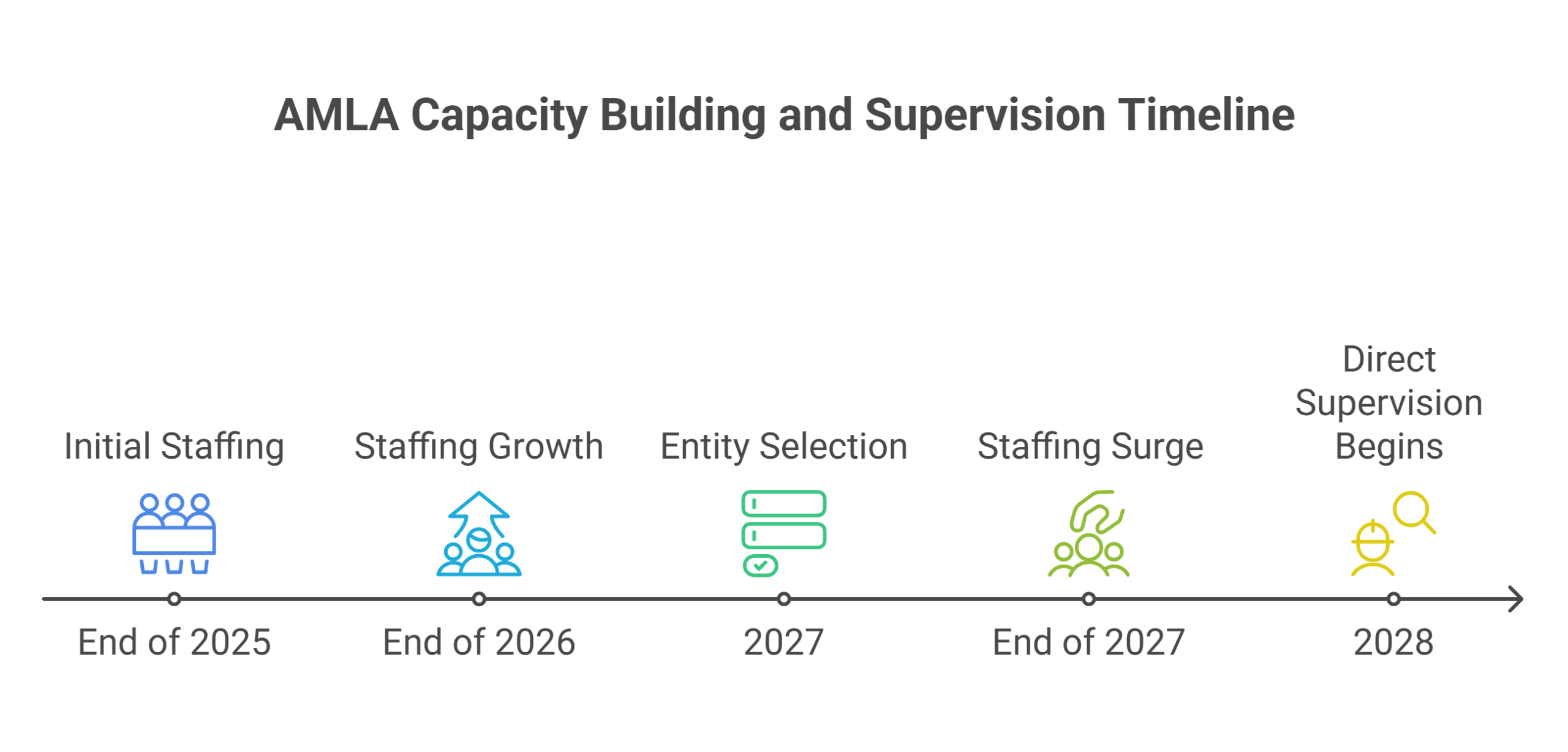
The European anti money laundering framework is entering a new supervisory phase as responsibility shifts toward a more integrated model. The creation of the Authority for Anti Money Laundering and Countering the Financing of Terrorism introduces an EU level institution with direct supervisory powers over selected high risk financial institutions, while national authorities remain responsible for the wider supervised population. This is making AMLA supervision a central element of how financial crime controls will be assessed across the European market.
The transition is already underway. AMLA completed the transfer of all anti money laundering and countering the financing of terrorism mandates from the European Banking Authority on 1 January 2026, including supervisory insights, risk assessments and the EuReCa database. Existing guidelines and standards remain in force until they are replaced, creating continuity while the new supervisory structure is being developed.
The next major milestone is direct supervision. AMLA will select up to 40 financial institutions or groups for direct supervision during 2027, with the selected entities moving to EU level supervision from 2028. Eligibility is based on cross border activity and risk, including institutions active in at least six Member States with a high residual risk profile. The selection methodology is being developed through a common risk assessment framework intended to make risk categorisation more consistent across supervisors.
Risk Assessment is Becoming More Standardised
This common methodology is an important change for AMLA supervision because it moves risk assessment toward a more consistent framework. In March 2026, AMLA launched a data collection exercise to test and calibrate the models that will inform the 2027 selection process. The exercise includes entities that may qualify for direct supervision as well as a representative sample expected to remain under national supervision.
The process is increasingly data driven. In May 2026, AMLA published a standardised reporting package for national supervisors to identify entities provisionally eligible for direct supervision. The package includes a common reporting template and interpretative guidance, indicating that data consistency is becoming part of the supervisory infrastructure itself.
The scale of AMLA’s institutional build out also illustrates the transformation. Its 2026 to 2028 programming document expects staffing to increase from 120 at the end of 2025 to 432 by the end of 2027, as the authority develops its supervisory, analytical and technological capabilities.