The European Union’s new anti money laundering framework is putting greater emphasis on consistency in how breaches are identified, assessed and sanctioned. As the Authority for Anti Money Laundering and Countering the Financing of Terrorism takes on a stronger supervisory role, the objective is increasingly to reduce differences in enforcement outcomes where comparable breaches occur under similar circumstances.
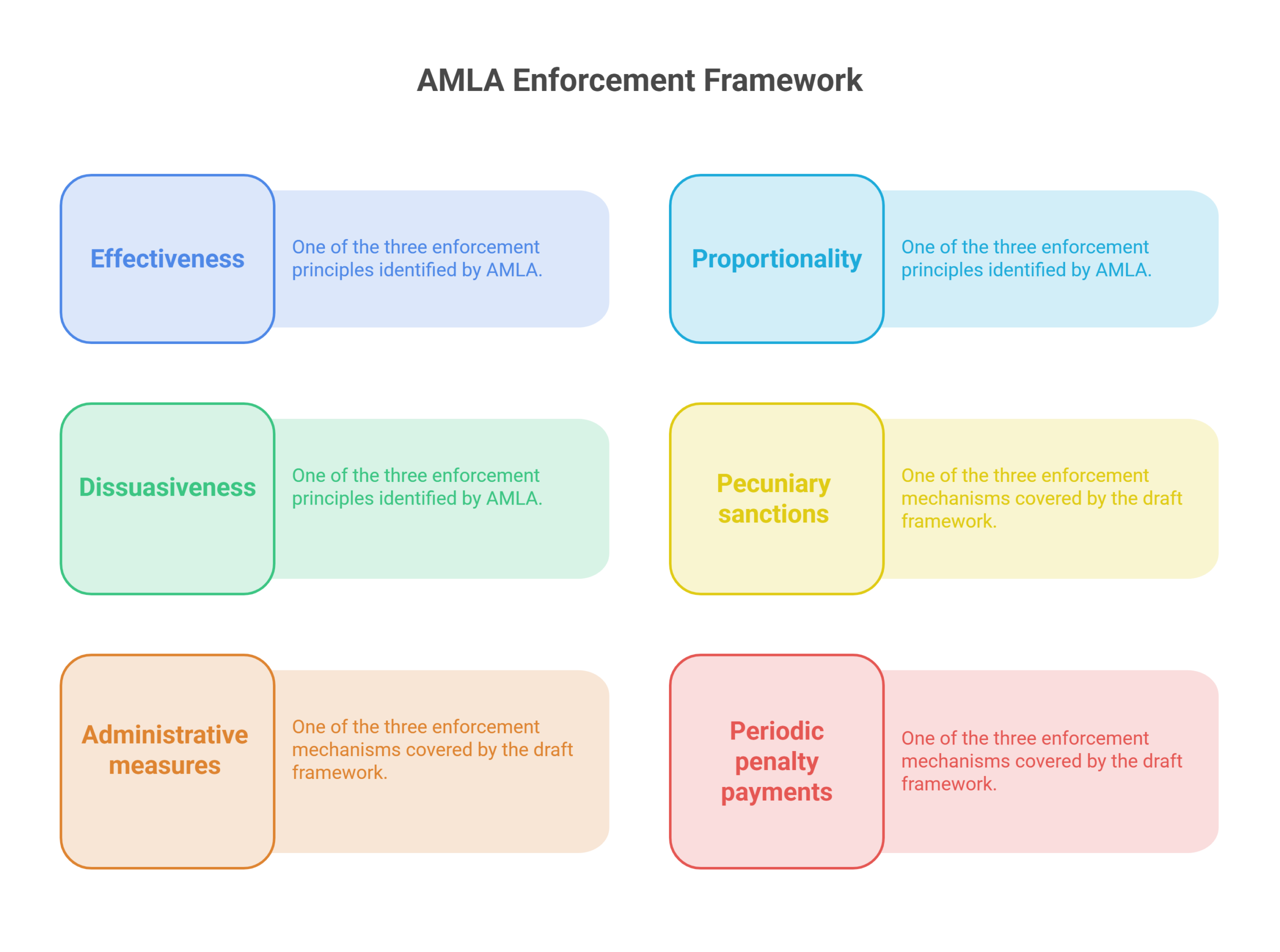
This is making AML enforcement standards more important to the implementation of the new framework. In July 2026, AMLA introduced a common approach intended to support more consistent enforcement across the EU. The approach establishes common criteria for assessing breaches and determining appropriate enforcement responses while retaining the principles of effectiveness, proportionality and dissuasiveness.
Enforcement Criteria are Becoming More Harmonised
The shift is significant because consistency does not necessarily mean identical penalties. Financial institutions can have different sizes, risk profiles, business models and levels of non-compliance. A common enforcement methodology instead seeks to ensure that these factors are considered through a more consistent assessment process.
AMLA’s regulatory work covers several enforcement mechanisms, including pecuniary sanctions, administrative measures and periodic penalty payments. The framework is also designed to establish common indicators for assessing the seriousness of breaches and criteria for determining the appropriate response. This provides supervisors with a more structured basis for enforcement decisions.
AML enforcement standards are therefore becoming connected to the broader goal of supervisory convergence. Common criteria can reduce the possibility that similar shortcomings receive significantly different treatment depending on the jurisdiction in which they are identified. At the same time, proportionality allows enforcement outcomes to reflect the circumstances surrounding individual breaches.
Enforcement is Becoming Part of the Wider Supervisory Framework
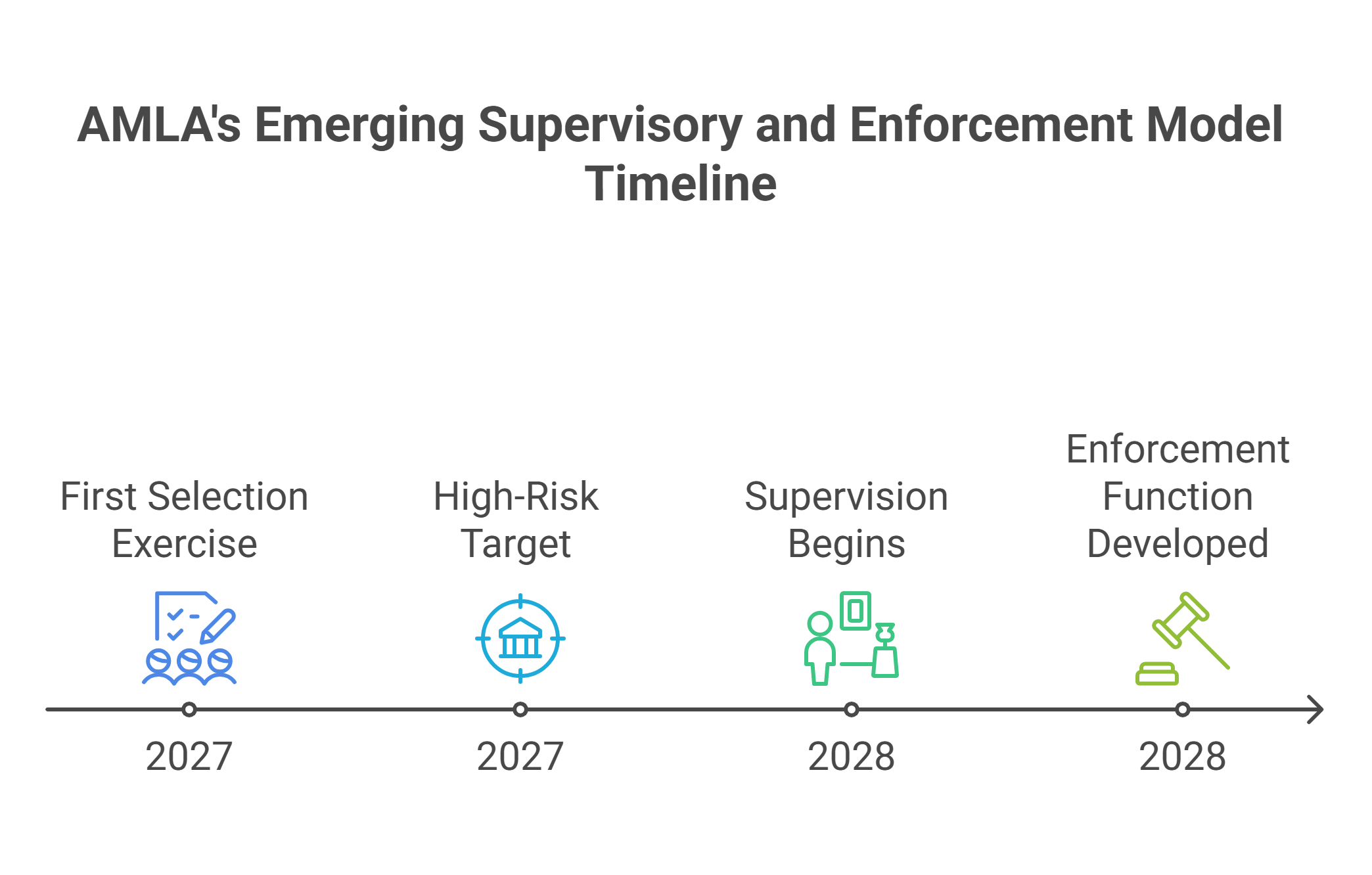
The development also needs to be viewed alongside AMLA’s broader supervisory mandate. The Authority is working toward a common supervisory model while preparing to directly supervise up to 40 of the most complex and high-risk financial institutions or groups from 2028. This requires a closer alignment between risk assessment, supervisory monitoring and enforcement.
The new framework is therefore not simply about increasing penalties. It is about establishing a more predictable relationship between a breach, its assessed severity and the supervisory response. That can strengthen accountability while giving institutions greater clarity about how compliance weaknesses may be evaluated.