
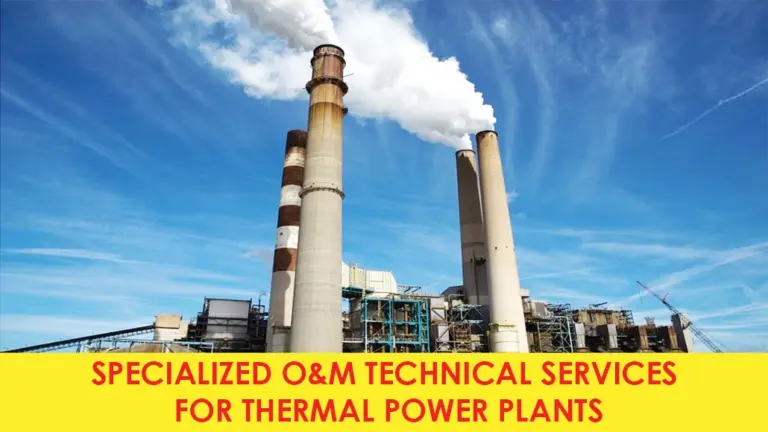
India’s electricity sector is undergoing a major transformation. Rapid economic growth, urbanization, industrial development and increasing electrification are driving continuous growth in electricity demand. At the same time, India is expanding renewable energy capacity, particularly solar and wind, to meet its long-term energy-transition and decarbonization objectives.
Despite the rapid growth of renewable energy, thermal power particularly coal-based generation, continues to play a critical role in ensuring energy security, grid stability, availability and reliability. Thermal power plants provide controllable generation and can support the grid when renewable generation is variable or unavailable. The challenge for the thermal power sector is therefore not simply to generate electricity, but to generate it more efficiently, reliably, economically and flexibly, while reducing emissions and operating costs.
Artificial Intelligence (AI), Machine Learning (ML), Industrial Internet of Things (IIoT), advanced analytics and digital twins can play an important role in achieving these objectives.
The Central Electricity Authority (CEA) continues to maintain dedicated thermal-generation and installed-capacity monitoring, while its recent publications also highlight the increasing importance of flexible operation, renewable integration and thermal plant performance.
Power Generation Scenario in India
India has one of the world’s largest and fastest-growing electricity systems. The country’s generation portfolio consists of coal, lignite, gas, hydro, nuclear and renewable energy sources. Coal-based generation remains an important component because it provides dependable, dispatchable power 24 x 7 and supports the grid during periods of high demand and during periods of low renewable generation. This changing generation mix creates a new operating environment for thermal power plants.
At the same time, renewable energy is expanding rapidly. CEA reported 3,489.79 MW of renewable capacity addition during May 2026, compared with 1,600 MW of conventional capacity addition. During the same month, peak demand met reached 270.820 GW, while all-India PLF was reported at 71.37%.
Traditional thermal plants were generally designed for relatively stable base-load operation. Increasing renewable penetration requires them to operate more flexibly, including:
|
Consequently, the future thermal power plant must be efficient, flexible, intelligent and highly reliable.
Installed Thermal Power Capacity in India
As of 31 July 2026, CEA reported India’s total installed thermal capacity at approximately 551994.76 MW
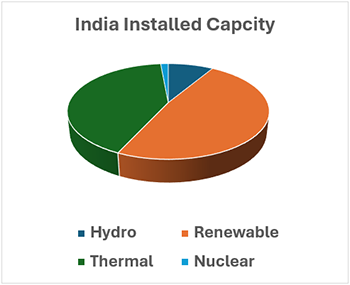 |
Thermal category | Installed capacity |
| Coal / Thermal | 251.49 GW | |
| Renewable | 291.73 GW | |
| Nuclear | 8.78 GW | |
| Hydro | 18.54 GW | |
| Total Installed Power | 551.99 GW |
The same CEA data reported total installed generation capacity of approximately 551.99 GW, demonstrating 46% contribution of thermal generation to India’s electricity infrastructure. CEA’s latest installed-capacity reporting continues through August 2026, reflecting the ongoing expansion and changing composition of India’s generation fleet.
The significance of this installed thermal fleet is considerable. A large proportion of these plants will remain important for many years, particularly during the transition toward a renewable-dominated electricity system. Therefore, improving the performance of the existing thermal fleet can provide significant benefits without depending entirely on new generation capacity.
Availability and Reliability – The Key Requirements
For a thermal power plant, availability and reliability are fundamental performance indicators.
Availability: Availability represents the ability of a generating unit to remain capable of producing electricity when required
Reliability: Reliability represents the ability of equipment and systems to perform their intended function continuously and without unexpected failure.
A power plant may have adequate installation capacity but still fail to meet grid requirements if its availability is poor. Major causes of thermal power plant unavailability. CEA has historically highlighted Renovation & Modernization and Life Extension as important approaches for improving the performance of existing thermal units.
| Boiler tube failures | DCS, PLC |
| Turbine problems | SCADA, C&I systems |
| Generator faults | Vibration monitoring |
| Coal mill failures | Temperature sensors |
| ID/FD/PA fan failures | Pressure transmitters |
| Feed-pump problems | Flow measurements |
| Transformer failures | Electrical protection systems |
| Conveyor and CHP problems | Laboratory analysis |
| Cooling-system deterioration | Performance tests |
| Control and instrumentation failures | Maintenance records |
| Electrical equipment failures | Inspection reports |
| Poor maintenance practices | Historical operating data |
| Maintenance Practices | Monitoring Data |
AI can significantly strengthen these conventional maintenance practices.
Why AI is Important for Thermal Power Plants
A modern thermal power plant generates enormous quantities of data available. Traditionally, much of this information is used for monitoring and troubleshooting. AI changes the approach from “What happened?” to “Why did it happen?” and ultimately: “What is likely to happen next?” This is the fundamental value of AI.
Major Areas for AI Implementation
Boiler Efficiency Optimization
AI can continuously analyze boiler operating parameters such as machine-learning models can identify the operating conditions that provide optimum combustion while maintaining required steam parameters.
| Excess air | Coal flow & Analysis |
| Unburnt carbon | Total Air flow |
| Stack losses | PA/coal ratio |
| Auxiliary power consumption | Furnace pressure |
| Heat losses | Furnace temperature |
| O₂ and CO, NOx | |
| Mill parameters | |
| Burner operation | |
| Steam Parameters | |
| Spray flow | |
| APH Performance | |
| Boiler tube thermal stress | Flue-gas temperature |
AI-based optimization can help reduce: The result can be improved boiler efficiency and reduced heat rate. Heat rate is one of the most important economic indicators of a thermal power plant.
AI can establish a relationship between operating parameters and unit heat rate.
The system can identify the following and instead of relying only on periodic performance tests, AI can provide continuous performance monitoring.
Boiler efficiencyPrevious locations
Heat Rate ParametersReal time data for BTF
| Optimum load | Furnace temperature |
| Coal Analysis | Steam temperature |
| Optimum excess air | Boiler pressure |
| Condenser performance | Water chemistry |
| Turbine efficiency | Tube thickness |
| Feed-water heater performance | Ash deposition |
| Mill performance | Operating hours |
| Cooling-tower performance | Load cycling |
| Auxiliary power consumption | Tube metal Temperature |
Predictive Maintenance
Predictive maintenance is one of the most valuable applications of AI. Instead of maintaining equipment only according to fixed schedules, AI analyses equipment condition and predicts potential failures. Example: ID Fan
AI can analyze: Vibration, bearing temperature, Motor current, Fan load, Damper position, Differential pressure and identify abnormal operating patterns before a major failure occurs.
The same approach can be applied to the following areas:
Coal mills, Pumps, Fans, Motors, Transformers, Steam Turbines, Generators, Coal / Ash Conveyors, Gearboxes and Boiler-feed pumps, etc.
NTPC’s Indian Power Stations 2025 technical compendium specifically includes work on AI and data-analysis tools for maintenance optimization, predictive maintenance, electrical asset diagnostics and extending equipment life.
AI for Boiler Tube Failure Prediction
Boiler tube leakage is one of the major causes of forced outages in coal-fired power plants.
AI can analyze historical and real-time data such as machine-learning models can identify patterns associated with tube degradation and provide an early warning.
AI can therefore move maintenance from
Failure → Inspection → Repair
Towards
Monitoring → Prediction → Planned Maintenance → Avoided Failure
This methodology can significantly improve unit availability.
AI for Turbine and Generator Monitoring
Steam turbines and generators contain high-value equipment where unexpected failures can cause significant generation losses. AI can monitor the system and can establish a normal operating envelope and detect deviations. This enables operators to identify early signs.
| Bearing vibration | Rotor imbalance | Mill loading |
| Bearing temperature | Alignment problems | Primary air flow |
| Shaft displacement | Condenser degradation | Mill outlet temperature |
| Differential expansion | Generator cooling problems | Differential pressure |
| Rotor eccentricity | Abnormal vibration | Coal fineness |
| Condenser vacuum | Bearing Vibration | Air-to-fuel ratio |
| Steam parameters | Burner distribution | |
| Generator temperature | ||
| Hydrogen pressure | ||
| Electrical parameters | ||
| Steam Turbine and Generator | Mill Optimize | |
AI for Coal Mills and Combustion Optimizations
Coal mills have a major influence on boiler performance. AI can optimize and it can also identify abnormal mill behavior and recommend corrective action. Improved mill performance results in better combustion, reduced unburnt carbon and improved boiler efficiency.
AI-Based Furnace Temperature Monitoring
Furnace temperature distribution is critical for boiler safety and efficiency. Advanced camera systems, sensors and data analytics can be combined with AI to develop a real-time understanding of furnace conditions. AI can identify. It is learned that NTPC’s recent technical program includes work on digital furnace-temperature mapping and the use of AI/ML to predict furnace temperature using real-time data. This demonstrates that AI-based furnace analytics are moving from concept toward practical power-plant applications.
| Hot spots | Cooling-water temperature |
| Flame instability & failure | Cooling water flow |
| Poor burner performance | Condenser vacuum |
| Asymmetric combustion | Terminal temperature difference |
| Slagging tendencies | Cooling-tower approach |
| Abnormal furnace conditions | Fan performance |
| Fouling indicators | |
| Furnace Temperature | Cooling Water |
AI for Condenser and Cooling-Tower optimization
Condenser performance directly affects turbine efficiency and heat rate. AI can analyze
The system can predict deterioration and recommend cleaning or operational adjustments. Improved condenser performance can reduce heat rate and increase generation efficiency.
Benefits of AI Implementation
The major benefits of AI implementation in thermal power generation include. Early identification of equipment deterioration can reduce forced outages. Continuous monitoring allows potential failures to be identified before they become major incidents. Optimization of boilers, turbines, condensers and auxiliary systems can reduce specific fuel consumption. Also, AI can identify optimum combustion conditions. Maintenance can be based on actual equipment condition rather than fixed schedules. Early detection of abnormal conditions can reduce thermal, mechanical and electrical stress. Better combustion and lower fuel consumption can reduce emissions per unit of electricity generated. Better combustion and lower fuel consumption can reduce emissions per unit of electricity generated. AI can support safe operation at different loads and during frequent load changes
- Higher Plant Availability
- Improved Reliability
- Improved Boiler Efficiency
- Reduced Heat Rate
- Reduced Maintenance Cost
- Extended Equipment Life
- Reduced Auxiliary Power
- Improved Environmental Performance
- Improved Operational Flexibility
- Better Decision Making
Operators and management receive real-time, data-driven recommendations.
Challenges in AI Implementation
AI implementation should not be considered simply as purchasing an AI software package. The success of AI depends on the quality of the underlying data.
| PLF improvement | Poor sensor reliability |
| Heat-rate reduction | Missing data |
| Boiler-efficiency improvement | Incorrect calibration |
| Auxiliary power reduction | Inconsistent historical records |
| Forced-outage reduction | Different DCS platforms |
| Equivalent availability improvement | Cybersecurity risks |
| Maintenance-cost reduction | Lack of standardized data |
| Equipment-life extension | Limited AI skills among plant personnel |
| Coal-consumption reduction | Resistance to changing traditional operating practices |
| Emission reduction | Difficulty integrating old equipment with modern digital systems |
| Economic Benefits | Major challenges |
Therefore, data quality must come before AI. A poorly calibrated sensor feeding inaccurate information into an AI model will produce an inaccurate recommendation.
Recommended Implementation Strategy
A thermal power plant should adopt AI in stages. Refer to the following:
| Phase 1 – Data Preparation | Phase 2 – Monitoring | Phase 3 – Predictive | Phase 4 – Performance Optimization | |||
|---|---|---|---|---|---|---|
| Audit all sensors | ➡ | Boiler performance | ➡ | Boiler tube failures | ➡ | Combustion |
| Verify instrumentation accuracy | Turbine performance | Mills | Air-fuel ratio | |||
| Establish data historians | Heat rate | Fans | Mill operation | |||
| Standardized tags | Equipment condition | Pumps | Steam temperature | |||
| Remove bad data | Auxiliary power | Motors | Condenser performance | |||
| Improve cybersecurity | Emissions | Transformers | Cooling systems | |||
| Turbine bearings | Auxiliary power |
Phase 5 – Prescriptive AI
The final stage should not only predict problems but also recommend actions. “What should the operator do now?” This is where AI creates maximum operational value.
Economic Value of AI
The business case for AI should be measured in terms of actual plant benefits. Important KPIs and even a small improvement in heat rate or availability across a large thermal fleet can produce substantial economic benefits. India’s existing thermal fleet therefore represents a significant opportunity for AI-based performance improvement.
Conclusion
India’s power sector is entering a new phase in which reliability, flexibility, efficiency and sustainability must be achieved simultaneously. Thermal power will continue to have an important role in India’s electricity system, particularly in providing dependable and flexible generation while renewable energy capacity expands. With a large installed thermal fleet, even incremental improvements in efficiency, availability and reliability can create substantial national benefits.
Artificial Intelligence provides an opportunity to transform conventional thermal power plants into intelligent, predictive and optimized generating stations.
AI can support the entire plant lifecycle from fuel and combustion optimization to predictive maintenance, performance monitoring, equipment-health assessment and renewable-energy integration. The objective should therefore be:
“Generate more electricity from the same assets, with less fuel, fewer failures, lower operating costs and lower environmental impact”
The future of Indian thermal power generation is not simply about adding more capacity. It is about making the existing and future fleet smarter, more efficient, more reliable and more flexible. AI will be one of the key technologies enabling this transformation.