
Materials Science, Sensor Integration, and Industry Investment
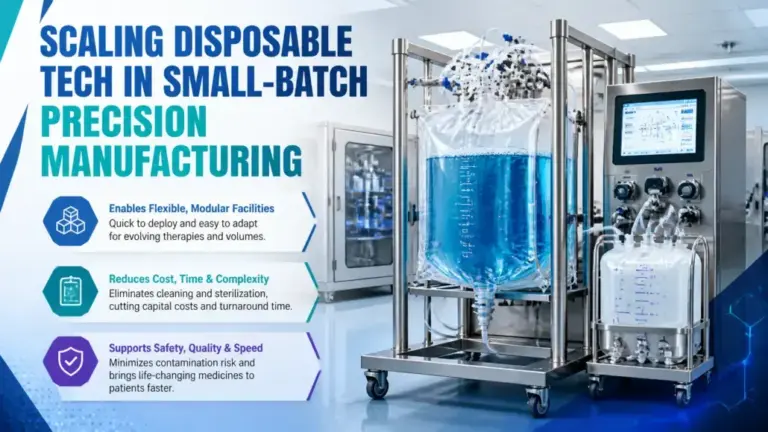
The technical variety of disposable components is vast, ranging from simple tubing and connectors to complex 2,000-liter bioreactors and automated chromatography systems. The plastics used must meet stringent requirements for biocompatibility, chemical resistance, and mechanical strength. Polyethylene (PE) and Ethylene Vinyl Acetate (EVA) are commonly used for storage bags, while more specialized polymers like Polyethersulfone (PES) are used for filtration membranes. The challenge for manufacturers lies in ensuring that these materials do not leach harmful substances into the drug product, a process known as extractables and leachables (E&L) testing. The expertise gained in characterizing these materials is a key component of the industry’s commitment to patient safety.
Facility Architecture, Data Integration, and Technical Coordination
Economic Drivers and Global Standardization
The economic case for the integration of these technologies is also becoming increasingly compelling. While the ongoing cost of purchasing disposable components can be higher than the operational costs of a stainless-steel facility, the long-term savings associated with reduced capital expenditure, lower water and energy usage, and faster time-to-market are significant. Reducing the time needed for cleaning and validation can increase the annual throughput of a facility by up to 30%, significantly improving the overall return on investment. Moreover, the improved flexibility and reduced risk of cross-contamination can lead to lower costs by reducing the number of rejected batches and avoiding costly recalls. The financial benefits of scaling disposable technology are thus a major driver of their adoption across the biopharmaceutical landscape.
Future Outlook and Human Capital
Looking ahead, the commitment to disposable technology will be a defining characteristic of the precision biomanufacturing landscape in the coming decades. The ongoing development of even more sophisticated single-use sensors, including those capable of monitoring complex biological markers in real-time, will further improve the precision and reliability of manufacturing processes. The integration of fully automated, ‘closed-loop’ disposable production lines—where every step from cell culture to final fill-finish is performed in a sterile, single-use environment—will be the next major milestone for the industry.
References
-
Sartorius Expands Global Production Capacity for Single-Use Bioprocessing Solutions
-
The Shift to Single-Use Technology in Biopharmaceutical Manufacturing
-
Modular Biomanufacturing: The Agile Future of Drug Production
-
The Economic Case for Disposable Technology in Precision Medicine
-
Standardizing Single-Use Systems: The Role of the BPSA