
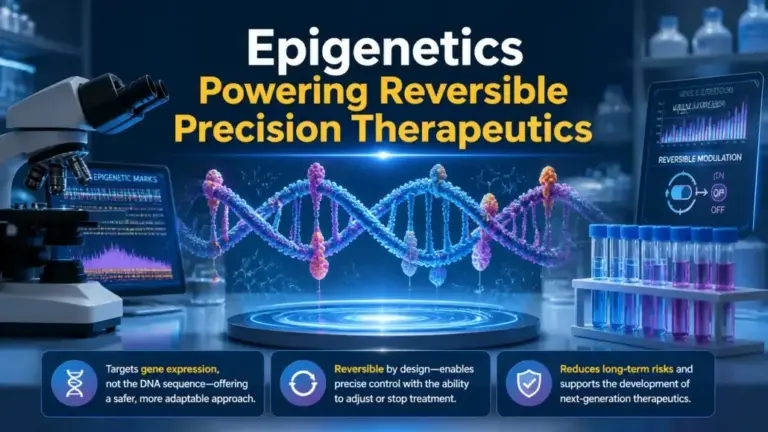
The pharmaceutical industry is entering a new frontier in genomic medicine, moving beyond permanent gene editing toward a more dynamic and reversible approach to therapy. While technologies like CRISPR have revolutionized our ability to correct genetic mutations, they often come with significant risks and ethical considerations due to their permanent nature. The emergence of epigenetics, the study of heritable changes in gene expression that do not involve alterations to the underlying DNA sequence, is providing a powerful alternative. Pharma Advancement notes that by modulating the chemical tags that turn genes on or off, researchers are developing reversible precision therapeutics that can treat a wide range of diseases by fine-tuning the body’s own regulatory systems. This innovation is transforming the way we approach chronic conditions like cancer and neurodegeneration, marking a new era of programmable medicine.
Molecular Machinery: Enzymes, Epigenetic CRISPR, and ncRNAs
The technical mechanisms of epigenetic therapy are highly diverse, involving a variety of enzyme classes. DNA Methyltransferases (DNMTs) add methyl groups to DNA, typically silencing genes, while Histone Deacetylases (HDACs) and Histone Acetyltransferases (HATs) modify the proteins around which DNA is wrapped, altering its compactness. The challenge for drug developers is to design molecules that can selectively target these enzymes in a specific tissue or for a specific gene set. New technologies like ‘Epigenetic CRISPR’ allow for even more precise control, using a ‘dead’ Cas9 protein to recruit epigenetic modifiers to a specific genomic location without cutting the DNA. This combination of CRISPR’s targeting precision and epigenetics’ reversibility is a major milestone for the field.
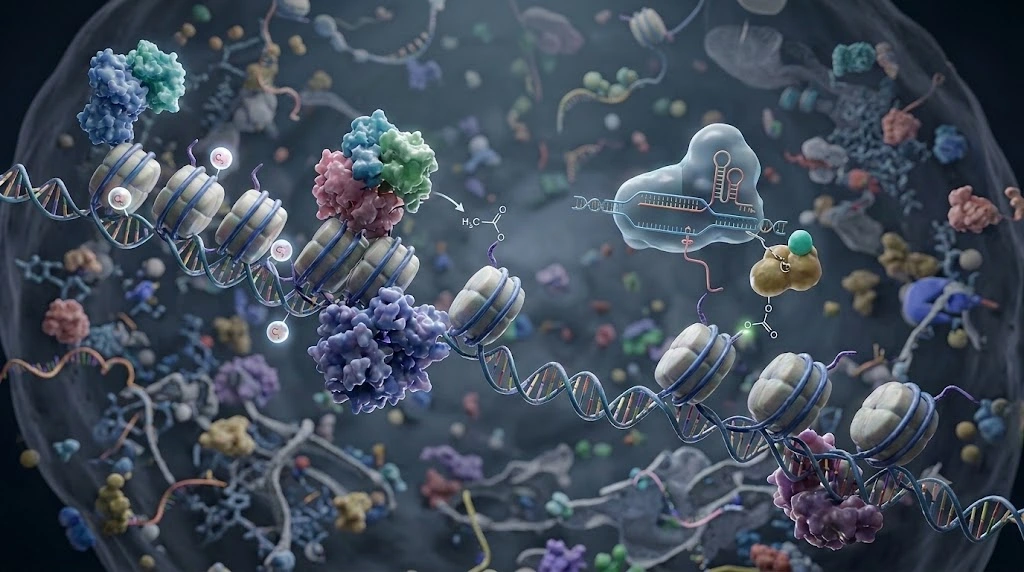
Furthermore, the role of ‘non-coding RNAs’ (ncRNAs) in epigenetic regulation is an area of intense research. These molecules do not code for proteins but instead act as regulatory guides, directing epigenetic enzymes to their targets or directly interfering with the translation of mRNA. By designing synthetic ncRNAs, researchers can create highly specific and temporary modulators of gene expression. This ‘RNA-based epigenetics’ offers a rapidly deployable and highly versatile platform for treating a variety of conditions, from acute viral infections to chronic metabolic disorders. The technical synergy between RNA biology and epigenetic modulation is a hallmark of the new programmable medicine paradigm.
Intersecting with Precision Medicine, Exposomics, and Early Detection
The shift toward reversible precision therapeutics is intrinsically linked to the broader goals of precision medicine. As simulation capabilities improve, we see quantum computing breaking simulation barrier for large molecule precision, allowing for the precise design of epigenetic modulators that can fine-tune gene expression. By providing a more nuanced and adjustable approach to treatment, epigenetics allows for the development of highly personalized therapy plans that can be tailored to the unique regulatory profile of each patient. For instance, the transition toward multi-omics data integration is bolstered by the high-quality epigenetic data provided by new sequencing technologies, creating a more holistic understanding of the patient’s molecular biology. This systemic approach ensures that the management of disease is not just a one-time intervention, but a continuous process of molecular fine-tuning that optimizes the chances of long-term success for every individual patient. The synergy between dynamic regulation and advanced analytics is the engine that will power the next generation of medical breakthroughs.
Furthermore, the integration of epigenetics is driving a revolution in the way researchers understand the role of the environment and lifestyle in human health. By analyzing the epigenetic clock—the pattern of chemical tags that change as we age—scientists can gain new insights into how factors like diet, stress, and pollution influence disease risk and therapeutic response. Similarly, the study of epigenetic inheritance—how the regulatory state of a parent can be passed to their offspring—is providing a new layer of information that can be integrated with genetic data to provide a more comprehensive understanding of health and disease across generations. The expertise gained in managing and analyzing these complex regulatory datasets is a vital component of the broader effort to build a more proactive and preventative healthcare system.
Translation Challenges, Market Economics, and Governance
The technical implementation of these therapies also requires a high degree of coordination between molecular biologists, medicinal chemists, and clinical researchers. Designing modulators that are both highly specific for a particular epigenetic enzyme and capable of penetrating the complex environment of the cell is a significant engineering challenge. Similarly, developing new biomarkers that can accurately measure the patient’s epigenetic state—and how it responds to therapy in real-time—is a key priority for the industry. The collaboration between these different sectors is essential for overcoming the technical hurdles and ensuring that the benefits of reversible precision therapeutics reach the clinical setting as quickly and safely as possible.

Future Trajectory and Talent Development
References
-
Bristol Myers Squibb Expands Epigenetics Portfolio to Advance Next-Generation Oncology Therapies
-
Epigenetic Modulation in Cancer Therapy: The Rise of Reversible Treatments
-
The Role of DNA Methylation and Histone Modification in Precision Medicine
-
Reversible vs. Permanent Gene Editing: Evaluating the Clinical Trade-offs
-
International Human Epigenome Consortium: Standardizing Epigenetic Data Sharing