
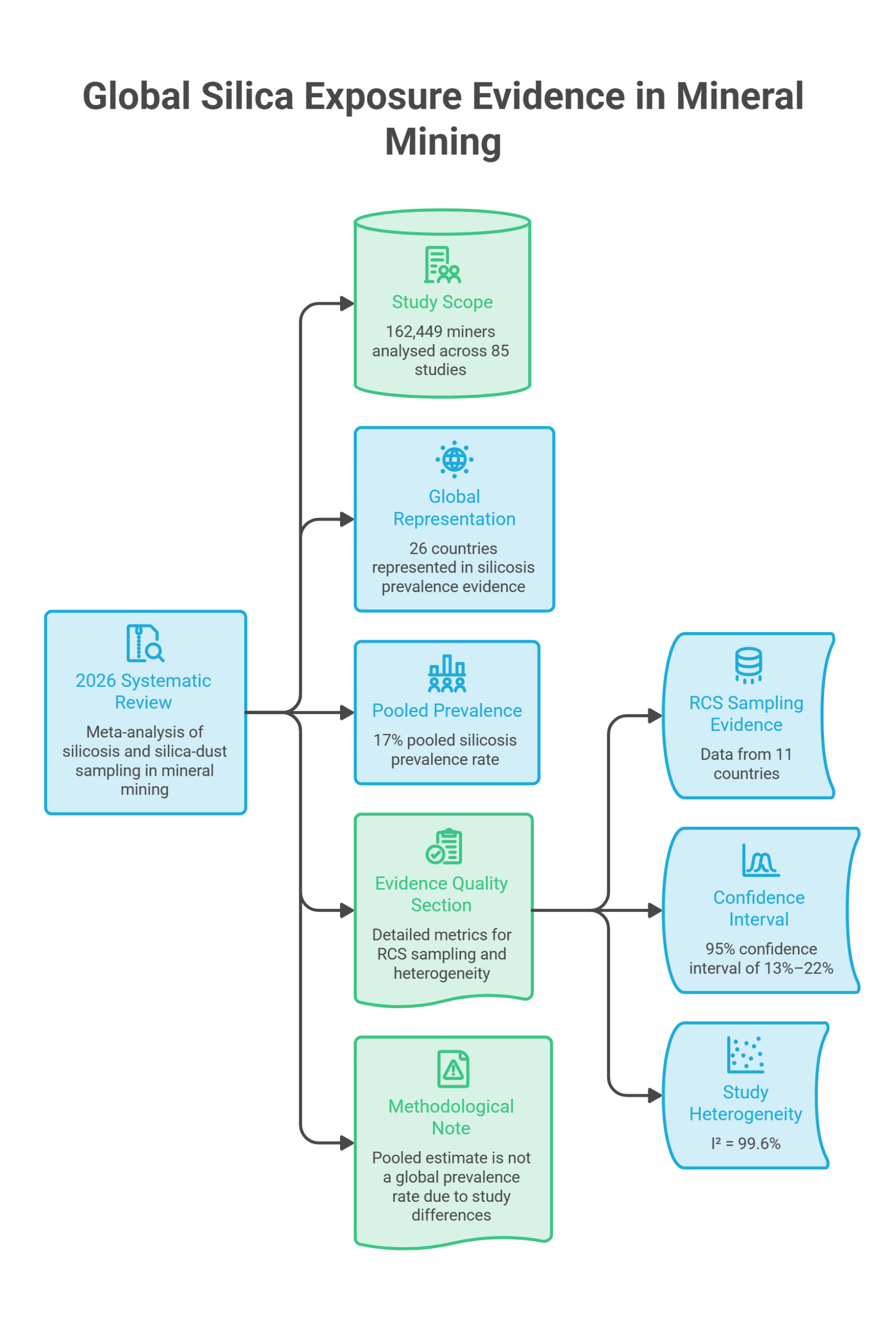
Key Takeaway: Global mining evidence shows a substantial and highly variable silicosis burden, reinforcing the importance of workplace-level exposure assessment and targeted dust controls.
As exposure monitoring becomes more detailed, the resulting findings can also influence how mines review broader high-consequence workplace risks and formal control systems. This makes silica exposure management part of a wider shift toward evidence-led workplace risk control, while the next topic moves from occupational exposure toward formal oversight of tailings facilities, high-consequence mine infrastructure.
Workplace Silica Controls Becoming More Continuous and Data-Led
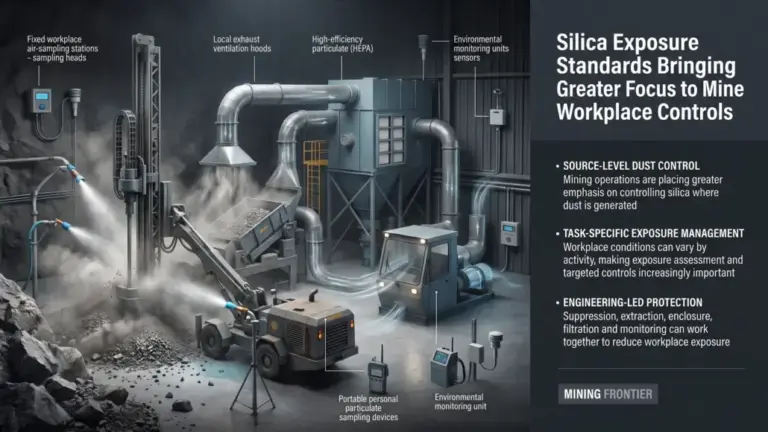
The growing focus on silica exposure standards is linking workplace measurement more closely with the controls used to prevent respirable dust from reaching workers. Monitoring can identify higher-risk tasks and work areas, while engineering measures such as suppression, extraction, enclosure and filtration can be reviewed and maintained against those conditions.
The global evidence also shows why a single control approach cannot be applied uniformly across mining. Exposure varies between commodities, processes, jobs and operating environments, making task-level assessment and control verification important parts of ongoing occupational-risk management.
For Mining Frontier, the broader development is a move toward treating silica management as a continuous workplace-control process rather than a standalone exposure limit. Standards establish measurable requirements, but sustained protection depends on how effectively mines assess exposure, maintain engineering controls and respond when conditions change.