
The UK Fashion and Textile Association (UKFT) has made a formal call on the government to move beyond trade agreements and promotional activity, arguing that neither is sufficient to convert export opportunities into actual sales for British fashion and textile businesses.
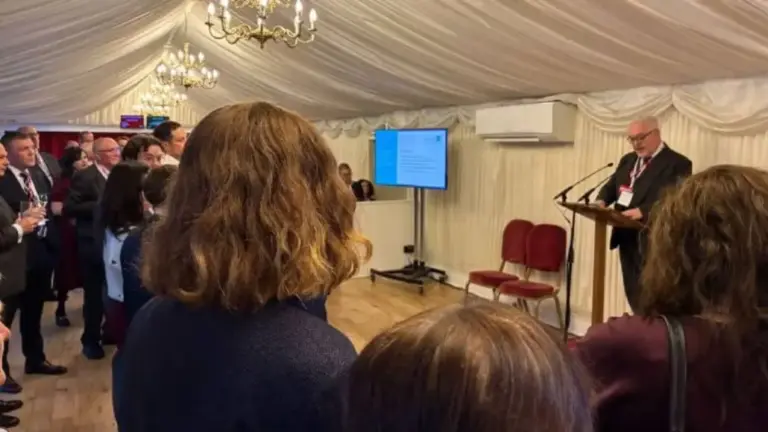
The association presented its position at an Export Partners UK event held at the House of Lords, reinforcing concerns it had already submitted in evidence to the House of Commons Business, Innovation and Trade Committee in October 2026. That submission highlighted a significant decline in UK fashion exports to the EU since 2016, with businesses also struggling to identify and develop alternative international markets.
Brexit Trade Barriers Weighing on Exporters
UKFT identified a range of structural challenges holding back UK fashion exports, including Brexit-related customs costs, unrecoverable VAT and regulatory complexity. High UK manufacturing costs and reduced government support were also cited as key constraints on international growth.
Among the most direct blows to smaller exporters was the withdrawal of the Tradeshow Access Programme in 2021. That scheme had previously provided grants enabling smaller businesses to exhibit at international trade fairs and connect with potential overseas buyers. Without it, many companies have lost a practical route to market development.
UKFT acknowledged its working relationship with the Department for Business and Trade on trade policy and export promotion. However, the association was clear that such promotional activity and trade agreements alone cannot substitute for direct financial assistance to businesses on the ground.
The Case for Financial Assistance and Overseas Networks
The association is calling for export support built around three core pillars: funding, market intelligence and the development of commercial relationships. It stressed that businesses need direct access to buyers and agents overseas if they are to turn an identified opportunity into a completed sale.
UKFT also raised concerns about the erosion of commercial expertise and business contacts within UK embassies and consulates. The organisation is pushing for stronger overseas networks that can help British companies navigate unfamiliar markets and build relationships with potential customers abroad.
The textile trade body pointed to the former Tradeshow Access Programme and similar export-support schemes operated by European competitors as models that had delivered measurable returns. It called on the government to set targets that measure actual business growth against public investment, rather than simply tracking participation in government learning programmes.
Rules of Origin and Trade Agreement Limitations
Beyond funding, UKFT raised concerns about the practical operation of existing trade agreements. Rules of origin and restrictions on the movement of goods between the UK and EU were identified as issues that can directly disadvantage British brands — particularly those whose collections cannot be manufactured domestically and that rely on near-shore production within the EU.
The association outlined several potential remedies, including revisiting free-circulation arrangements, addressing the treatment of import VAT, and exploring wider cumulation provisions within the UK’s international trade agreements. Cumulation provisions can allow materials or processing from specified partner countries to count towards origin requirements, offering greater flexibility for exporters.
Industry-Wide Call to Action
UKFT’s position is being amplified through Export Partners UK, a body that represents more than 30 UK trade associations. The broader message being put to ministers is that trade agreements do not, by themselves, generate exports.
The association is urging the government to work more closely with industry to restore the financial assistance, market information and overseas commercial contacts that fashion and textile businesses need to compete internationally. For UK fashion exports to recover and grow, UKFT argues, policy must translate into tangible, business-level support.