
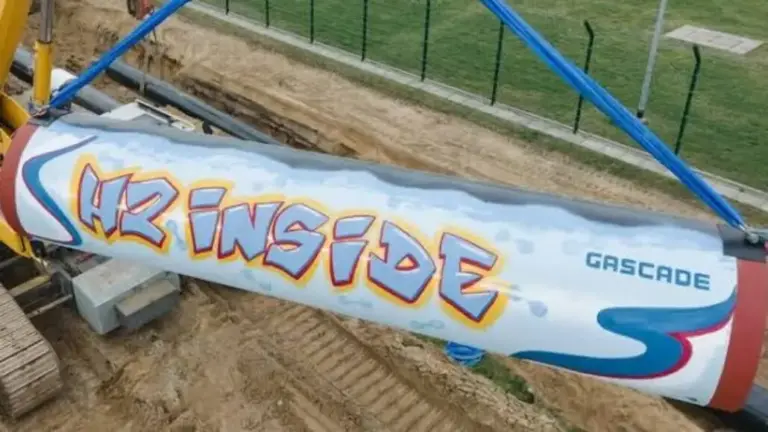
The beginning of the planning procedure for approval of the HYROW hydrogen pipeline in Germany is a significant turning point in the establishment of hydrogen infrastructure in Germany for GASCADE Gastransport GmbH – GASCADE.
Notably, HYROW is the first novel construction project of GASCADE in the German central hydrogen network to progress from the planning stage to the authorisation stage. The project thus adds to the already operating pipeline sections of Flow – making hydrogen happen – and makes an additional contribution to the establishment of a high-capacity hydrogen network in Germany.
The official approval procedures for the planned hydrogen pipeline start with the public announcement of the application documents required for the planning authorisation procedure by the Stralsund Mining Authority on November 17, 2026.
According to the legal provisions, the application documents will be published on the web page of the Mining Authority Stralsund. More specifically, private individuals impacted by the project, along with other stakeholders, may take part in the process.
Interestingly, the HYROW hydrogen pipeline in Germany will stretch to around 115 kilometres from Rostock to Wrangelsburg. There it will link to the north-south axis of Flow – making hydrogen happen.
This creates a significant connection between the area of Rostock and the supra-regional hydrogen network. Additionally, connecting points for hydrogen manufacturers and consumers are to be created in Mecklenburg-Western Pomerania via the proposed route. This will equip the state with an early standardised hydrogen infrastructure and will contribute to enhancing the status of the state as a commercial hub. HYROW is a section of the centralised hydrogen network of Germany and is expected to be operational by 2028 end.
Initial archaeological surveys are due to begin in 2026.
At the same time, the permitting procedure, initial archaeological investigations are anticipated to start in late 2026 at almost 50 sites along the proposed route. The work is scheduled to continue until 2027. The objective is to find possible cultural and historic discoveries as early as possible so that they can be considered for further preparation and subsequent building of the line.