Verification of Payee Becoming Part of the Instant Payment Journey

0
Verification of Payee Becoming Part of the Instant Payment Journey

As digital payments become faster and increasingly available around the clock, the timing of fraud and error controls is changing across the global payments industry. For World Finance Informs, the significance of verification of payee lies in its movement from an optional payment feature toward a pre-validation step that can operate before funds are transferred. Instead of relying only on controls after a payment has been submitted, payment providers can check beneficiary information during the initiation process and give the payer an indication of whether the details correspond with the receiving account.

Pre-Validation Becoming More Relevant to Instant Payment Journeys

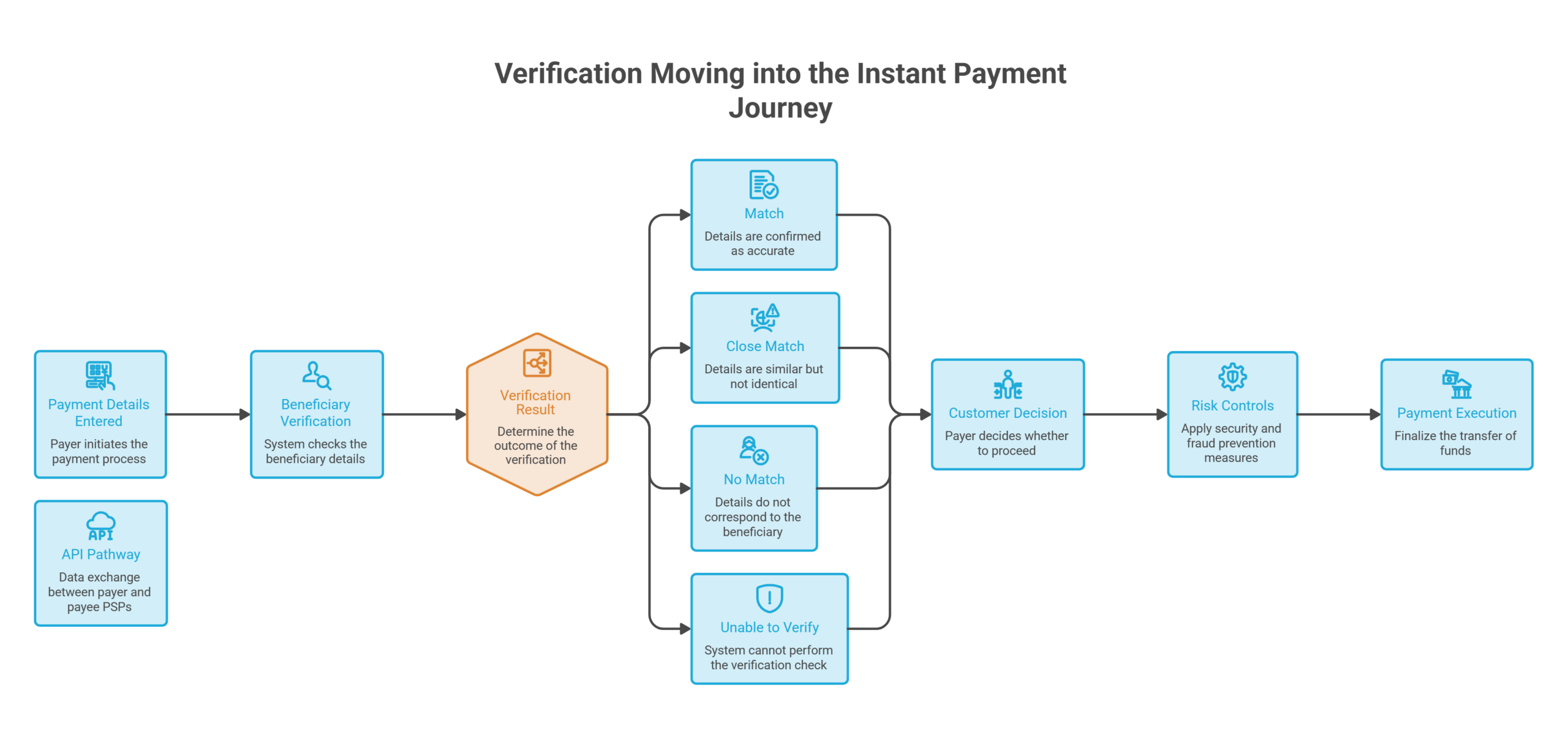
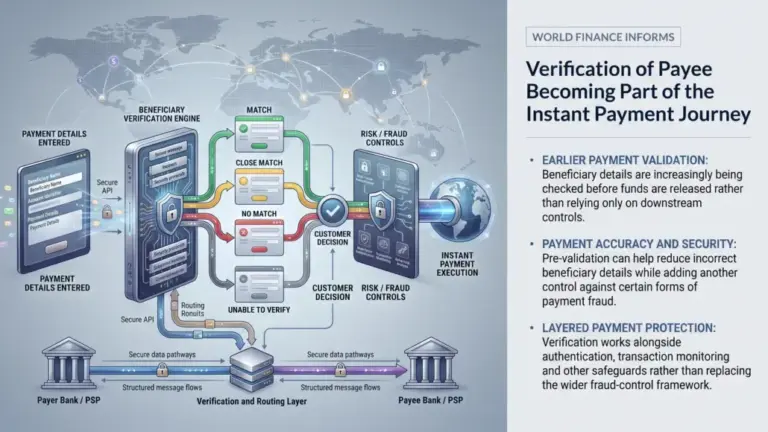
The logic is particularly relevant to instant payments because rapid execution leaves less opportunity to correct an incorrectly addressed transfer after it has been processed. The BIS has identified payment pre-validation as a way to check the accuracy, validity and completeness of payment information before a transaction is initiated. Verification of payee can therefore serve two related purposes: reducing payment errors and strengthening protection against certain forms of fraud where beneficiary details do not correspond with the payer’s intended recipient.

Different payment ecosystems are implementing this principle in different ways. European payment providers are operating match, close-match and no-match responses under the region’s verification framework, while established name-checking services in the United Kingdom and newer implementations in Australia demonstrate that beneficiary validation is not confined to one regulatory model. Other markets are introducing related beneficiary-name checks within their own instant-payment systems. The broader direction is toward verification of payee becoming embedded earlier in the payment journey, while the exact rules, data exchanged and customer responses continue to differ across markets.

The emerging model also changes the role of the customer at the point of payment. A verification result can provide an additional opportunity to review beneficiary information before authorisation, but a successful match does not establish that the recipient is trustworthy or that the payment decision was free from manipulation. Pre-validation is therefore better understood as one layer within a broader control framework that can include customer authentication, transaction monitoring and fraud detection. This distinction is important as payment providers seek to balance stronger safeguards with a payment experience that remains fast and understandable.

Interoperable Verification Becoming Part of Payment Infrastructure

The expansion of verification of payee is increasingly turning beneficiary checking into an infrastructure function rather than a standalone customer feature. The BIS describes payment pre-validation as a process that checks payment information before a transaction is initiated, helping reduce errors, rejected payments and certain fraud risks. This requires payment service providers to exchange and validate information quickly enough for the result to reach the payer before authorisation. As adoption expands, the underlying requirement becomes interoperability between banks, payment providers and verification services rather than simply adding another screen to a banking application.

APIs and Data Quality Shaping Verification at Scale

The technical architecture behind verification of payee is becoming more important as providers handle larger payment flows. The European Payments Council’s scheme uses inter-PSP messaging and APIs to send beneficiary information to the receiving institution, which returns outcomes such as match, close match, no match or inability to verify. Its updated API specifications and security requirements show that beneficiary validation depends on reliable data exchange, standardised interfaces and secure responses between institutions. This makes the verification layer part of the underlying payment infrastructure rather than an isolated customer-facing feature.

The model is also expanding beyond simple consumer transfers. Verification can support business payments involving suppliers, employees and other recurring beneficiaries, where incorrect account information can create failed transactions and manual reconciliation. At the same time, a successful name match cannot establish that a recipient is legitimate or that a payment has not resulted from manipulation. Stronger protection therefore requires verification of payee to operate alongside authentication, transaction monitoring and other fraud controls. It can also create broader cost and efficiency implications for digital banking.