
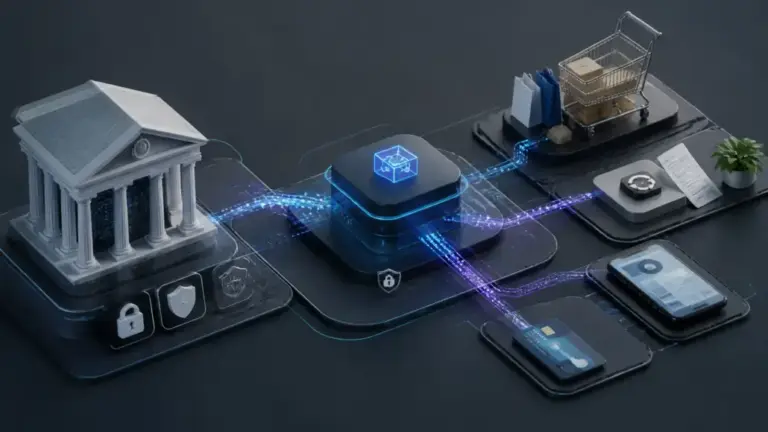
Bank accounts are increasingly becoming accessible through digital services outside the traditional banking application. Open banking has enabled customers to give authorised third parties access to account information and, increasingly, initiate payments directly from those accounts. Combined with faster payment infrastructure, this is creating a payment model in which bank accounts can become part of a wider digital commerce and financial-services ecosystem.
This is giving open banking account to account payments a broader role in digital banking. Rather than requiring customers to enter card details or move between separate banking and merchant environments, account-to-account payments can allow funds to move directly from a bank account through an authorised digital interface. The underlying bank account remains central, but the customer experience can increasingly be delivered through another financial or commercial service.
Account-to-Account Payments are Moving into Digital Experiences
Traditional digital banking generally keeps payment activity within the bank’s own channels. Open banking changes this relationship by allowing regulated third parties to connect to bank accounts through APIs, subject to customer permission and applicable controls. This creates a more open payment environment in which banks provide the underlying account and payment infrastructure while other providers can build services around it.
The distinction becomes particularly important for account-to-account payments. Instead of using a card as the intermediary between a customer and merchant, a customer can authorise a payment directly from their bank account. This can create opportunities for pay-by-bank services, digital marketplaces, bill payments and other account-based payment experiences.
The development is no longer limited to early-stage experimentation. Open Banking Limited reported that UK open-banking payments reached 351 million transactions in 2025, an increase of 57% from the previous year. By July 2026, the UK’s major high-street banks had collectively processed more than one billion open-banking payments since the launch of the framework.
These figures come from one market, but they illustrate the broader shift toward bank-account connectivity as a payment capability. Open banking account to account payments can increasingly sit within digital journeys that do not require the customer to initiate the transaction directly through their bank’s interface.
Open Banking is Connecting Banks with the Wider Digital Economy
The significance of open banking extends beyond payment initiation. APIs can allow financial information and payment capabilities to become integrated into applications operated by fintechs, merchants and other regulated service providers. The Bank for International Settlements describes open finance as a development that can break down data silos and support new financial services, while emphasising that standardised protocols and interoperability are important to achieving those benefits. (bis.org)
This creates a different competitive structure around banking. Banks continue to provide regulated accounts and payment infrastructure, while third parties can develop customer experiences on top of those capabilities. Consumers can therefore encounter banking functions within commerce, financial-management and other digital applications rather than exclusively inside a bank-owned channel.
Open banking account to account payments are particularly relevant to this model because payment initiation can become embedded directly into the service where the customer is already making a purchase or managing a financial obligation.
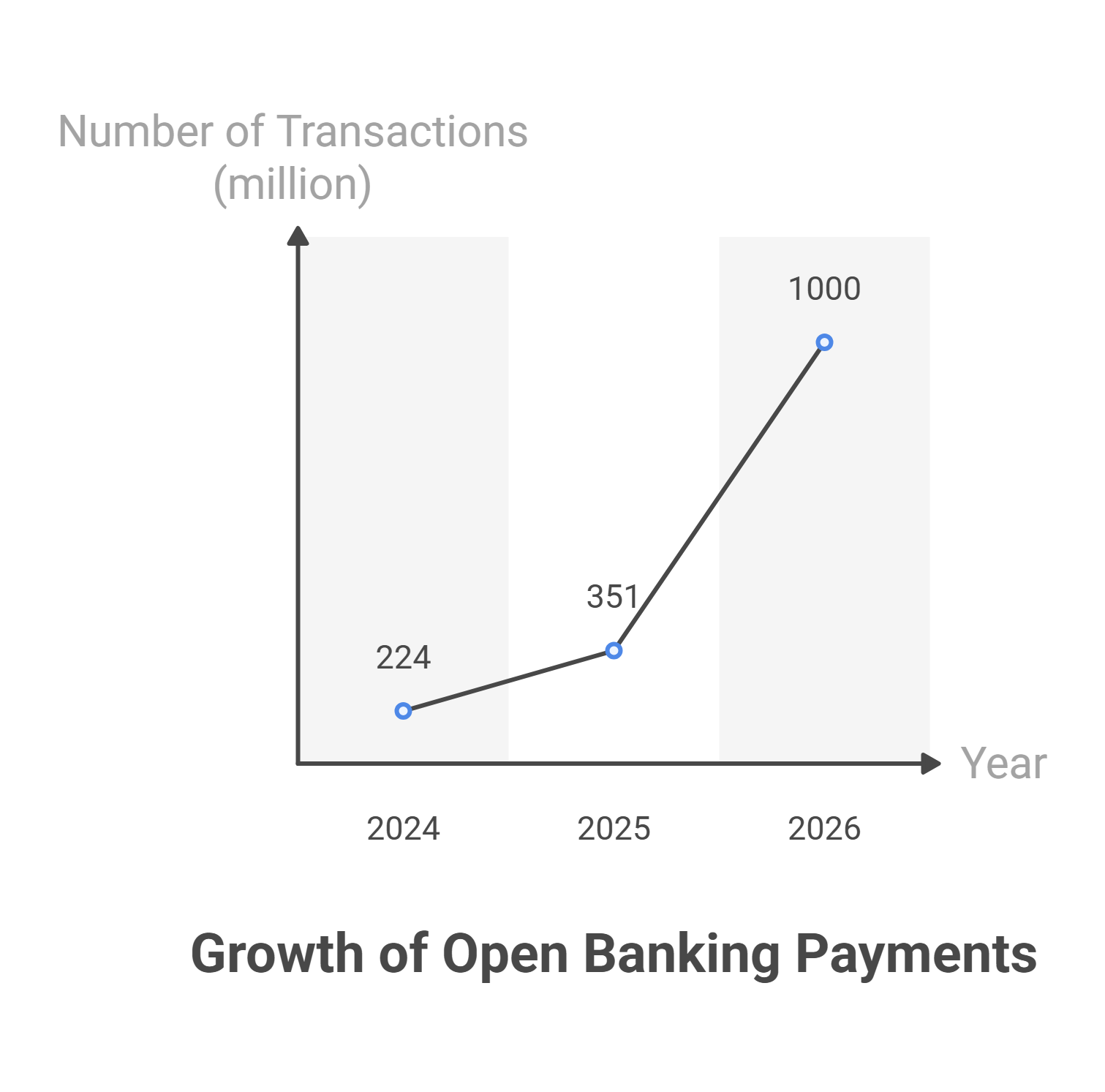
Key Takeaway: Rising payment volumes and cumulative transaction milestones show that open banking is moving from an emerging connectivity model toward established account-to-account payment infrastructure.
The wider development is changing the role of the bank account within digital finance. Open banking account to account payments can connect existing banking infrastructure with merchant, fintech and financial-service experiences, bringing direct bank-account payments closer to the centre of digital commerce.