Telecom voice support is moving beyond traditional interactive voice response systems and scripted voice bots toward systems that can understand natural-language requests and participate in broader service workflows. Conventional IVR generally guides customers through predefined menus, while earlier voice bots were designed around narrower commands and scripted responses. Generative AI is changing that model by allowing voice systems to interpret more varied requests and maintain a more conversational interaction.
This is creating a broader role for AI voice agents in telecom customer service. Instead of simply identifying an intent and directing the caller toward another process, an agent can potentially understand the request, retrieve relevant information, use connected tools and continue through an authorised workflow. The important change is therefore not only more natural speech, but the ability to connect spoken interaction with service execution.
From Scripted IVR to Conversational Voice Support
Traditional IVR remains useful for predictable requests at scale, but its menu-based structure can create friction when a customer’s issue does not fit neatly into predefined options. Natural-language voice systems offer a different interaction model by allowing customers to describe a problem in their own words.
This is where AI voice agents can provide a more capable interface. A customer could explain that a recent bill appears higher than expected, report a connectivity problem or ask about an existing order without navigating through several layers of options. The system can interpret the request and determine which information, tools or workflows are relevant.
The development is also moving beyond speech recognition itself. A capable voice agent needs to combine voice interaction with access to business systems, defined procedures and operational tools. TM Forum’s 2026 Contact Center Voice Agent Implementation Guide identifies four capability areas: voice interaction, task completion, tool-calling and SOP compliance.
Voice Agents are Moving Toward Task Completion
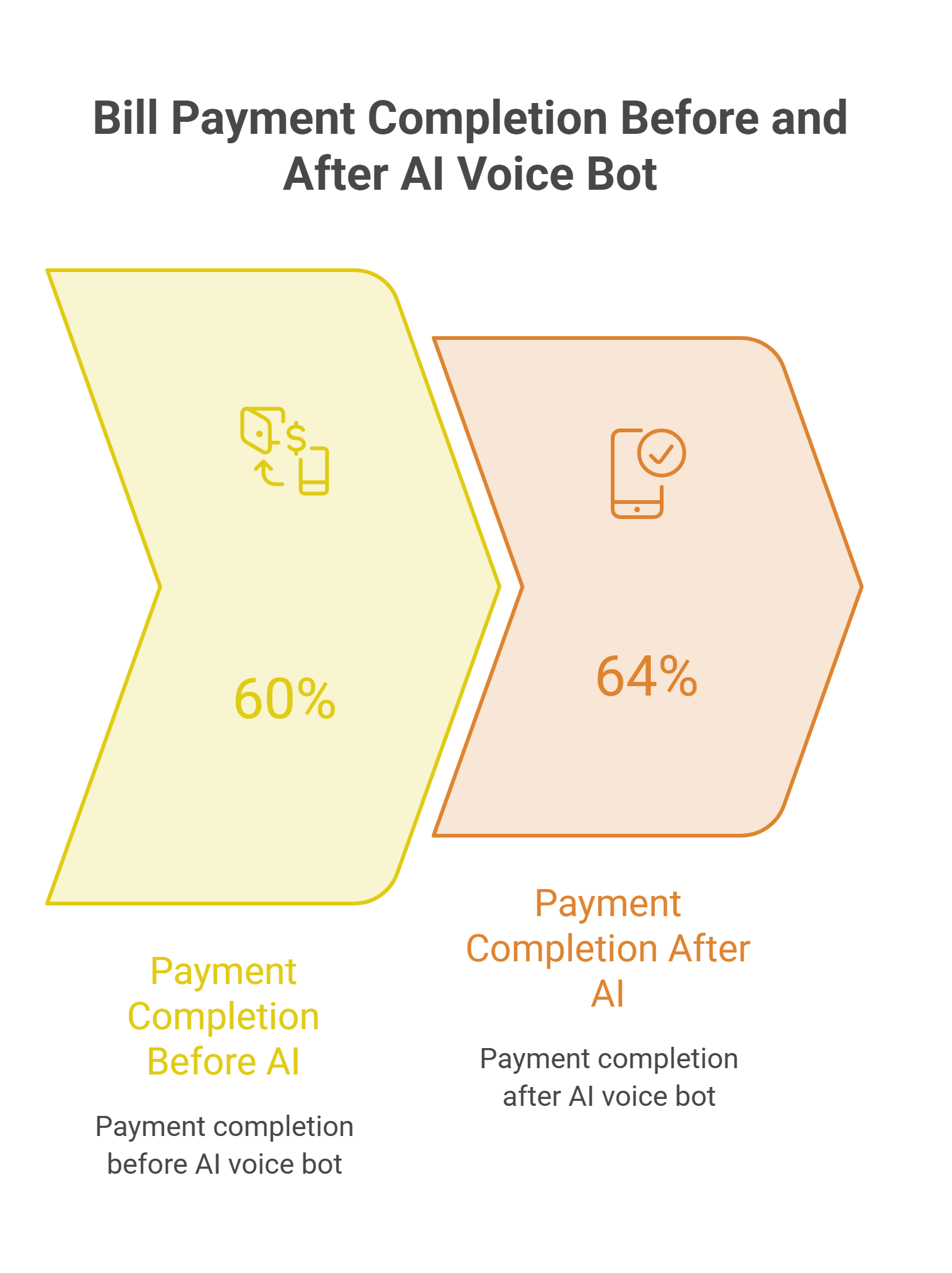
The distinction between a voice bot and an agent becomes clearer when the system is expected to complete work rather than simply provide an answer. A billing interaction, for example, could involve checking the customer’s account, reviewing the relevant charge, explaining the result and initiating an approved follow-up action.
The same principle can apply to technical support. A caller reporting a connectivity problem may require checks against service status, account information and previous troubleshooting steps before the issue can be resolved. A connected voice agent can potentially coordinate those checks within the same conversation rather than transferring the customer between separate processes.
AI voice agents therefore represent an evolution in how telecom operators can use voice as a customer-service interface. The objective is not simply to make automated calls sound more natural. It is to connect spoken interaction with the data, tools and workflows required to deliver a useful outcome.
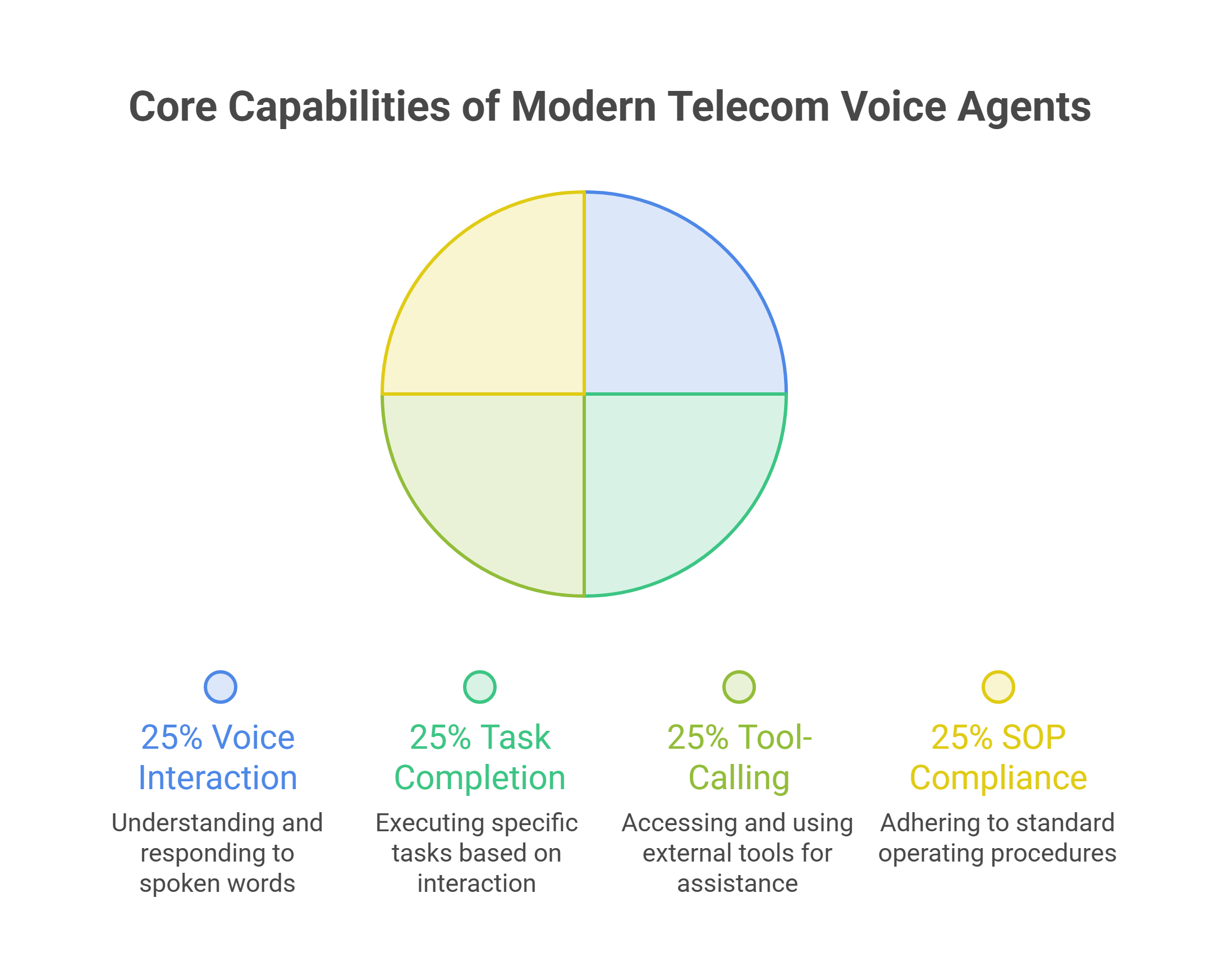
Key Takeaway: Telecom voice agents are being defined around more than conversational speech, with task completion, tool access and procedure compliance becoming core capabilities.