Primary aluminium production depends on a network of materials and energy inputs that must remain available for smelters to operate continuously. While alumina and electricity receive much of the attention, smelting also requires aluminium fluoride, carbon anodes and other specialised materials. Disruptions to any of these inputs can affect production schedules, operating costs and the ability of smelters to maintain stable conditions.
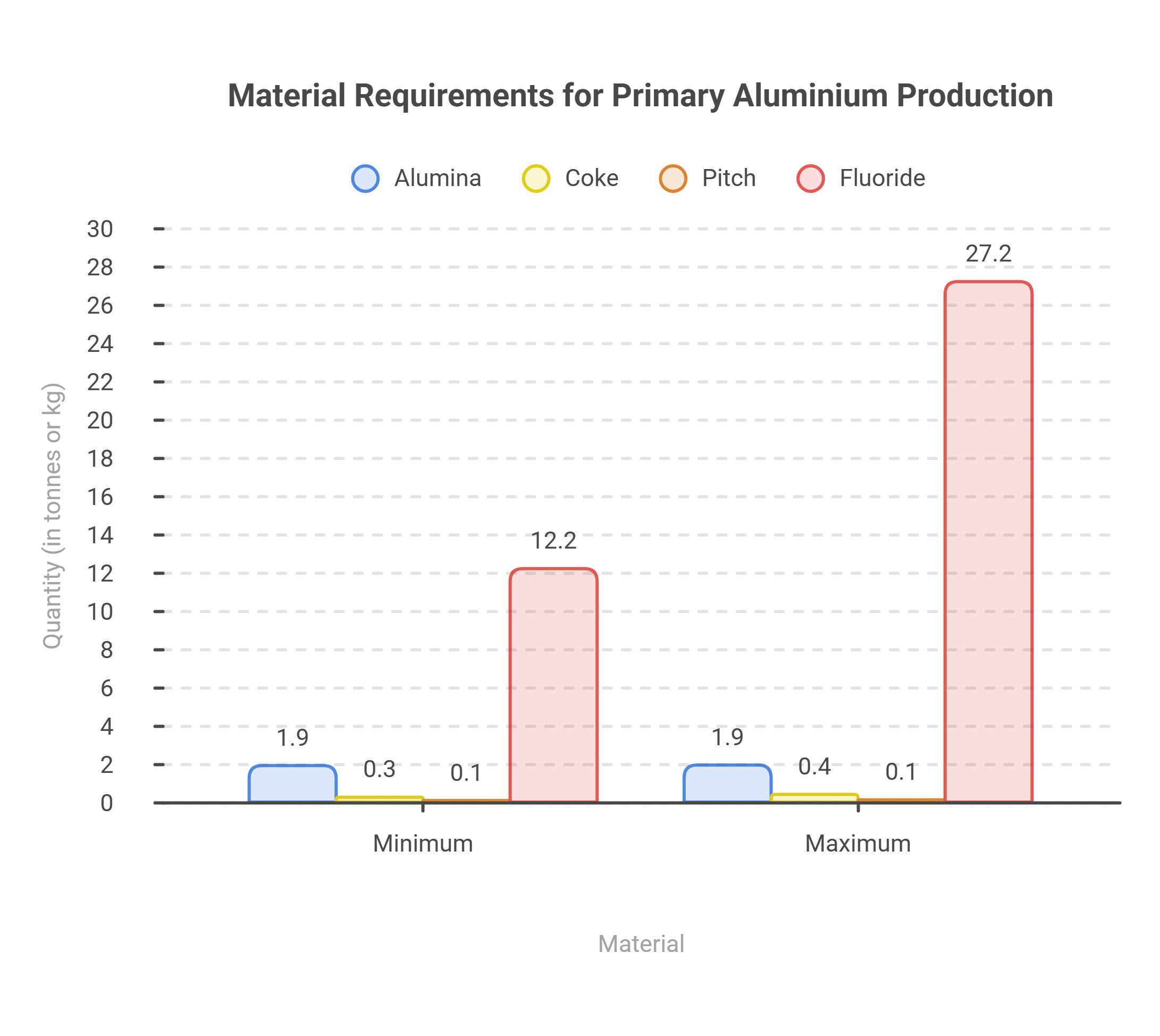
This is making aluminium smelting inputs an increasingly important part of supply-chain planning. The material requirements are substantial. Illustrative producer-level data indicates that producing one tonne of primary aluminium can require around 1.91 to 1.94 tonnes of alumina, 0.26 to 0.40 tonnes of calcined petroleum coke, 0.08 to 0.12 tonnes of liquid pitch and 12.2 to 27.2 kilograms of aluminium fluoride. These figures vary between facilities, but they demonstrate the range of materials that must be secured alongside energy.
Critical Inputs are Becoming a Focus of Aluminium Supply Security
The significance of these materials is not determined only by their physical volumes. Some inputs are used in relatively small quantities but can become difficult to replace quickly because of limited suppliers, specialised production requirements or long transportation routes.
Aluminium fluoride is a useful example. It plays a role in controlling the electrolyte chemistry within the smelting cell, meaning a disruption in supply can affect an essential part of the production process. Carbon materials are similarly important because baked anodes depend on calcined petroleum coke and pitch, both of which have their own upstream supply chains.
This creates several layers of exposure for aluminium producers. A smelter can face risks from the availability of the input itself, the concentration of global suppliers, shipping routes, port infrastructure and the cost of maintaining inventories.
The issue becomes more significant when supply chains are concentrated geographically. An input may be readily available under normal market conditions but become a constraint when a major producing region or transport corridor experiences disruption. aluminium smelting inputs therefore need to be assessed not simply by price and availability, but also by the resilience of the supply routes supporting them.
Smelters are Looking Beyond Immediate Procurement
The growing focus on input security is encouraging a broader approach to sourcing. Producers can reduce exposure through diversified suppliers, regional manufacturing capacity, strategic inventories and closer integration between upstream material producers and smelters.
This does not necessarily mean that every input must be produced locally. The more practical objective is to reduce dependence on highly concentrated or vulnerable supply routes for materials that are essential to continuous operation.
Aluminium smelting inputs are consequently becoming a strategic consideration alongside technology, energy costs and production capacity. The ability to secure these materials reliably can influence whether a smelter can maintain output when global logistics or commodity markets become more volatile.