
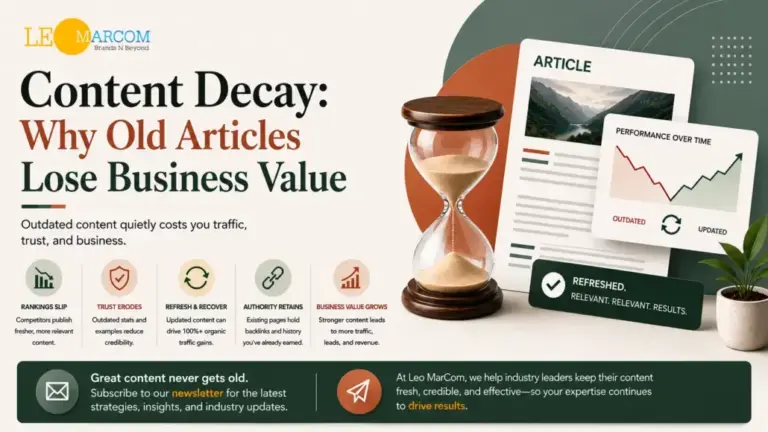
A published article does not stay valuable forever. Content decay sets in quietly, chipping away at traffic and leads long after a post first performed well. Most marketing teams notice the drop only after it has already cost them business.
Why Content Decay Happens to Even Strong Articles
According to a 2024 Ahrefs study, 66% of pages older than two years see declining organic traffic. That decline rarely announces itself with a sudden crash. Instead, rankings slip gradually as competitors publish fresher material and cited data grows outdated.
Content decay affects more than search rankings. Stale statistics and outdated screenshots quietly damage credibility even when a page still ranks reasonably well. Consequently, buyers reading an old article may question whether a brand is still active or relevant.
How a Content Refresh Strategy Reverses the Damage
A content refresh strategy targets pages that once performed well but have started slipping. HubSpot has reported organic traffic gains of over 100% after updating and re-promoting older posts. That single data point shows how much value sits untapped in existing content libraries.
Refreshing beats writing from scratch in most cases. Existing pages already carry backlinks, indexed history and some remaining authority. Therefore, updating statistics, examples and structure often recovers performance faster than a brand-new article ever could.
How Industry Media Stays Ahead of Content Decay
A pharma company updating coverage through worldpharmatoday.com keeps its published expertise current and credible. Similarly, a healthcare brand refreshing content on hhmglobal.com avoids the trust gap that stale pages create.
The same discipline applies elsewhere. A finance firm featured on worldfinanceinforms.com or an energy company covered on powerinfotoday.com benefits from regularly revisited, updated coverage.
Building a Content Refresh Strategy Across Industries
Telecom brands can apply this discipline through teleinfotoday.com, while construction and mining firms maintain relevance via worldconstructiontoday.com and miningfrontier.com. Packaging companies gain similar advantages through packagingworldinsights.com.
Start by auditing your highest-traffic pages for outdated statistics and claims. Next, prioritize updates to content closest to slipping out of top rankings. Additionally, schedule regular reviews instead of treating publishing as a one-time task.
Conclusion
Content decay is not a reason to abandon older articles. It is a signal to revisit and strengthen them before competitors take their place. Brands that treat content as a maintained asset protect business value that fresh publishing alone cannot fully replace.
At Leo MarCom, we help pharma, healthcare, energy, telecom, finance, construction, mining and packaging brands build the content refresh strategy that keeps published expertise current and credible. Subscribe to our newsletter to get the latest industry updates.