Mining companies have long looked at drilling, blasting, crushing and grinding as connected parts of the same production process. The difference now is that the industry has better tools to measure those connections and, more importantly, put a financial value on them.
That is making mine to mill optimisation more important as a business decision. A blast that produces the right rock size can reduce pressure on the crusher and mill. A change in mill settings can affect throughput and energy use. A decision that appears more expensive at one stage can therefore lower the total cost of producing a tonne of metal across the operation.
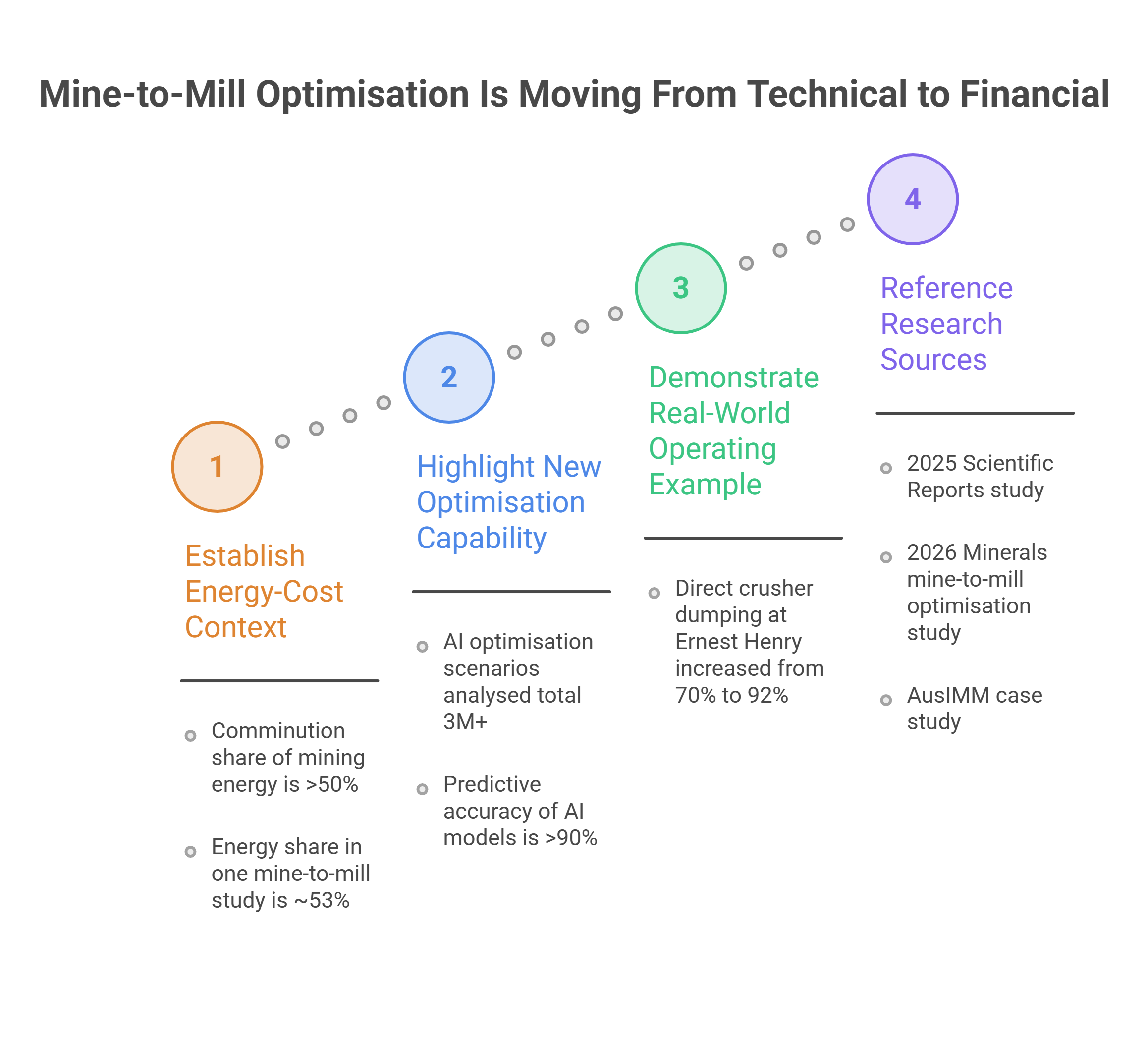
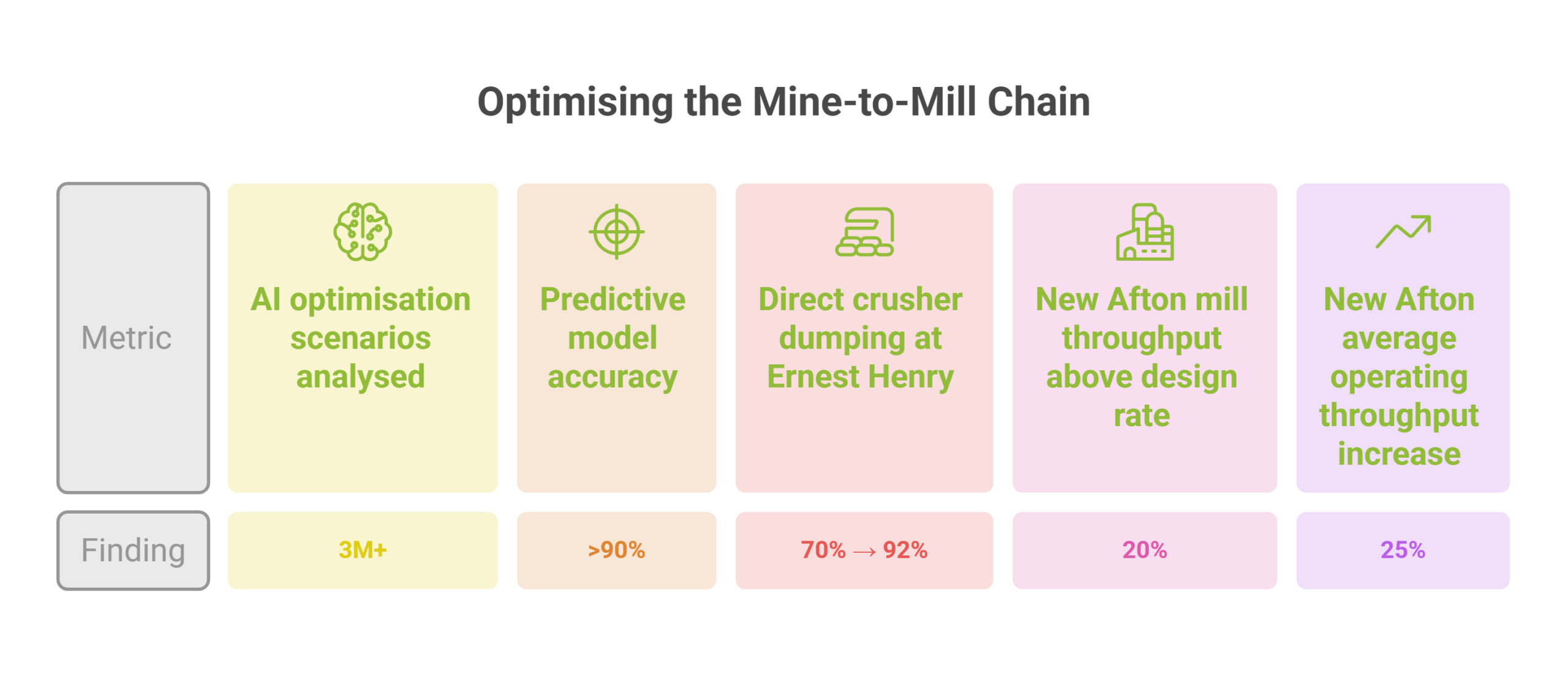
Recent research illustrates how large this opportunity can be. A 2026 study built an integrated mine-to-mill model using more than three million simulated scenarios, linking drilling and blasting parameters with screening, crushing, stockpiling and grinding. Its machine-learning models achieved predictive accuracy above 90%, allowing technical and financial trade-offs to be assessed across the production chain rather than at individual stages.
This changes the question mining companies are asking. Instead of looking for the cheapest way to drill, blast or process material independently, the focus can shift toward finding the combination that creates the best overall result.
The Blast Can Set the Cost of the Mill
Fragmentation is one of the clearest examples of why mine to mill optimisation matters. Rock that is broken into a more suitable size during blasting can require less work during crushing and grinding. Coarser or more uneven fragmentation can have the opposite effect, increasing downstream energy use, bottlenecks and handling requirements.
Comminution is particularly important because crushing and grinding account for more than half of mining energy consumption in recent research, with grinding being especially energy intensive. One study estimates that comminution accounts for around 53% of total mining energy use and more than 60% of total operating expenses in the context it examined.
That creates an important economic trade-off. Spending more on drilling and blasting can make sense when better fragmentation reduces a larger cost further downstream. But the objective is not simply to use more explosives or create finer rock. The right level depends on geology, blast design, processing conditions, recovery and the cost of each stage.
A long-running case at Ernest Henry in Australia shows how upstream changes can affect downstream operations. A fragmentation optimisation programme increased the share of material that could be dumped directly into the crusher from 70% to 92%, while also reducing reliance on the rock breaker.