
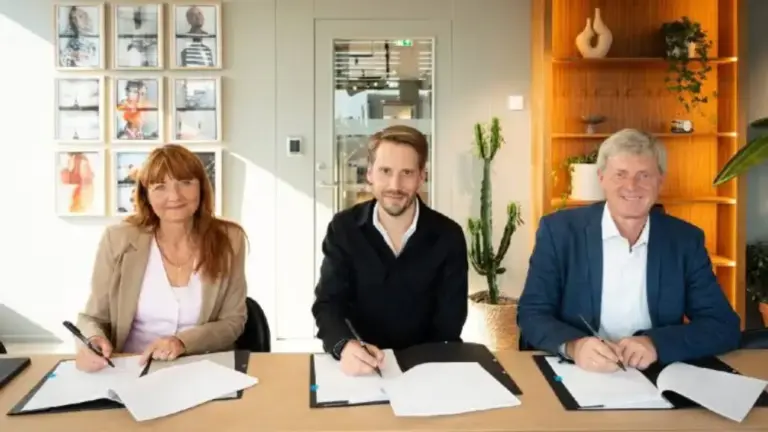
Following eight years of collaborative partnership, the H&M Group, IndustriALL Global Union, and IF Metall have announced a significant update to their Global Framework Agreement (GFA). This revised accord expands upon the protections first established in 2015 and later renewed in 2016, marking a continued commitment to Fashion for Good and the enhancement of Labor Rights across global operations.
The agreement serves as a protective framework for workers at approximately 1,000 manufacturing facilities operated by the retail group’s partners. By establishing rigorous safeguards for workplace conditions and trade union rights, the GFA ensures that all production sites within the company’s Supply Chain adhere to international standards. This development is a clear sign of Progress in the ongoing effort to foster a more sustainable and ethical Apparel Industry.
Expanded Protections and International Standards
The updated GFA incorporates core conventions from the International Labour Organization (ILO), including the pivotal ILO Convention 190. This specific convention is dedicated to the prevention and eradication of violence and harassment within the professional environment. By integrating these standards, the agreement reinforces mechanisms designed to identify, prevent, and remedy gender-based violence.
Furthermore, the H&M Group has committed to enhanced due diligence processes that align with OECD Guidelines. These updates are intended to ensure that the Fashion for Good Progress remains a central pillar of the company’s manufacturing strategy, protecting the fundamental Labor Rights of thousands of garment workers.
Enhanced Governance and Dispute Resolution
To ensure the effective implementation of these provisions, the governance structure of the GFA has been modernized. The new framework introduces a multi-layered oversight system, including:
- National monitoring committees
- A global steering committee
- A joint industrial relations development committee
A critical component of this updated structure is the establishment of a binding dispute resolution process. Under this system, any conflicts arising within the Supply Chain will be addressed through an independent mediator whose decisions are final. This mechanism provides the necessary foundation for functional industrial relations, which are essential for a stable and sustainable Apparel Industry.
Industry Collaboration and Collective Action
The H&M Group, IndustriALL, and IF Metall also acknowledged the importance of broader industry-wide initiatives. Programs such as the ACT agreement, the Accord on Fire and Building Safety, the Ready-Made Garment Sustainability Council (RSC), and the Employment Injury Scheme (EIS) in Bangladesh continue to play a vital role in improving global working conditions.
Atle Hoie, the General Secretary of IndustriALL, noted that the renewed agreement continues the essential work of empowering workers and unions. He emphasized that neutrality in union organizing and the new dispute resolution mechanisms are vital for long-term Progress. The agreement maintains that workers have the right to refuse unsafe work as part of their occupational health and safety protections.
Moving forward, the GFA will continue to facilitate the signing of collective agreements at the factory and industry levels. It also mandates ongoing training for both management and union representatives, covering topics such as industrial relations, collective bargaining, and peaceful conflict resolution. The H&M Group has reaffirmed its intent to use its influence to foster respect for human and trade union rights among its direct suppliers, ensuring that worker representatives can perform their duties without fear of discrimination. This comprehensive approach ensures that Fashion for Good Progress remains an achievable goal for the global textile sector.