
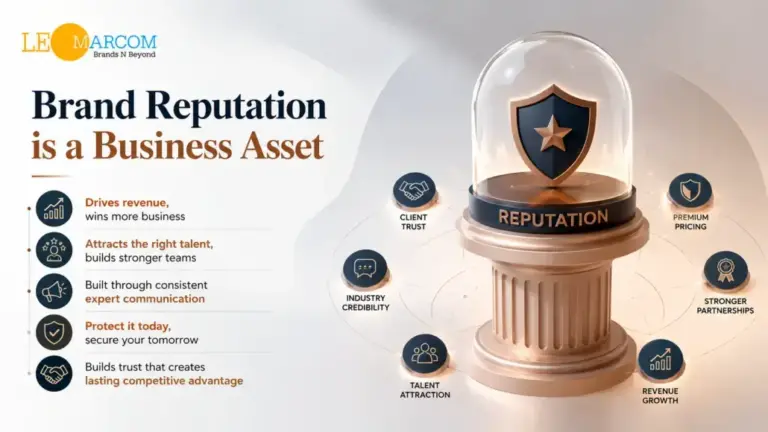
Brand reputation is a business asset that is one of the most valuable and most underappreciated assets a company can build. Unlike physical infrastructure, equipment or intellectual property, brand reputation does not appear on a balance sheet. But it directly influences revenue, client retention, talent acquisition, partnership opportunities and the ability to command premium pricing in competitive markets.
Consequently, businesses that invest in building and protecting their brand reputation are accumulating a compounding commercial advantage that their competitors find increasingly difficult to close regardless of how much they spend on sales or advertising.
What Brand Reputation Actually Is
Brand reputation is the collective perception of a business held by its clients, partners, employees, competitors and the broader professional community it operates within. It is shaped by every interaction a company has, every piece of content published, every client experience delivered, every communication made and every commitment either kept or broken.
Furthermore, in the digital age brand reputation is formed and reformed continuously through online reviews, industry media coverage, social media presence, thought leadership content and the visible behaviour of a company across every public touchpoint. Therefore, brand reputation is not something businesses can choose to manage or ignore, it is being built or eroded constantly whether they are paying attention or not.
Brand Reputation Drives Revenue
The commercial case for brand reputation as a business asset is clear and well documented. Businesses with strong professional reputations win more contracts, lose fewer clients to competitors, spend less on sales conversion and command stronger pricing than those with weak or inconsistent reputations.
Moreover, in B2B markets where purchasing decisions involve significant investment and long-term commitment, reputation is often the deciding factor between two technically comparable vendors. Decision-makers choose partners they trust and trust is built through reputation accumulated over time. World Finance Informs and Tele Info Today demonstrate how consistent expert publishing builds exactly this kind of professional reputation keeping brands visible and credible with the decision-makers that matter most across finance and telecommunications sectors.
Reputation Attracts the Right Talent
Brand reputation is not only a client-facing asset it is a talent asset. The most skilled professionals in every industry have choices about where they work and the reputation of a potential employer directly influences those choices.
Furthermore, businesses with strong reputations as employers communicated through consistent brand messaging, visible company culture and active professional presence attract better candidates, reduce recruitment costs and retain high performers more effectively. As a result, brand reputation delivers competitive advantage in talent markets that directly translates into better client outcomes and stronger business performance.
Reputation Is Built Through Consistent Expert Communication
The most durable brand reputations in B2B markets are built through years of consistent, expert-driven communication not through single campaigns or moments of exceptional performance. Therefore, businesses that publish authoritative content, maintain active industry media presence and communicate transparently across every channel are building reputation assets that compound in value with every interaction.
HHM Global, World Pharma Today and Power Info Today all serve brands building exactly this kind of reputation providing expert platforms through which pharmaceutical, healthcare and energy companies can demonstrate their knowledge and credibility to the professional audiences that shape their markets.
Protecting Reputation Is as Important as Building It
Brand reputation takes years to build and can be damaged significantly faster than it was accumulated. Consequently, businesses must invest not just in building reputation through positive communication but in protecting it through consistent ethical behaviour, transparent crisis communication and rigorous quality standards across every client interaction.
In addition, the speed at which reputational damage spreads through digital channels in 2026 makes proactive reputation management a business necessity rather than a reactive afterthought. Brands that monitor their digital presence, respond professionally to challenges and communicate consistently through trusted industry platforms maintain far stronger reputational resilience than those that leave their reputation unmanaged.
Conclusion
Brand reputation is a business asset that drives revenue, attracts talent, wins contracts and determines long-term market position. In 2026 the businesses that treat reputation as a strategic investment built through expert communication, consistent presence and genuine professional credibility will compound advantages that their competitors cannot easily replicate or overtake.
At Leo MarCom, we help B2B brands across pharma, healthcare, energy, construction, mining and finance build and protect the kind of professional reputation that delivers lasting commercial value. Subscribe to our newsletter to get the latest industry updates.