
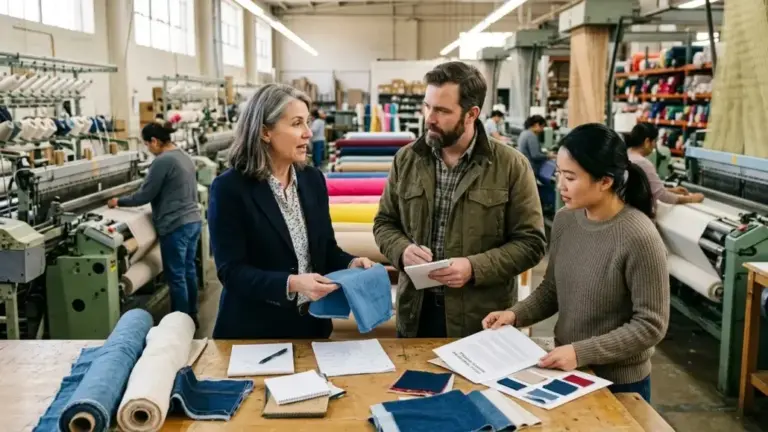
On July 6, 2026, a unified group of U.S. organizations representing textile producers, apparel brands, and retailers formally requested the Trump administration to implement a newly developed textile trade incentive program. This proposal was submitted to the Office of the United States Trade Representative (USTR) as a strategic effort to enhance domestic manufacturing growth and secure the industry’s future. This collaboration marks the first instance where these diverse organizations have aligned to publicly support a singular trade policy initiative.
Strategic Collaboration to Strengthen Apparel Supply Chains
The joint submission was drafted in response to Section 301 investigations regarding policies on goods produced with forced labor. Despite often holding differing views on trade matters, the National Council of Textile Organizations (NCTO), the American Apparel & Footwear Association (AAFA), the United States Fashion Industry Association (USFIA), and the U.S. Industrial and Narrow Fabrics Institute (USINFI) have come together. Their shared goal is to stabilize apparel supply chains within the Western Hemisphere and provide a mechanism for brands to diversify their sourcing strategies.
The proposed textile trade incentive program is designed to revitalize U.S. textile manufacturing by encouraging investment and increasing exports. According to the submission, the program could lead to the creation of over 56,000 new jobs in the United States. Furthermore, the initiative is expected to drive billions of dollars in domestic investment, providing benefits that extend to cotton farming and the broader supply chain.
Mechanism for Offsetting Section 301 Tariffs
The core of the proposal involves a credit system. Under this plan, brands and retailers would earn tariff credits when purchasing U.S. textiles and qualified apparel from specific free trade agreement partners in the Western Hemisphere. These earned credits could then be utilized to offset potential Section 301 tariffs applied to goods from eligible countries. The associations describe this as a strategy to unlock growth for manufacturers and retailers alike.
The groups emphasize that with appropriate incentives, the industry can see a significant rise in domestic manufacturing growth and the reopening of previously closed facilities. If the administration adopts the program, the organizations project that exports of textiles to the Western Hemisphere could double, potentially reaching $29 billion annually. This surge in U.S. textile manufacturing exports would be a primary driver for job creation and sector-wide investment.
Formal Request for Trade Policy Initiative Integration
The associations developed this framework as a constructive alternative to mechanisms previously suggested by the USTR. By presenting this trade policy initiative, the groups aim to provide a solution that addresses labor concerns while maintaining the competitiveness of American businesses. They have formally requested the USTR to include this incentive program as a core component of any remedies resulting from the ongoing Section 301 tariffs investigations.
The submission concludes by highlighting that the program offers a pathway to maintain the critical infrastructure of the American textile industry while helping retailers find new opportunities in a shifting global market.